


The India rain alert for September 7 comes with widespread rainfall, thunderstorms and isolated heavy rain across several regions. The latest IMD forecast points to heightened weather activity in northern, central, eastern and northeastern India, with implications for farmers, commuters and smaller cities.
IMD weather forecast shows widespread rain across India
The latest India Meteorological Department forecast issued on September 7, 2026, shows active monsoon conditions across several parts of the country. The IMD has forecast widespread rainfall with thunderstorms and lightning over Uttarakhand and eastern Uttar Pradesh, while central, eastern and northeastern regions are also expected to see varying levels of rainfall through the week.
The weather system is not uniform across all states. Some regions are expected to receive widespread rain, while others may experience isolated showers or thunderstorms. The IMD has also identified areas where isolated heavy rainfall is likely.
For September 7, the most notable areas include Uttarakhand, eastern Uttar Pradesh, parts of Madhya Pradesh, Bihar, West Bengal, northeastern states and several parts of central India. Vidarbha is also expected to see rainfall activity during September 7 to 9, with isolated heavy rain forecast there on September 11.
This makes the current weather situation particularly relevant for smaller cities and rural districts, where heavy showers can quickly affect roads, agriculture and local infrastructure.
Heavy rain forecast for Uttar Pradesh and Uttarakhand
Uttarakhand and eastern Uttar Pradesh are among the areas requiring closer attention in the latest forecast.
The IMD has predicted fairly widespread to widespread rainfall accompanied by thunderstorms and lightning over Uttarakhand on September 7, with another active spell possible from September 10 to 12. Isolated heavy rainfall is also expected in the state on September 7 and again during September 10 to 12.
Eastern Uttar Pradesh is expected to receive fairly widespread to widespread rainfall on September 7 and 8, while isolated heavy rainfall is likely from September 7 to 9.
This matters for districts outside the major urban centres as well. Heavy rain in smaller towns can cause waterlogging on local roads, interrupt public transport and affect market activity. In hilly areas, intense rainfall can also increase the risk of landslides and sudden disruptions along roads.
The forecast does not mean every district in these states will receive heavy rain. IMD warnings are location-specific, and rainfall intensity can vary significantly over short distances.
Central India remains under active monsoon conditions
Central India is another important zone in the September 7 weather forecast.
The IMD has predicted fairly widespread to widespread rainfall accompanied by thunderstorms and lightning over western Madhya Pradesh on September 7. Eastern Madhya Pradesh is expected to see similar conditions on September 7 and 8, with another spell possible later in the week.
Isolated heavy rainfall is forecast over eastern Madhya Pradesh from September 7 to 12. Chhattisgarh is expected to see widespread rainfall activity from September 8 to 12, while isolated heavy rainfall is possible from September 9 to 12.
Vidarbha, which includes parts of eastern Maharashtra and is particularly relevant to Nagpur and surrounding districts, is expected to see isolated to scattered rainfall from September 7 to 9. The IMD has forecast fairly widespread to widespread rainfall over Vidarbha from September 10 to 12, with isolated heavy rain possible on September 11.
For farmers in the region, the timing and intensity of this rain will be important because excessive rainfall after earlier wet spells can create problems for standing crops and field operations.
Eastern India could see repeated rain spells
Eastern India is also expected to remain active during the coming days.
The IMD has forecast fairly widespread to widespread rainfall over Gangetic West Bengal from September 7 to 10. Sub-Himalayan West Bengal and Sikkim are expected to see widespread rainfall from September 7 to 12, while Jharkhand is likely to experience widespread rain from September 8 to 11.
Bihar is expected to receive fairly widespread to widespread rainfall on September 7, followed by additional rainfall activity during September 8 to 12. Odisha is also expected to see rainfall, with a more widespread spell forecast between September 10 and 12.
Heavy rainfall is possible at isolated locations in several of these areas. The IMD has specifically forecast isolated heavy rain over Sub-Himalayan West Bengal and Sikkim on September 7 and 8, Gangetic West Bengal from September 7 to 9, Bihar on September 7 and 8, and Odisha from September 9 to 12.
For smaller cities, repeated rainfall can put pressure on drainage systems and transport networks, particularly where waterlogging is already a seasonal problem.
Northeast India faces continued rainfall activity
The Northeast is also likely to remain wet through much of the forecast period.
The IMD has forecast fairly widespread to widespread rainfall over Arunachal Pradesh from September 7 to 12. Assam and Meghalaya are expected to see widespread rainfall on September 7 and 8, with another active period possible on September 11 and 12. Nagaland, Manipur, Mizoram and Tripura are also expected to receive widespread rainfall during September 7 to 12.
Isolated heavy rainfall is possible across Arunachal Pradesh, Assam, Meghalaya and the other northeastern states during this period.
Thunderstorms and lightning have also been forecast over parts of the region. In areas with steep terrain, prolonged or intense rainfall can create additional risks for roads, slopes and local connectivity.
Residents in vulnerable locations should therefore rely on district-level warnings rather than assuming that a state-wide forecast applies equally everywhere.
What the rain forecast means for farmers
For farmers, rain in September can be both useful and disruptive.
The monsoon remains important for the country’s agricultural economy, particularly for rain-dependent farming areas. Adequate rainfall can support standing crops and replenish soil moisture. But excessive rain within a short period can create waterlogging, crop damage and difficulties in carrying out field operations.
The current IMD forecast covers agricultural regions across Madhya Pradesh, Maharashtra, Uttar Pradesh, Bihar, Chhattisgarh, Odisha and eastern India. Farmers in these areas need to pay attention to the intensity rather than simply the presence of rain.
Where heavy rainfall is forecast, field drainage becomes particularly important. Farmers may also need to avoid unnecessary movement of harvested produce or agricultural machinery during intense spells.
The impact will depend heavily on the crop, soil conditions, local rainfall already received and the drainage characteristics of individual fields.
The IMD’s agricultural weather advisories can provide more specific guidance because district-level conditions can differ considerably from the broader state forecast.
Commuters in smaller cities should prepare for sudden disruptions
The latest India rain alert is also significant for daily commuters.
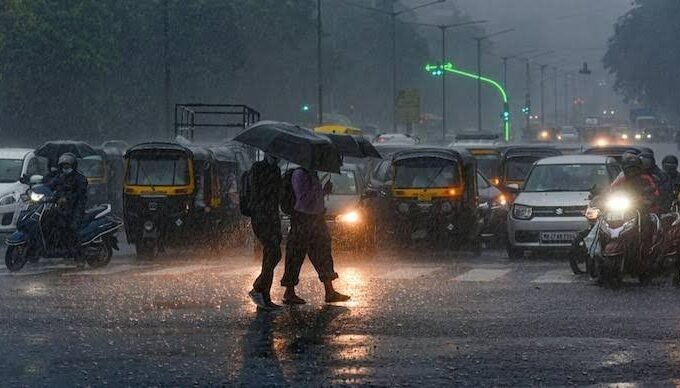
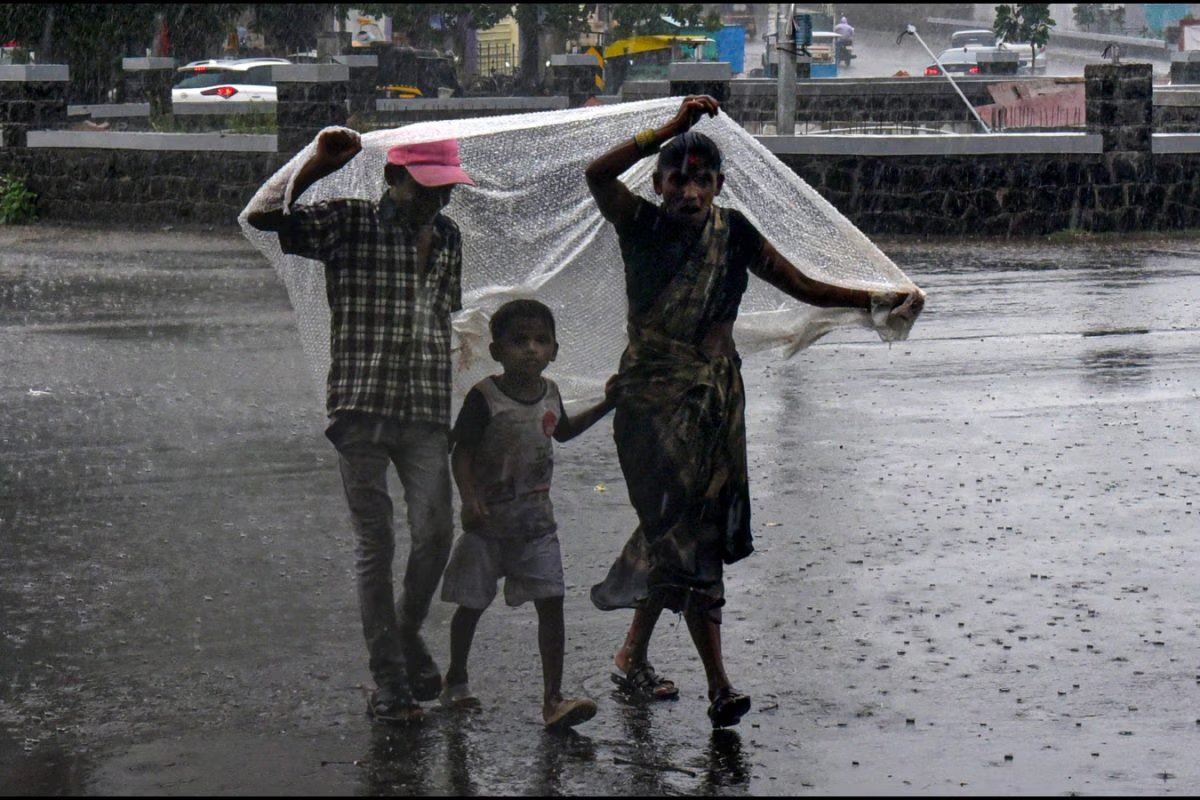
Heavy showers can cause short-duration waterlogging even when total daily rainfall is not exceptionally high. Roads in smaller cities and towns can be particularly vulnerable where drainage capacity is limited.
Thunderstorms bring another concern. The IMD has forecast lightning and gusty winds in several areas, including parts of southern India. On September 7, gusty winds reaching 40 to 50 kmph and occasionally up to 60 kmph are expected over coastal Andhra Pradesh and Yanam and Rayalaseema. Stronger winds are also forecast over parts of Karnataka.
Commuters should therefore account for slower traffic, reduced visibility during intense showers and possible temporary road disruptions.
People travelling through hilly districts should also check local alerts before beginning journeys, particularly where heavy rain has been forecast.
Maharashtra and Vidarbha weather needs attention
For Maharashtra, the latest IMD forecast does not indicate the same rainfall intensity everywhere.
Konkan and Goa are expected to receive fairly widespread to widespread rainfall from September 7 to 12. Gujarat, Madhya Maharashtra, Marathwada and Saurashtra and Kutch are expected to see isolated to scattered rainfall during the same period.
Vidarbha has a more specific forecast. The region is likely to see isolated to scattered rainfall from September 7 to 9, followed by fairly widespread to widespread rainfall from September 10 to 12. Isolated heavy rainfall is forecast for Vidarbha on September 11.
For Nagpur and surrounding districts, this means residents should watch the district-level forecast rather than relying only on broad Maharashtra weather updates.
The distinction is important because rainfall can vary considerably between Nagpur, nearby rural areas and other Vidarbha districts.
Why the 22-state rain alert needs context
Reports describing the September 7 weather situation as a 22-state rain alert are referring to rainfall and thunderstorm activity expected across a broad group of states and Union Territories. However, the official IMD bulletin does not describe the entire country as being under one uniform heavy-rain warning.
The official forecast differentiates between widespread rainfall, scattered rainfall, isolated heavy rainfall, thunderstorms, lightning and strong winds.
That distinction matters. A rain forecast does not automatically mean a red alert or dangerous conditions everywhere.
The IMD itself notes that its warning categories are specific to the expected severity and that forecasts are valid for defined periods. District-level warnings provide a more precise picture for residents.
This is especially important when weather headlines use phrases such as massive rain alert or rain across 22 states. Readers should look at the actual IMD warning for their district before making travel or farming decisions.
What to watch over the next few days
The weather situation is expected to remain active in several parts of India beyond September 7.
The IMD forecast indicates continued rainfall over Uttarakhand, eastern Uttar Pradesh, Madhya Pradesh, eastern India and the Northeast. Vidarbha is also expected to see a more widespread spell later in the week.
For residents, the most useful approach is to monitor district-level alerts, especially during thunderstorms and periods of heavy rainfall.
Farmers should focus on crop-specific advisories, drainage and the timing of field activities. Commuters should allow additional travel time during intense spells and avoid unnecessary exposure to lightning or strong winds.
The current forecast shows a broad monsoon footprint, but its impact will ultimately depend on local rainfall intensity and infrastructure conditions.
Key Takeaways
- The IMD’s September 7 bulletin forecasts widespread rainfall and thunderstorms across several parts of northern, central, eastern and northeastern India.
- Uttarakhand, eastern Uttar Pradesh, parts of Madhya Pradesh, Bihar, West Bengal and northeastern states are among the areas facing notable rainfall activity.
- Vidarbha is expected to see scattered rain from September 7 to 9, followed by a more widespread spell from September 10 to 12, with isolated heavy rain possible on September 11.
- The reported 22-state alert should not be interpreted as one uniform heavy-rain warning because the IMD forecast assigns different rainfall and weather conditions to different regions.
FAQs
Which states are expected to receive heavy rain on September 7, 2026?
The IMD has forecast isolated heavy rainfall over Uttarakhand, eastern Uttar Pradesh, eastern Madhya Pradesh, Bihar, parts of the Northeast, Sub-Himalayan West Bengal and Sikkim, among other areas. The exact warning varies by region and date.
Is Maharashtra under a heavy rain alert?
Rainfall is expected across several parts of Maharashtra, but conditions vary by region. Konkan and Goa are forecast to receive widespread rainfall, while Vidarbha is expected to see scattered rainfall initially and a more widespread spell later in the week.
What should farmers do during the current rain spell?
Farmers should follow district-specific agricultural weather advisories, monitor heavy-rain warnings and ensure adequate field drainage. Decisions should also depend on the crop, soil moisture and local rainfall conditions.
Will the rain affect commuters?
Yes, intense showers can cause waterlogging, slower traffic and temporary road disruptions. Thunderstorms and strong winds may create additional risks in some areas. Commuters should check local weather alerts before travelling, especially in districts under heavy-rain or thunderstorm warnings.
(India rain alert, IMD weather forecast September 7 2026, 22 state rain alert, India weather today, IMD rain forecast, Maharashtra weather, Vidarbha rain alert, Nagpur weather, heavy rain India, monsoon update India, farmers weather alert, India monsoon 2026, rain forecast today)









Leave a comment