

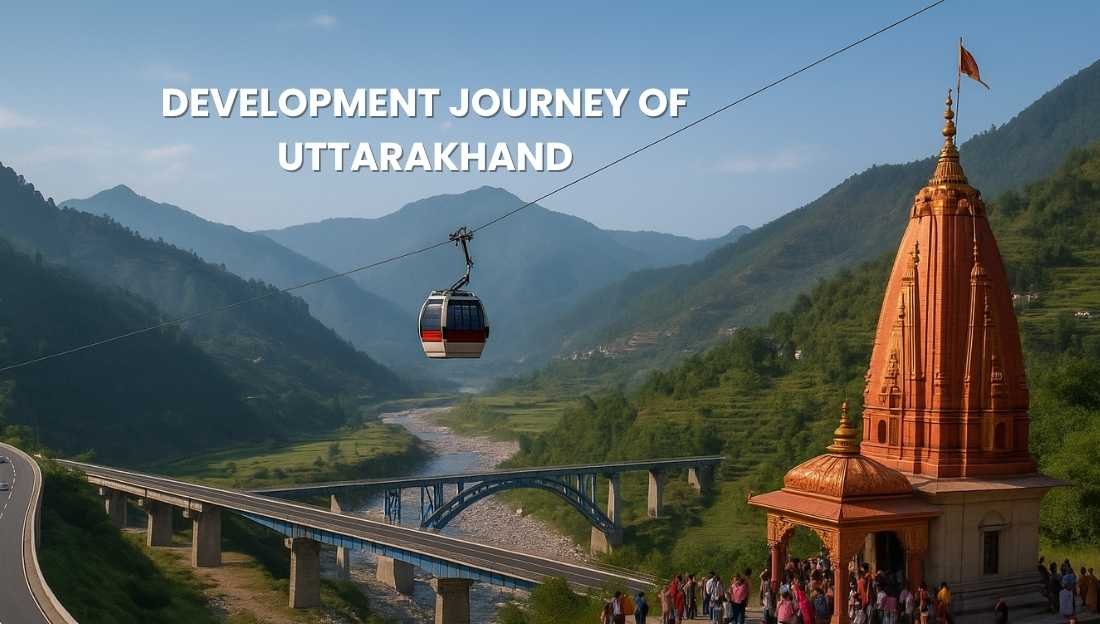
Uttarakhand’s Transformation Dialogues have positioned Dehradun at the center of a broader growth strategy focused on infrastructure, tourism, investment, and sustainability. The initiative highlights how a hill state plans to balance economic expansion with ecological sensitivity and regional inclusion.
Uttarakhand’s Transformation Dialogues are shaping a new development narrative for Dehradun and other districts by aligning policy, investment, and infrastructure priorities. As the state capital, Dehradun plays a strategic role in administration, education, and services. The dialogues reflect a structured attempt to accelerate growth while preserving the fragile Himalayan ecosystem. With a focus on tourism, logistics, renewable energy, and urban planning, the state aims to create a model that supports both economic output and environmental responsibility.
Infrastructure Push and Urban Expansion in Dehradun
Dehradun has witnessed steady expansion over the past decade, driven by migration, educational institutions, and proximity to pilgrimage circuits. Infrastructure upgrades now form the backbone of its growth strategy. Road widening projects, bypass developments, and improved connectivity to Delhi and other northern cities are designed to ease congestion and attract private investment.
The city also benefits from enhanced rail and air connectivity. Expansion of airport facilities and improved highway links strengthen Dehradun’s role as a gateway to the Garhwal region. Urban planning discussions increasingly focus on controlled expansion, zoning regulations, and traffic management to prevent unplanned sprawl. Smart city initiatives emphasize digitized services, surveillance systems, and improved waste management to maintain urban livability.
Tourism, Pilgrimage and Hospitality Sector Strategy
Tourism remains a central pillar of Uttarakhand’s growth strategy. The state is home to major pilgrimage destinations such as Kedarnath, Badrinath, Gangotri, and Yamunotri. Dehradun serves as a logistical and administrative hub for these circuits. Transformation Dialogues highlight infrastructure improvements along pilgrimage routes, including better road connectivity, safety measures, and visitor facilities.
Beyond religious tourism, the state promotes wellness tourism, eco tourism, and adventure activities such as trekking and river rafting. Investment in homestay schemes and local hospitality training programs creates livelihood opportunities in smaller towns. By diversifying tourism offerings, the state seeks year round economic activity rather than seasonal spikes.
Industrial Development and Investment Climate
Uttarakhand has historically attracted industries in pharmaceuticals, food processing, and light manufacturing, particularly in districts like Haridwar and Udham Singh Nagar. Dehradun’s growth strategy now includes strengthening the investment climate through simplified clearances and land allocation processes.
Industrial parks and logistics hubs are part of long term planning. The state’s location between the plains and hill regions provides an advantage for distribution networks serving northern India. However, industrial expansion is being framed within environmental safeguards, especially in sensitive zones. Balancing manufacturing growth with ecological constraints remains a key theme in policy discussions.
Renewable Energy and Sustainability Focus
As a Himalayan state with rich hydropower potential, Uttarakhand has long relied on hydroelectric projects. Recent dialogues emphasize optimizing existing capacity while addressing environmental concerns related to river ecosystems and seismic sensitivity. Small and medium hydropower projects continue to play a role in the state’s energy mix.
Solar energy adoption is also increasing, particularly rooftop installations in urban centers like Dehradun. Sustainability discussions extend to water conservation, forest protection, and disaster resilience. Given the state’s vulnerability to landslides and floods, climate adaptive infrastructure is central to its development roadmap.
Human Capital, Education and Skill Development
Dehradun hosts several prominent educational institutions and defense establishments, contributing to its identity as an academic and administrative hub. Growth strategies include strengthening higher education, research collaboration, and skill development aligned with emerging sectors such as tourism management, renewable energy, and digital services.
Skill development programs aim to reduce out migration by creating local employment opportunities. Training in hospitality, paramedical services, and technical trades supports both urban and rural economies. By linking education with industry needs, the state attempts to build a more resilient workforce.
Challenges in Hill State Development
Despite clear growth ambitions, Uttarakhand faces structural challenges. Geographic constraints increase construction costs and limit large scale industrial expansion in many districts. Environmental clearances and disaster risk management add complexity to infrastructure projects.
Urban pressure in Dehradun has also raised concerns about water scarcity, traffic congestion, and waste management. Policy dialogues increasingly stress the importance of planned urbanization rather than reactive expansion. Ensuring that benefits of growth reach remote hill communities remains a long term objective.
Future Outlook Beyond Dehradun
While Dehradun remains the focal point, Transformation Dialogues aim to extend development benefits across the state. Regional hubs such as Haldwani, Rudrapur, and Pithoragarh are part of broader connectivity and tourism plans. Strengthening district level infrastructure reduces over dependence on the capital.
The state’s long term vision rests on three pillars: sustainable tourism, environmentally responsible industrial growth, and resilient infrastructure. If executed effectively, Uttarakhand can position itself as a model for hill state development that combines economic progress with ecological balance.
Takeaways
• Dehradun is central to Uttarakhand’s infrastructure and urban growth strategy
• Tourism diversification supports year round employment across districts
• Industrial expansion is linked with environmental safeguards
• Sustainability and disaster resilience are core to long term planning
FAQs
Q1. What are Uttarakhand’s Transformation Dialogues?
They are structured policy discussions and development initiatives focused on accelerating economic growth while maintaining environmental balance in the state.
Q2. Why is Dehradun important in this strategy?
As the state capital and a major educational and administrative center, Dehradun acts as the primary hub for infrastructure, services, and investment.
Q3. Which sectors are driving growth in Uttarakhand?
Tourism, hydropower, pharmaceuticals, food processing, renewable energy, and hospitality are key sectors.
Q4. What challenges does the state face in development?
Geographic constraints, environmental sensitivity, disaster risks, and urban management pressures are major challenges.











Leave a comment