

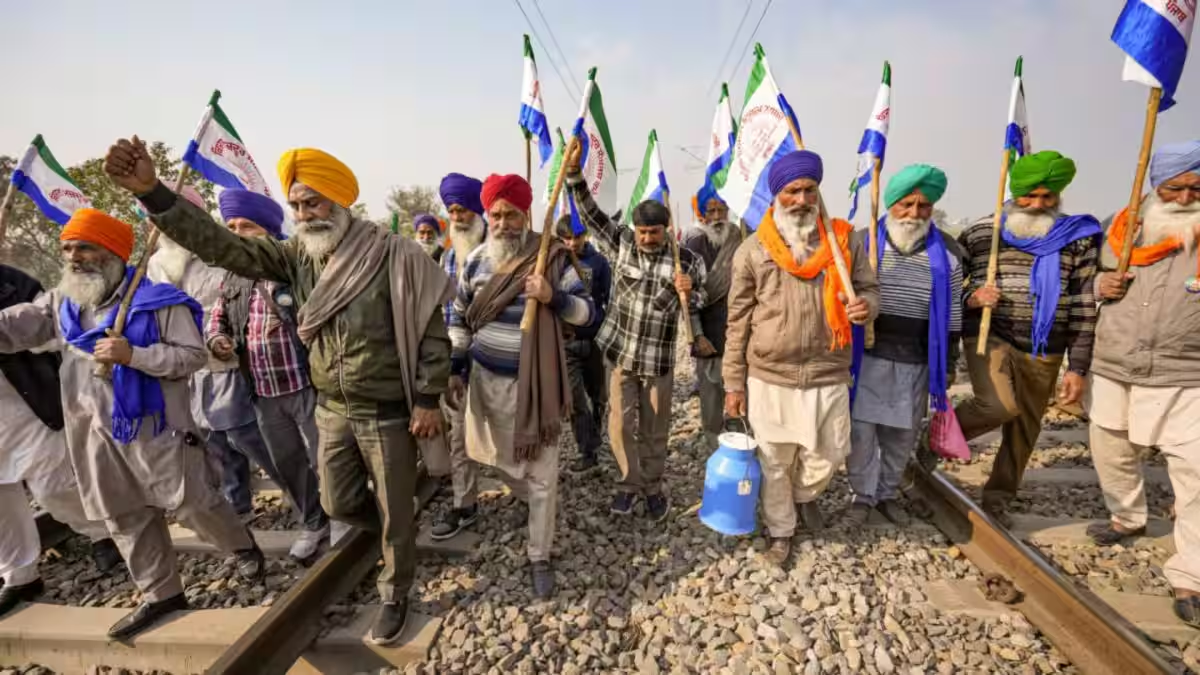
Punjab farmers marked Shaheed Diwas with renewed protests against trade policies, linking the historic day to ongoing agrarian concerns. The demonstrations signal rising tensions between farmer groups and policymakers over market access, pricing, and international trade agreements.
Farmers Use Shaheed Diwas to Amplify Protest Message
Punjab farmers protests on Shaheed Diwas gained visibility as multiple farmer unions organized gatherings and rallies across key districts. The date, observed to honor Bhagat Singh, Rajguru, and Sukhdev, carries strong emotional weight in Punjab, making it a strategic moment for mobilization.
Farmer leaders used the platform to connect historical sacrifice with present-day economic struggles. Speeches and marches focused on protecting farmers’ rights and ensuring that policy decisions do not undermine domestic agriculture.
This year’s demonstrations were not isolated events but part of a continuing pattern of organized resistance. Over the past few years, Punjab has remained a central hub for farmer-led movements, particularly when policy changes are perceived as threats to minimum support price structures and mandi systems.
Trade Policy Concerns Driving Farmer Unrest in Punjab
The current wave of farmer protests in Punjab is closely tied to concerns around trade agreements and agricultural imports. Farmers fear that increased openness to global markets could expose them to price volatility and competition from cheaper imports.
One of the key issues being raised is the potential weakening of government-backed procurement systems. Many farmers rely on assured procurement at minimum support price rates, especially for crops like wheat and paddy. Any shift toward market-driven pricing is seen as a risk.
There is also apprehension about how international trade deals could impact crop patterns. Farmers argue that without adequate safeguards, domestic production could become less viable, particularly for small and marginal landholders.
Role of Farmer Unions and Political Signaling
Farmer unions continue to play a central role in organizing and sustaining protests. On Shaheed Diwas, union leaders emphasized unity and long-term resistance, signaling that the issue goes beyond a single policy decision.
The protests also carry political implications. Punjab has a history of strong farmer mobilization influencing state and national narratives. By choosing a symbolic day, unions are sending a message that their demands are rooted in both economic necessity and regional identity.
Political parties are closely watching these developments. While some leaders have expressed support for farmers, others have called for dialogue to avoid escalation. The balance between negotiation and protest will likely define the next phase of this movement.
Impact on Local Economy and Public Life
The renewed protests have had localized effects on transport, market activity, and daily life in parts of Punjab. Road blockades and rallies can disrupt supply chains, especially in agricultural mandis where timing is critical for trade.
At the same time, the protests highlight deeper structural challenges in the rural economy. Rising input costs, uncertain returns, and policy ambiguity are key stress points for farmers. These factors are not limited to Punjab but resonate across other agricultural states as well.
The visibility of protests during Shaheed Diwas ensures that these issues receive national attention. It also reinforces the idea that agricultural policy remains a politically sensitive and economically significant area in India.
What Comes Next for Farmer Protests in India
The current phase of farmer protests suggests that tensions around trade policy are unlikely to subside quickly. Farmer groups are expected to continue mobilizing through coordinated actions, especially during key political or symbolic moments.
The central question remains how policymakers will respond. Constructive dialogue, clarity on trade frameworks, and reassurances on procurement systems could play a role in easing concerns.
For now, the protests serve as a reminder that agricultural reforms require careful balancing of global integration and domestic stability. The events on Shaheed Diwas have once again brought this debate into sharp focus.
Takeaways
– Punjab farmers used Shaheed Diwas to intensify protest visibility
– Trade policy concerns and MSP security remain central issues
– Farmer unions are driving coordinated and symbolic mobilization
– Protests highlight broader challenges in India’s agricultural economy
FAQs
Why did farmers protest on Shaheed Diwas?
Farmers chose Shaheed Diwas due to its emotional and historical significance in Punjab, using the day to amplify their concerns about trade policies and agricultural security.
What are the main issues behind the protests?
Key concerns include potential impacts of trade agreements, fears over weakening minimum support price systems, and exposure to global market competition.
Are these protests limited to Punjab?
While Punjab is a major center, similar concerns exist in other agricultural states, though the scale and visibility may vary.
What could resolve the current tensions?
Clear policy communication, safeguards for farmers, and continued dialogue between unions and the government are likely paths toward resolution.









Leave a comment