

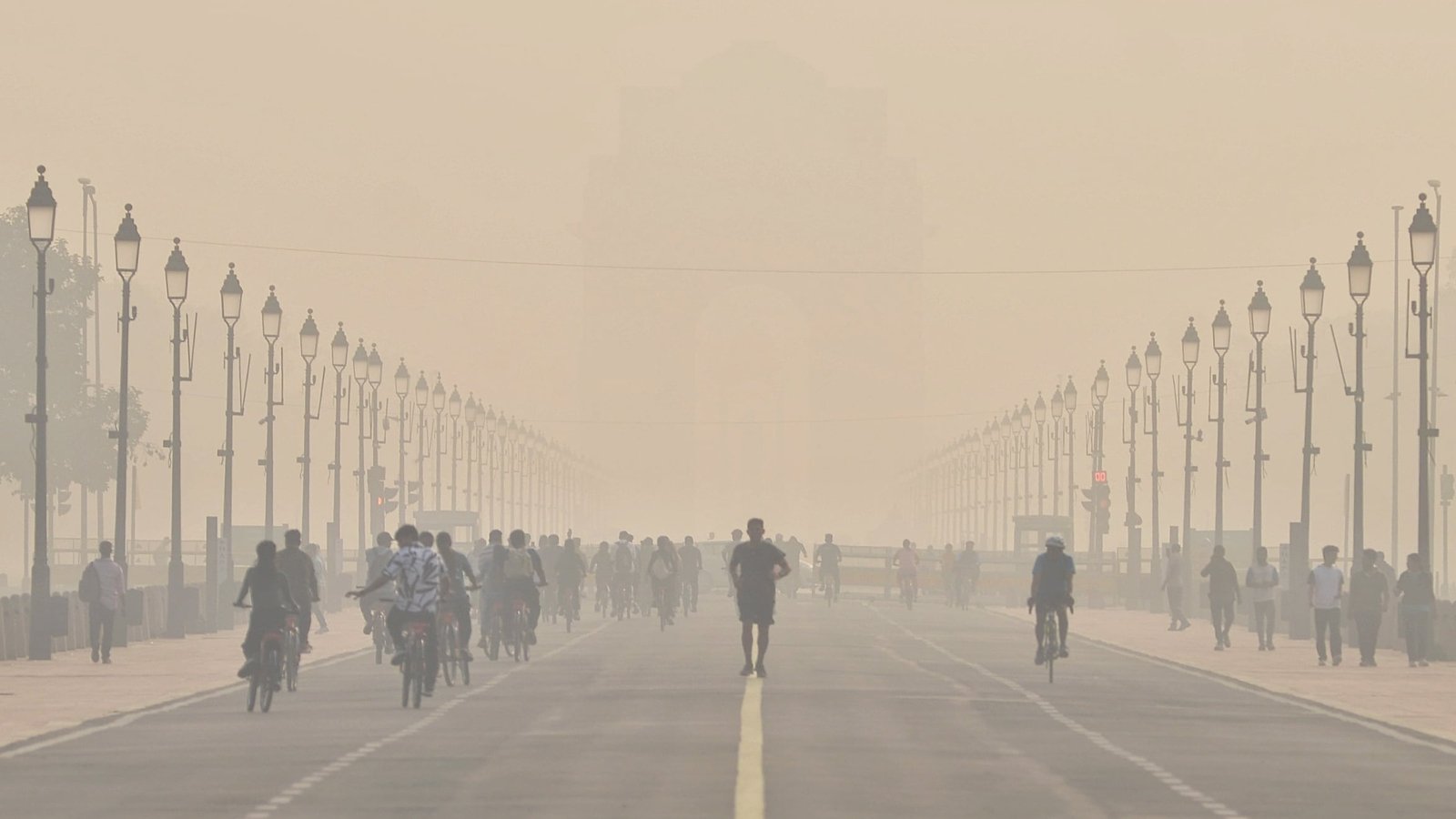
State responses to worsening air quality have come under close scrutiny as Punjab, Rajasthan, and Madhya Pradesh adopt different policy approaches to address rising pollution levels. With winter conditions trapping pollutants, these states face shared challenges but are responding through varied regulatory, administrative, and enforcement strategies.
Air quality deterioration is no longer confined to metropolitan regions. Several Tier 2 and Tier 3 cities across these states are recording poor to very poor air quality, forcing governments to balance economic activity with public health priorities.
Why Air Quality Has Worsened Across These States
Seasonal factors play a central role in the current pollution spike. Falling temperatures, low wind speed, and temperature inversion limit pollutant dispersion across North and Central India. These conditions amplify emissions from vehicles, industries, and biomass burning.
In Punjab, agricultural residue burning remains a major contributor during the post harvest season. Rajasthan faces dust related pollution combined with urban traffic growth. Madhya Pradesh is witnessing rising emissions from industrial clusters and expanding urban transport networks.
These structural differences influence how each state frames its policy response and enforcement focus.
Punjab’s Focus on Crop Residue and Rural Interventions
Punjab’s air quality policy is heavily shaped by stubble burning concerns. The state administration has prioritised residue management by promoting alternatives such as in situ decomposition and mechanical equipment for crop waste handling.
District administrations have been instructed to intensify monitoring in rural belts during peak burning windows. Financial incentives and penalties are used together, encouraging farmers to adopt cleaner practices while discouraging violations.
Punjab has also coordinated with local bodies to restrict construction dust and regulate diesel generator use in urban centres. However, enforcement gaps remain due to scale and dependency on seasonal farming cycles.
Rajasthan’s Urban and Dust Control Strategy
Rajasthan’s air pollution challenge differs due to its geography and climate. Dust storms, dry soil, and rapid urban expansion contribute significantly to particulate matter levels, especially in cities like Jaipur, Jodhpur, and Kota.
The state has focused on construction regulation, mandating dust control measures at building sites. Urban local bodies have increased road sprinkling and mechanical sweeping to limit re suspended dust.
Traffic management measures such as stricter vehicle checks and promotion of public transport have been introduced, but implementation varies by city. Rajasthan’s policy approach leans toward municipal enforcement rather than agriculture led interventions.
Madhya Pradesh and Industrial Emission Management
Madhya Pradesh’s response centres on industrial emissions and transport growth in cities like Indore, Bhopal, and Gwalior. Pollution control boards have stepped up inspections of factories, power plants, and brick kilns.
Temporary restrictions on high emission industrial activities are imposed during peak pollution days. The state has also pushed for cleaner fuel adoption and tighter emission standards for commercial vehicles.
Urban planning measures remain uneven across districts, with better compliance in larger cities and weaker enforcement in smaller towns where monitoring capacity is limited.
Comparing Enforcement Strength and Ground Impact
Across the three states, enforcement remains the key differentiator. Punjab’s policies are comprehensive but heavily dependent on farmer participation and rural compliance. Rajasthan relies on urban local bodies that often lack manpower and technical capacity.
Madhya Pradesh shows relatively stronger industrial oversight but struggles with consistent monitoring in semi urban areas. In all three states, policy intent often outpaces on ground execution, especially during sudden pollution spikes.
Public awareness campaigns exist but are not uniformly targeted at vulnerable groups such as children, elderly residents, and outdoor workers.
Health Advisories and Public Communication
All three states have issued health advisories urging reduced outdoor exposure during high pollution days. Schools and hospitals are advised to monitor air quality levels and adjust activities accordingly.
However, real time communication varies. Cities with better digital infrastructure provide timely alerts, while smaller towns rely on general advisories that may not reflect local conditions accurately.
Experts argue that decentralised monitoring and ward level alerts are essential to make advisories effective beyond major urban centres.
What These Policy Differences Mean Going Forward
The comparison highlights that air pollution requires region specific solutions within a coordinated framework. Punjab cannot rely solely on crop residue management without urban emission control. Rajasthan needs long term dust mitigation planning beyond seasonal measures. Madhya Pradesh must strengthen monitoring in smaller cities to prevent spillover effects.
As winter progresses, inter state coordination will become increasingly important since air pollution does not respect administrative boundaries. Data sharing, joint enforcement drives, and consistent messaging could improve overall outcomes.
The current situation underscores that while policies exist, sustained enforcement and local adaptation will determine their real impact on public health.
Takeaways
- Punjab, Rajasthan, and Madhya Pradesh face worsening air quality due to different regional factors
- Each state has adopted a distinct policy focus based on local pollution sources
- Enforcement gaps remain a common challenge across states
- Better coordination and local monitoring are critical for long term improvement
FAQs
Why is air quality worsening across these states during winter?
Low wind speed and temperature inversion trap pollutants near the ground.
How is Punjab addressing air pollution differently?
Punjab focuses heavily on reducing crop residue burning alongside urban measures.
What is Rajasthan’s main pollution control challenge?
Dust from construction and dry terrain combined with traffic emissions.
Is Madhya Pradesh targeting industries to reduce pollution?
Yes, industrial inspections and emission controls form a key part of its strategy.









Leave a comment