

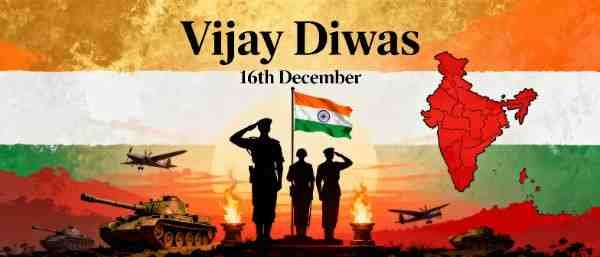
Vijay Diwas 2025 is being observed across Tier 2 and Tier 3 communities with local ceremonies, veteran tributes, and public participation that reflect how India’s Victory Day continues to hold meaning beyond capital cities and military headquarters.
December 16 marks India’s victory in the 1971 war, and while national events are centred in Delhi, smaller cities and towns across the country are marking the day through district level programmes, school events, and community led remembrance activities.
Vijay Diwas 2025 and its relevance beyond metros
Vijay Diwas 2025 is not limited to formal defence ceremonies. In Tier 2 and Tier 3 cities, the observance is deeply rooted in local history, personal memory, and community identity. Many families in these towns have direct links to the armed forces, either through veterans, serving personnel, or paramilitary service.
District administrations have organised wreath laying ceremonies at war memorials, police lines, and collectorate premises. These events often involve serving officers, retired soldiers, local elected representatives, and school students.
Unlike large televised events, these observances are modest but participatory. The focus remains on remembrance rather than spectacle, reinforcing the relevance of the day at a grassroots level.
Role of veterans and ex servicemen associations
Veterans play a central role in Vijay Diwas 2025 observances in smaller cities. Ex servicemen associations across towns in Uttar Pradesh, Rajasthan, Madhya Pradesh, Bihar, and Odisha have organised gatherings where veterans share personal accounts of service and sacrifice.
In many Tier 3 towns, retired soldiers are respected community figures. Their presence at Vijay Diwas events adds authenticity and emotional weight. These gatherings often include felicitation of war widows and families of martyrs.
Local administrations coordinate with these associations to ensure veterans are recognised publicly. For younger residents, especially students, such interactions provide rare direct exposure to living military history.
School and college level participation
Educational institutions are key drivers of Vijay Diwas 2025 awareness in Tier 2 and Tier 3 regions. Schools and colleges have conducted special assemblies, debates, essay competitions, and patriotic programmes to mark the occasion.
Teachers often use the day to explain the significance of the 1971 war in accessible terms, linking it to national unity and strategic resilience. In many government schools, students participate in flag hoisting and cultural programmes focused on patriotism.
Colleges and universities have hosted talks by defence personnel and scholars, particularly in towns with NCC units. These activities ensure that the historical importance of Vijay Diwas is transmitted to younger generations in a structured manner.
Community led events and local symbolism
Beyond official programmes, Vijay Diwas 2025 has seen community led initiatives in smaller towns. Residents’ groups, youth organisations, and social clubs have organised candle marches, patriotic walks, and small exhibitions featuring photographs and newspaper clippings from 1971.
In some towns, local temples, gurudwaras, and community halls host prayer meetings dedicated to fallen soldiers. These acts of remembrance blend national sentiment with local cultural practices.
Markets and public spaces display flags and banners, often arranged by shopkeepers and traders’ associations. While these displays are informal, they reflect widespread public engagement with the day.
Media coverage and regional narratives
Local newspapers and regional media outlets play an important role in shaping how Vijay Diwas 2025 is perceived in Tier 2 and Tier 3 areas. Coverage often focuses on local heroes, veterans from nearby villages, and district level events rather than national leadership.
Regional language media highlights stories of soldiers who returned to their hometowns after service, reinforcing a sense of local pride. This localisation of national history helps residents connect emotionally with broader events.
Radio stations and local cable networks also contribute by airing patriotic programmes and interviews with defence personnel, ensuring outreach even in areas with limited digital penetration.
Administrative approach and civic participation
District administrations treat Vijay Diwas 2025 as both a ceremonial and civic occasion. Flag hoisting, guard of honour ceremonies, and official addresses are conducted with protocol, but the emphasis is on inclusivity.
Officials encourage public attendance rather than restricted invitations. In many towns, the events are scheduled in accessible locations such as district stadiums or open grounds to allow wider participation.
Police, home guards, and civil defence volunteers are often involved, reinforcing the link between civilian administration and national security institutions at the local level.
Changing nature of observance in smaller cities
Compared to earlier decades, Vijay Diwas observance in Tier 2 and Tier 3 cities has evolved. There is greater involvement of youth, increased use of social media for local awareness, and more coordination between institutions.
However, the tone remains restrained and respectful. Unlike festival celebrations, Vijay Diwas is marked with solemnity, reflecting its association with sacrifice and national memory.
This balance between remembrance and civic pride defines how smaller communities engage with the occasion.
Why Vijay Diwas still resonates locally
For many residents of smaller towns, Vijay Diwas represents more than a historical milestone. It symbolises national resilience, personal sacrifice, and the role ordinary citizens play in supporting the armed forces.
The presence of veterans within communities keeps the memory of 1971 alive in a personal way. These connections ensure that the significance of the day does not fade into abstraction.
Vijay Diwas 2025 demonstrates that national observances retain meaning when they are anchored in local participation and lived experience.
Takeaways
- Vijay Diwas 2025 is widely observed across Tier 2 and Tier 3 communities.
- Veterans and ex servicemen play a central role in local ceremonies.
- Schools and colleges drive awareness among younger generations.
- Community led initiatives reinforce grassroots remembrance.
FAQs
What is Vijay Diwas
Vijay Diwas marks India’s victory in the 1971 war and is observed on December 16 each year.
How is Vijay Diwas observed in smaller cities
Through district ceremonies, school programmes, veteran gatherings, and community events.
Who participates in local Vijay Diwas events
Veterans, students, local officials, and residents from surrounding areas take part.
Why is Vijay Diwas important today
It honours military sacrifice and reinforces national unity across generations.












Leave a comment