

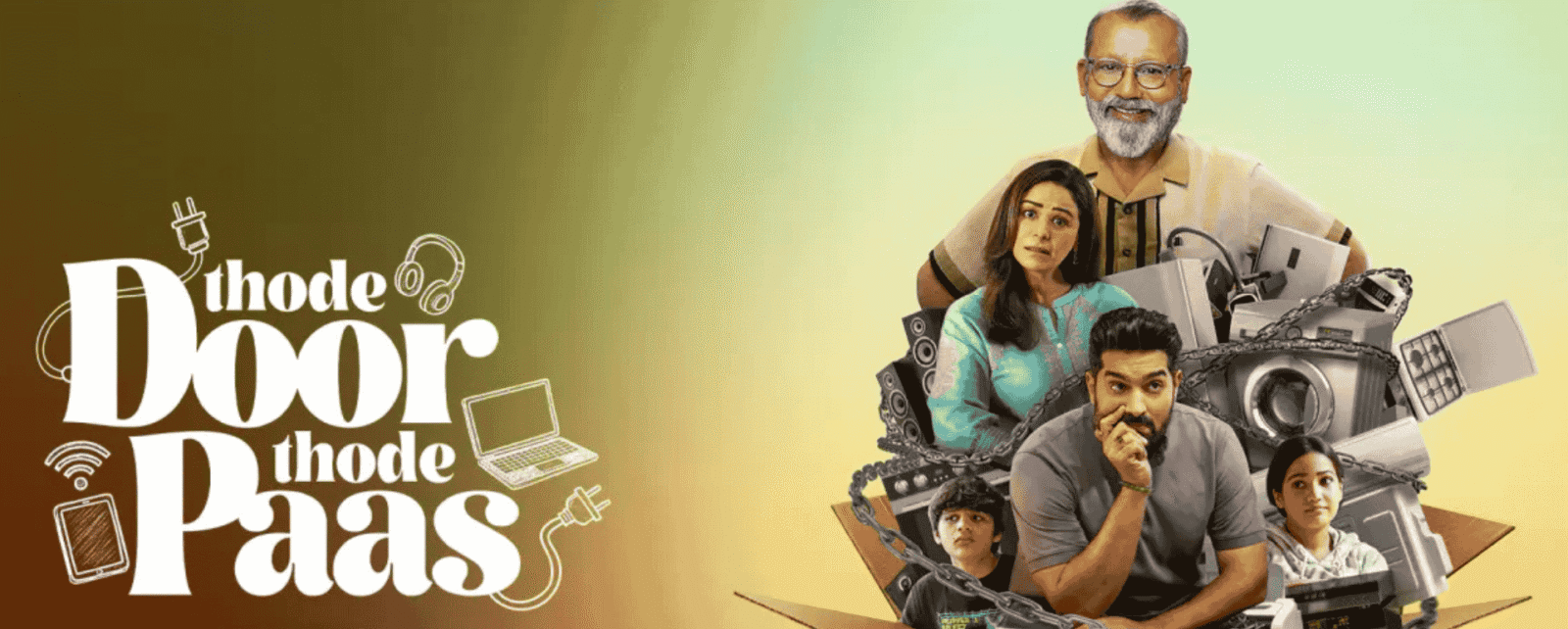
ZEE5’s Thode Door Thode Paas has struck a cultural nerve in India’s streaming ecosystem. Beyond its emotional storytelling, the series has opened an important conversation about digital burnout, family disconnect, and the modern struggle to balance technology with relationships—especially among India’s younger generation.
Intent and Context: A Time-Sensitive Cultural Reflection
This topic is time-sensitive, bridging entertainment and social commentary. Thode Door Thode Paas isn’t just another family drama; it’s a mirror to a generation trapped between constant connectivity and emotional detachment. The series explores what happens when devices take center stage in homes, and personal relationships begin to fade into background noise. In doing so, it speaks directly to India’s digitally saturated youth and urban families looking for a sense of reconnection.
The Story and Its Resonance with India’s Youth
At its core, Thode Door Thode Paas tells the story of a middle-class family struggling with the invisible barriers created by technology. The parents, children, and even grandparents share the same physical space yet live in separate digital worlds. A twist of circumstance forces them into a temporary disconnection from their gadgets—and that moment of pause becomes their turning point. The show’s realism lies in how it captures subtle, everyday behaviors: checking phones mid-conversation, dinner-time silence, or prioritizing online validation over real affection. For India’s youth—who spend an average of 6.8 hours a day on screens, according to a 2025 IAMAI report—the story feels personal and immediate.
Digital Overload and Emotional Disconnect
The series arrives at a time when mental health experts are increasingly warning about the psychological effects of screen addiction. A Deloitte Digital Life study found that 64 percent of Indian Gen Z users feel “digitally fatigued” yet unable to disconnect due to social and academic pressures. Thode Door Thode Paas transforms these statistics into lived moments of silence, frustration, and rediscovery. The show doesn’t preach digital abstinence—it portrays the emotional cost of constant distraction. Its biggest success lies in how it frames the idea of a digital detox not as rejection of technology, but as rediscovery of real connection.
Family Relationships in a Connected World
The family dynamic in Thode Door Thode Paas resonates across generations. Parents in the show are torn between professional obligations and parental guilt. The children reflect a hyper-connected generation that equates attention with affection. The show’s writing acknowledges that both sides are victims of the same digital loop. For many Indian families, particularly in Tier-1 and Tier-2 cities where work-from-home and hybrid education became the norm post-pandemic, this portrayal feels both familiar and cautionary. The show’s quiet brilliance lies in its emotional accuracy—it doesn’t exaggerate conflict, it humanizes it.
Why This Story Works in India’s Streaming Landscape
Indian OTT audiences have matured. After years of thrillers, crime dramas, and glossy romances, there’s growing demand for realistic narratives grounded in human emotion. Thode Door Thode Paas fits that cultural pivot perfectly. Its relatability and social relevance give it cross-generational appeal. Moreover, by centering the theme of digital balance, the series taps into a global wellness trend gaining traction among Indian viewers. Platforms like ZEE5 have recognized that emotionally intelligent storytelling—not spectacle—is what keeps audiences engaged long-term.
The Broader Message: Mindful Living in a Digital Era
The message behind Thode Door Thode Paas isn’t anti-technology—it’s pro-awareness. The show asks simple but profound questions: When was the last time you had an uninterrupted conversation? How often do you laugh without recording it? These questions reflect a broader cultural anxiety about how technology shapes modern relationships. The show’s characters discover that connection doesn’t require withdrawal—it requires intention. It’s a sentiment echoed across India’s youth, who are increasingly turning toward mindfulness, solo travel, and offline experiences as part of their digital detox routines.
How Streaming Platforms Are Reinventing Social Themes
OTT platforms in India are no longer confined to entertainment—they are evolving into platforms for reflection. Series like Thode Door Thode Paas show how streaming can double as social commentary. Other recent projects, such as School of Lies and Gullak, have similarly explored mental health and family issues in the digital age. This alignment of narrative and social relevance gives Indian streaming content a new identity—one that prioritizes cultural reflection alongside viewership.
The Takeaway for India’s Digital Generation
What Thode Door Thode Paas ultimately teaches is that emotional connection requires deliberate effort. Technology isn’t the enemy—it’s a tool that demands discipline. For Gen Z and millennials growing up in an algorithm-driven world, the show’s message is simple but urgent: balance your screens before they balance you. The story’s emotional authenticity, combined with its gentle storytelling, turns a domestic family drama into a mirror for India’s modern lifestyle crisis.
Takeaways:
- Thode Door Thode Paas captures India’s growing anxiety around digital overuse and emotional distance.
- The show promotes digital mindfulness through a relatable family narrative rather than moral preaching.
- OTT platforms like ZEE5 are reshaping entertainment by addressing socially relevant issues.
- The series mirrors India’s post-pandemic need for emotional reconnection and family balance.
FAQs
Q: Why has Thode Door Thode Paas resonated with Indian audiences?
A: It portrays the digital realities of modern Indian families with authenticity, combining entertainment with emotional reflection.
Q: Does the show criticize technology?
A: No. It highlights the importance of mindful technology use and the need for balance in daily life.
Q: How does it differ from other OTT family dramas?
A: Unlike most shows centered on conflict or escapism, Thode Door Thode Paas focuses on subtle emotional healing and everyday realism.
Q: What social message does it deliver to youth?
A: It encourages self-awareness about screen habits and promotes rebuilding offline relationships as a source of emotional grounding.











Leave a comment