

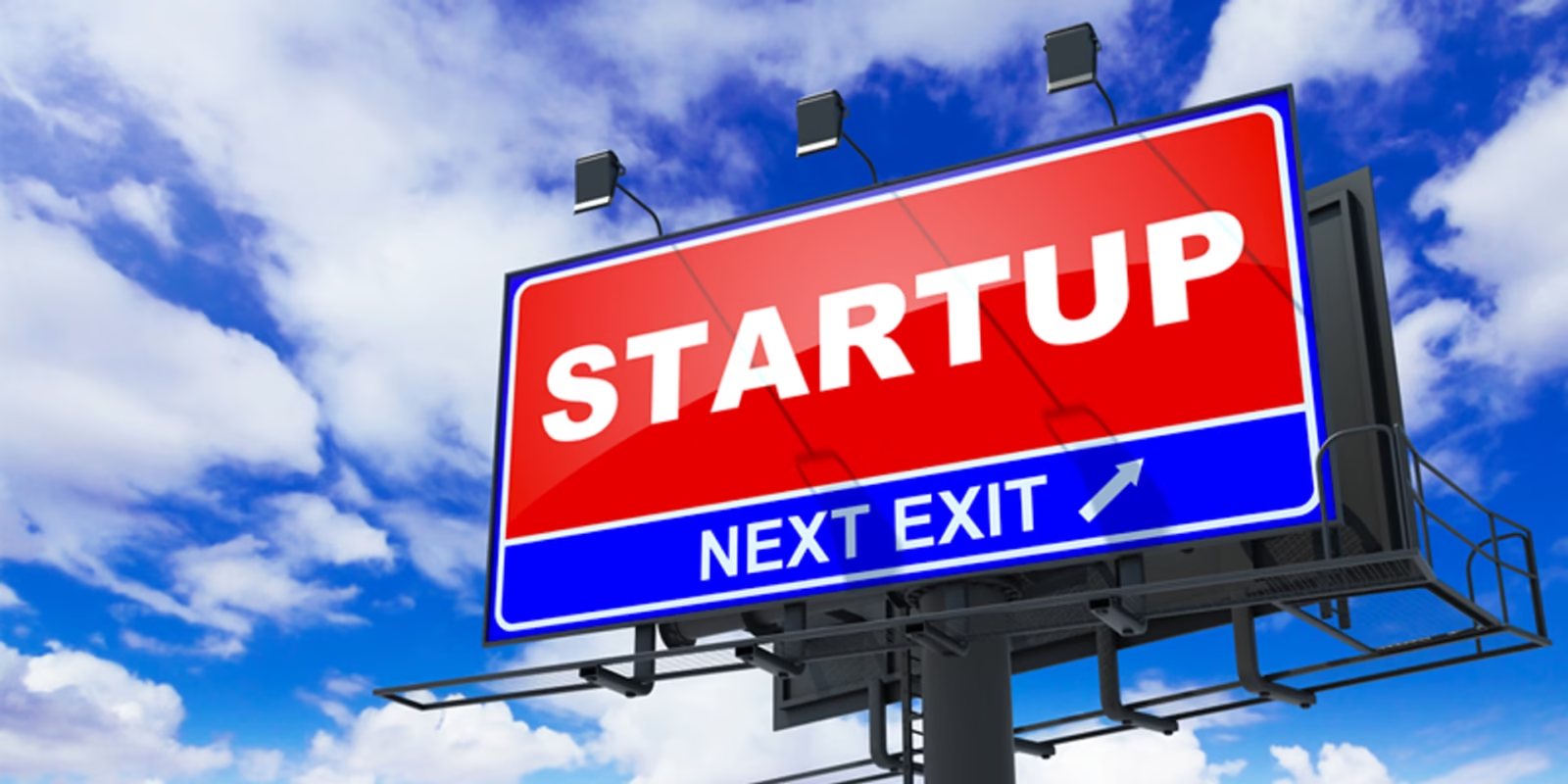
The surge in IPO exits from Indian startups signals a maturing market where founders, early employees and investors finally gain liquidity, while Tier 2 startup hubs see new capital circulation and stronger confidence in local entrepreneurship. The shift marks a turning point for both markets and emerging ecosystems.
Why the new IPO wave is picking up pace
The recent rise in IPO exits comes from improved market sentiment, stronger quarterly results across tech enabled sectors and maturing venture backed businesses that delayed listings during previous market slowdowns. With profitability improving among fintech, SaaS, logistics and consumer internet firms, investor appetite for listed tech assets has widened.
For many startups, reaching the public markets now serves two goals: accessing inexpensive capital for expansion and providing long overdue exits for early shareholders. The move also helps companies position themselves as stable long term players, shedding the growth at any cost tag that defined earlier phases of Indian startup development.
Investor implications: liquidity, caution and long term positioning
For retail and institutional investors, the surge in IPO exits brings opportunity but requires discipline. New age companies offer growth potential, but public markets demand transparency, predictable earnings and governance maturity. The companies now going public are generally more stable than the earlier wave, but investors still need to assess fundamentals such as cash flow improvement, customer acquisition costs and path to profit clarity.
Institutional investors welcome these listings because they diversify exposure beyond traditional manufacturing, banking and FMCG sectors. For retail investors in Tier 2 cities, IPOs create entry points into modern sectors like digital payments, SaaS and logistics that were previously unavailable on exchanges. This broadens the financial participation of smaller cities in India’s new economy.
How Tier 2 startup hubs gain from successful IPO cycles
Successful IPOs send strong signals to emerging hubs like Coimbatore, Jaipur, Indore, Kochi, Bhubaneswar and Chandigarh. When founders with Tier 2 roots or early employees from smaller towns unlock wealth through listings, some of that capital flows back into local angel networks, coworking spaces and new ventures.
Local talent benefits because IPO visibility attracts recruiters seeking employees experienced in scaling startups. This shifts youth perception, making entrepreneurship a viable career path outside metro cities. For Tier 2 accelerators and incubators, IPO exits act as case studies proving that geography is no longer a barrier for companies to reach public markets.
Impact on hiring, talent mobility and skill concentration in smaller cities
With more startups preparing for IPOs, hiring strengthens in technology, finance, compliance and operations. Tier 2 cities, which supply a high volume of engineering and business graduates, benefit from this surge. Companies increasingly recruit directly from universities in Nagpur, Mysuru, Coimbatore and Surat to support scale up operations before listing.
Talent mobility also shifts. Workers from smaller cities prefer joining companies closer to home if they believe those firms have credible paths to going public. This reduces migration pressure on metros and distributes skilled workforces more evenly across regions.
Challenges that accompany the IPO surge
Despite strong momentum, risks remain. Some firms may chase listings before achieving true profitability, leading to inconsistent post listing performance. If companies overpromise or underdeliver, investor confidence can weaken quickly.
Tier 2 startup ecosystems must also guard against overconcentration in a few sectors. Without diverse support structures such as legal advisory, financial auditing expertise and strong mentorship, local founders may struggle to prepare for IPO readiness. Moreover, smaller cities still lack deep capital markets, so founders often depend on metro based advisors to navigate listing requirements.
What the next phase means for India’s startup economy
The next two years will determine the sustainability of the IPO surge. If more companies maintain stable post listing performance, investor trust will solidify, encouraging deeper engagement from Tier 2 retail investors and strengthening secondary markets.
For startups in smaller cities, the IPO wave acts as both confidence and blueprint. It shows that disciplined financial management, product market fit and long term planning can make a company IPO ready regardless of location. As more Tier 2 founders internalise these lessons, India’s innovation geography will decentralise further.
Takeaways
A rise in IPO exits signals a maturing Indian startup sector with stronger fundamentals.
Tier 2 cities benefit through new capital circulation, skilled hiring and higher entrepreneurial confidence.
Investors gain access to new economy sectors but must prioritise fundamentals and governance.
Sustained success depends on post listing stability and ecosystem support beyond metro hubs.
FAQs
Why are more Indian startups choosing IPO exits now
Improved market sentiment, stronger profits and delayed listing pipelines have created favourable conditions for going public.
How does this IPO surge benefit Tier 2 cities
It channels wealth back into local ecosystems, boosts hiring, enhances startup visibility and inspires new founders outside metros.
Are these IPOs good for retail investors
They offer opportunities but require careful evaluation of financials, profitability timelines and governance practices before investing.
What challenges do smaller city startups face in becoming IPO ready
They often lack access to specialised advisors, mature financial processes and deep capital networks needed for listing preparation.








Leave a comment