

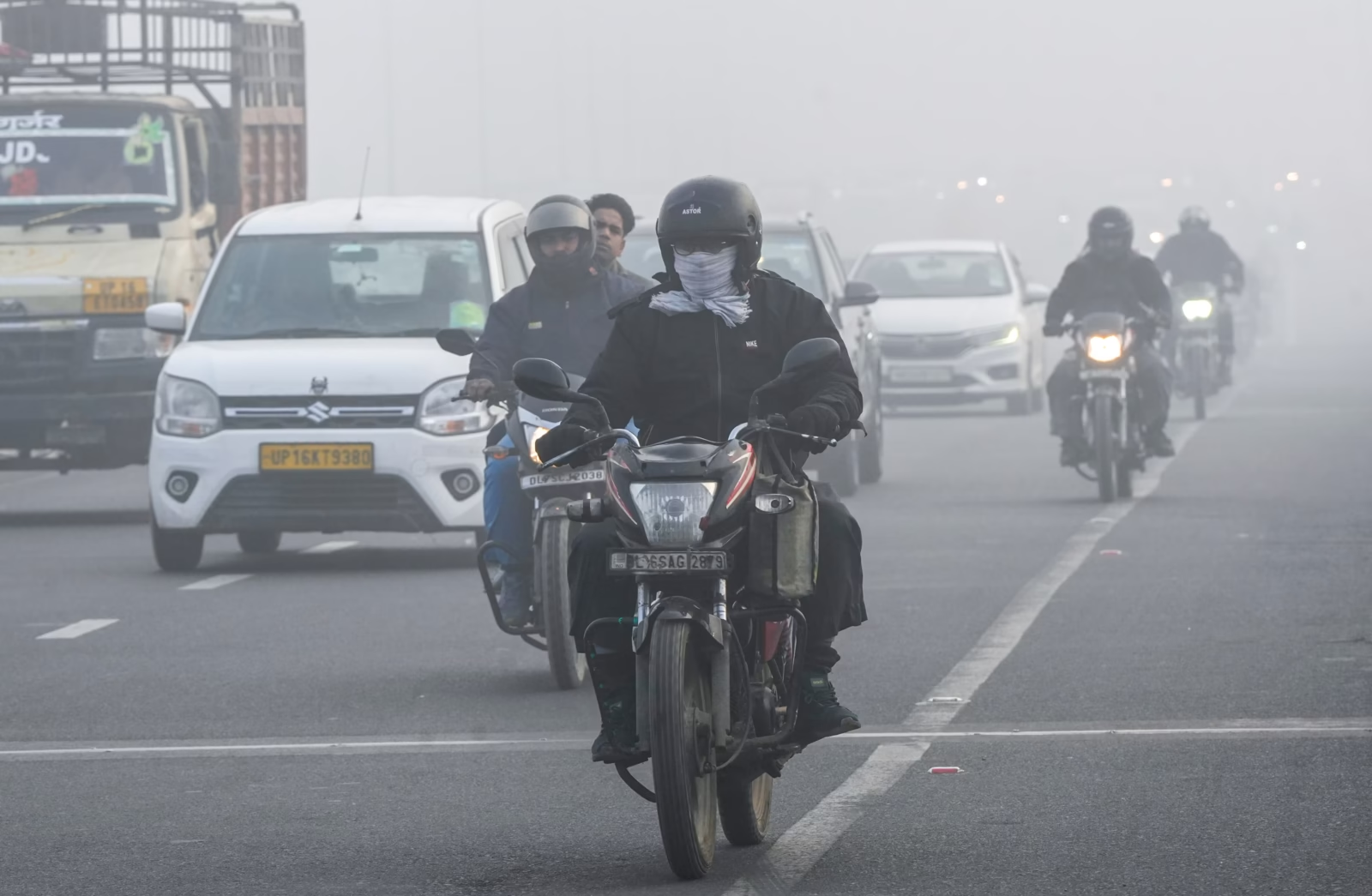
Delhi pollution crisis has intensified with authorities enforcing the No PUC No Fuel rule and tightening traffic curbs, directly affecting daily commuters across the national capital. With air quality remaining in the severe category, restrictions are reshaping how residents travel, refuel, and plan routine movement.
The current measures are time sensitive news driven actions under emergency pollution control protocols, and the tone reflects active enforcement rather than advisory guidance.
Why Delhi pollution levels reached a severe stage
The Delhi pollution crisis worsened due to a combination of unfavourable weather conditions, high vehicular emissions, and local pollution sources. Low wind speeds and temperature inversion have trapped pollutants close to the ground, preventing dispersion. Vehicular emissions remain one of the largest contributors, especially from older vehicles operating without valid pollution certificates. Construction activity, road dust, and biomass burning in surrounding regions have added to particulate matter levels. As air quality index readings consistently crossed severe thresholds, authorities activated stricter response measures to prevent further deterioration.
What No PUC No Fuel rule means for vehicle owners
Under the No PUC No Fuel rule, fuel stations are prohibited from supplying petrol or diesel to vehicles that do not carry a valid Pollution Under Control certificate. This applies to both two wheelers and four wheelers, regardless of vehicle age. Fuel station staff are required to check PUC certificates manually or through digital verification where available. Commuters without updated certificates are being turned away, forcing immediate compliance. The rule aims to remove high emitting vehicles from daily circulation and push owners to complete emissions testing before refuelling.
Traffic curbs and their effect on daily commuters
Traffic restrictions have added another layer of disruption during the Delhi pollution crisis. Entry of certain categories of commercial vehicles has been restricted, and staggered travel advisories have been issued for private vehicles. Peak hour congestion has increased on permitted routes as traffic redistributes. Office goers, delivery drivers, and public transport users are experiencing longer commute times. Ride hailing services have also reported surge pricing due to reduced vehicle availability and increased demand during restricted hours.
Public transport pressure and last mile challenges
With private vehicle use becoming difficult, more commuters are shifting to public transport. Buses and metro services are witnessing higher footfall, especially during morning and evening peaks. While the metro network provides some relief, last mile connectivity remains a challenge in many residential areas. Auto rickshaws and shared mobility options are limited due to fuel checks and traffic curbs. For elderly commuters, students, and those with flexible work timings, adjusting daily routines has become necessary to cope with overcrowding and delays.
Enforcement challenges and compliance gaps
Implementing the No PUC No Fuel rule at scale has exposed enforcement challenges. Not all fuel stations have uniform digital systems, leading to manual checks that slow down refuelling queues. Some commuters report confusion over certificate validity periods and testing centre availability. There are also concerns about uneven enforcement across different zones of the city. Authorities have stated that enforcement teams are monitoring compliance and issuing penalties where violations are detected, while urging citizens to cooperate during the emergency phase.
Health risks driving stricter pollution control measures
The Delhi pollution crisis poses serious health risks, particularly to children, senior citizens, and people with respiratory conditions. Prolonged exposure to high particulate matter levels can aggravate asthma, bronchitis, and cardiovascular issues. Hospitals have reported a rise in patients with breathing difficulties during severe pollution episodes. The No PUC No Fuel rule and traffic curbs are intended as short term interventions to reduce emission load while longer term solutions such as cleaner transport and better urban planning are pursued.
What commuters can do during the pollution emergency
Commuters are being advised to limit non essential travel, ensure their vehicles have valid PUC certificates, and use public transport wherever possible. Employers have been encouraged to allow work from home or flexible hours to reduce peak traffic load. Wearing protective masks outdoors and avoiding prolonged exposure during early morning and late evening hours can help reduce health risks. Staying informed through official advisories is critical as restrictions may change based on air quality trends.
Takeaways
No PUC No Fuel enforcement has made valid emission certificates mandatory for refuelling in Delhi.
Traffic curbs are increasing commute times and pushing more people towards public transport.
Enforcement gaps and manual checks are causing confusion at fuel stations.
Health risks from severe pollution are driving emergency level restrictions.
FAQs
What is the No PUC No Fuel rule in Delhi?
It prevents fuel stations from supplying fuel to vehicles that do not have a valid Pollution Under Control certificate.
Who is most affected by the current traffic curbs?
Daily office commuters, commercial drivers, and ride hailing users are facing longer travel times and higher costs.
Are public transport services fully operational during the pollution crisis?
Yes, buses and metro services are operating, but they are experiencing higher crowding during peak hours.
How long will these restrictions remain in place?
The measures will continue as long as air quality remains in the severe category and may be relaxed if pollution levels improve.










Leave a comment