

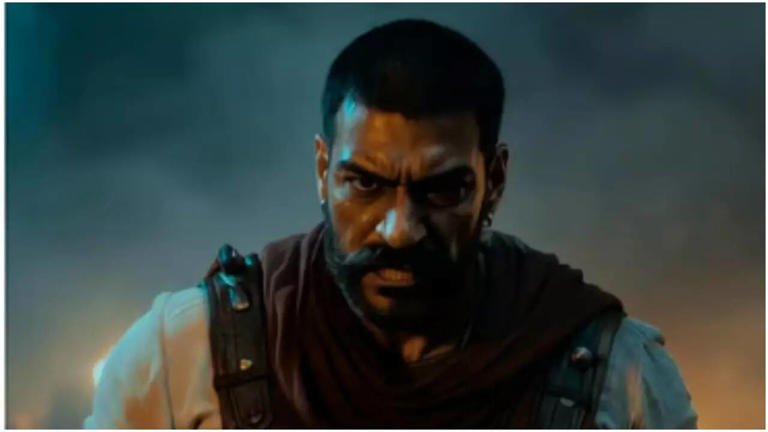
Ajay Devgn’s AI powered historical film Bal Tanhaji has drawn attention after its first look reveal, signalling a new phase in Bollywood’s use of technology for storytelling rooted in tradition. The project blends artificial intelligence with historical cinema, aiming to enhance scale, realism, and visual precision.
Why Bal Tanhaji Is Being Watched Closely
Bal Tanhaji is not just another historical film announcement. It carries significance because it follows the success of period cinema that combines emotion, spectacle, and national history. Ajay Devgn’s association with historical narratives has already built audience trust, and the AI powered angle adds a contemporary layer to that credibility.
The first look suggests a focus on visual authenticity, scale reconstruction, and controlled stylisation. AI tools are reportedly being used to assist with environment creation, crowd simulation, and period detailing rather than replacing core filmmaking roles. This distinction matters, as it positions AI as a support system, not a creative shortcut.
For the industry, Bal Tanhaji becomes a test case of how advanced technology can serve historical storytelling without diluting cultural context.
Understanding the Role of AI in Historical Filmmaking
Artificial intelligence in cinema is primarily used for data driven visual enhancement. In historical films, AI can analyse references, paintings, and architectural patterns to help recreate lost or damaged structures. It can also assist in crowd replication, battle formations, and continuity management.
In Bal Tanhaji, AI reportedly supports visual world building rather than narrative decisions. This means scriptwriting, performances, and direction remain human led, while AI improves efficiency and consistency. Such use reduces dependence on excessive green screens and manual visual effects corrections.
This approach aligns with global trends where AI complements traditional filmmaking workflows instead of replacing them.
Bal Tanhaji and the Tradition of Maratha Historical Cinema
Historical films based on Maratha warriors hold cultural significance in Indian cinema. Audiences expect dignity, accuracy, and emotional depth. Any technological intervention is closely scrutinised for authenticity.
Bal Tanhaji appears to acknowledge this responsibility by positioning AI as a background tool. Costumes, character arcs, and dialogue remain grounded in traditional research. Technology supports the frame but does not define the soul of the story.
This balance is essential. Over reliance on digital effects can distance viewers, while thoughtful integration can enhance immersion.
Industry Implications of AI Adoption in Bollywood
The use of AI in Bal Tanhaji reflects a broader shift in Bollywood’s production mindset. Rising budgets, tighter schedules, and global competition are pushing studios to adopt smarter tools.
AI assisted pre visualisation can reduce reshoots. Automated environment mapping saves time during post production. These efficiencies help control costs without sacrificing scale.
For technicians and artists, this also means reskilling rather than redundancy. AI requires trained operators, data supervisors, and integration specialists. The film industry’s workforce is slowly adapting to this hybrid model.
Audience Expectations and Perception Risks
Audience response to AI usage in films remains mixed. While viewers appreciate high quality visuals, they are sensitive to anything that feels artificial or over processed.
Bal Tanhaji’s early visuals suggest restraint. The colour palette, textures, and framing appear aligned with traditional historical cinema rather than futuristic aesthetics. This reduces the risk of alienating core audiences.
Transparency also plays a role. When filmmakers clearly communicate that AI enhances craft rather than replaces it, resistance tends to soften.
What This Film Signals for Future Historical Projects
If Bal Tanhaji succeeds both critically and commercially, it could set a precedent for future historical films. Smaller studios may adopt selective AI tools for set extension and crowd scenes, while big productions may invest deeper into AI driven pipelines.
This shift could also improve regional historical cinema, where budget constraints often limit scale. AI assisted workflows may allow authentic stories to be told with greater visual depth.
However, success depends on disciplined usage. AI must remain invisible to the viewer and subordinate to storytelling.
The Balance Between Innovation and Cultural Responsibility
Historical films carry the weight of collective memory. Any innovation must respect that responsibility. Bal Tanhaji’s positioning suggests awareness of this balance.
By using AI to serve historical accuracy and cinematic immersion, the film attempts to bridge tradition with modern production needs. This is where technology finds its most meaningful role.
The first look does not promise spectacle alone. It signals intent to evolve filmmaking without erasing its roots.
Takeaways
- Bal Tanhaji introduces AI as a supporting tool in historical cinema.
- The film aims to enhance realism without compromising cultural authenticity.
- AI usage reflects a broader shift in Bollywood production practices.
- Audience acceptance depends on restraint and transparency.
FAQs
What makes Bal Tanhaji different from other historical films?
It integrates AI tools to enhance visual authenticity while keeping storytelling traditional.
Does AI replace actors or directors in the film?
No. AI supports visual processes and does not replace creative decision making.
Why is AI being used in historical cinema?
It helps recreate environments, manage scale, and improve efficiency without excessive manual work.
Will AI change how Bollywood makes period films?
If used responsibly, it can improve quality and reduce production challenges.










Leave a comment