

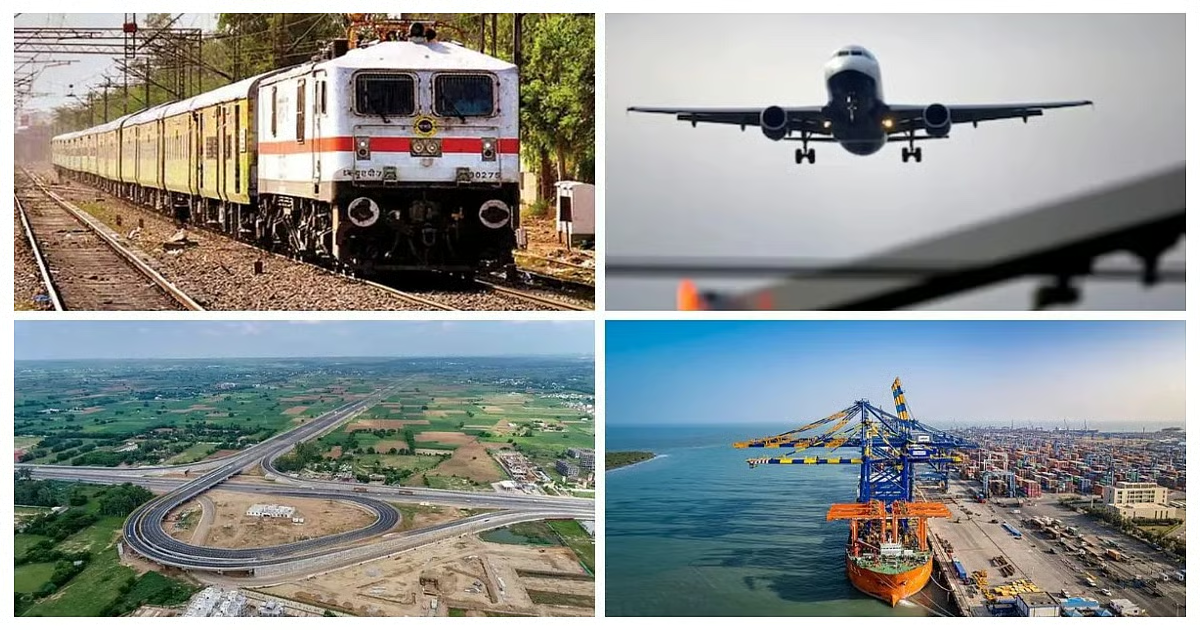
Short Summary: New transport infrastructure projects across smaller Indian cities are reshaping regional economies by improving connectivity, investment flow, and employment opportunities. As highways, rail networks, and urban mobility systems expand, Tier two and Tier three regions are witnessing structural economic changes.
Infrastructure push in smaller cities has become a defining feature of India’s development strategy, with transport projects playing a central role in reshaping regional economies. Investments in highways, railway corridors, metro systems, and logistics networks are gradually reducing the gap between metropolitan and non metropolitan growth centres. These developments are influencing trade patterns, urban expansion, and workforce mobility.
Improved Connectivity Driving Regional Economic Integration
Transport infrastructure expansion has strengthened connectivity between smaller cities and major industrial hubs. New expressways and upgraded rail routes are reducing travel time and transportation costs. For businesses, this means easier access to supply chains and markets, encouraging decentralised industrial growth.
Regional economic integration is particularly visible in states where logistics corridors have improved freight movement. Agricultural producers in smaller cities can transport perishable goods more efficiently, leading to better price realisation. Enhanced connectivity also supports tourism, retail expansion, and service sector growth.
Urban Mobility Projects And Changing City Landscapes
Urban transport initiatives such as metro rail, bus rapid transit systems, and smart mobility solutions are altering the physical and economic landscape of Tier two cities. Improved public transport reduces congestion and supports planned urbanisation. Cities that invest in modern mobility infrastructure often attract real estate development and commercial activity.
For residents, reliable transport systems improve access to education, healthcare, and employment opportunities. As daily commuting becomes more efficient, workforce participation can increase. These changes contribute to broader socio economic transformation in regional urban centres.
Logistics Infrastructure And Industrial Development
The growth of logistics parks, freight corridors, and multimodal transport hubs is creating new industrial ecosystems in smaller cities. Manufacturing units are increasingly locating operations outside major metros due to lower land costs and improved transport networks. This shift is contributing to balanced regional development.
Industrial clusters linked to transport infrastructure can generate employment across skill levels. Ancillary industries, warehousing services, and small enterprises benefit from increased economic activity. Over time, such developments can reduce migration pressure on metropolitan areas.
Impact On Real Estate And Investment Patterns
Transport infrastructure projects often influence real estate demand and investment flows. Improved connectivity makes smaller cities more attractive for residential and commercial projects. Property markets in several regional centres have seen rising interest from developers and institutional investors.
Infrastructure driven growth can also enhance municipal revenue through higher economic activity. However, urban planners emphasise the importance of sustainable development to prevent unplanned expansion. Strategic land use planning and environmental safeguards remain critical considerations.
Challenges In Execution And Policy Coordination
Despite progress, infrastructure projects in smaller cities face challenges related to funding, land acquisition, and inter agency coordination. Delays in project completion can affect economic outcomes and investor confidence. Transparent governance and efficient implementation mechanisms are essential to maximise benefits.
Public private partnerships have emerged as a key financing model for transport infrastructure. Policy reforms aimed at improving ease of doing business are also encouraging private sector participation. Long term success depends on aligning infrastructure development with local economic priorities.
Social And Environmental Considerations In Infrastructure Growth
Large scale transport projects can have social and environmental implications. Displacement, ecological impact, and resource use require careful management. Inclusive planning processes that involve local communities can help address potential concerns.
Sustainable transport solutions such as electric mobility and green logistics are gaining attention. Integrating environmental considerations into infrastructure planning ensures that economic growth does not come at the cost of ecological balance. This approach supports long term resilience in regional economies.
Takeaways
• Transport infrastructure expansion is strengthening regional economic integration
• Improved urban mobility is transforming employment and investment patterns
• Logistics networks are driving industrial growth in smaller cities
• Effective policy coordination is crucial for sustainable infrastructure outcomes
FAQ
Why is transport infrastructure important for smaller cities
It improves connectivity, attracts investment, and supports economic diversification beyond traditional sectors.
How do transport projects influence real estate markets
Better connectivity increases demand for housing and commercial spaces, encouraging planned urban expansion.
What challenges affect infrastructure development in regional areas
Funding constraints, land acquisition issues, and coordination delays can slow project execution.
Can infrastructure growth be environmentally sustainable
Yes, integrating green transport technologies and responsible planning can balance development with ecological concerns.











Leave a comment