

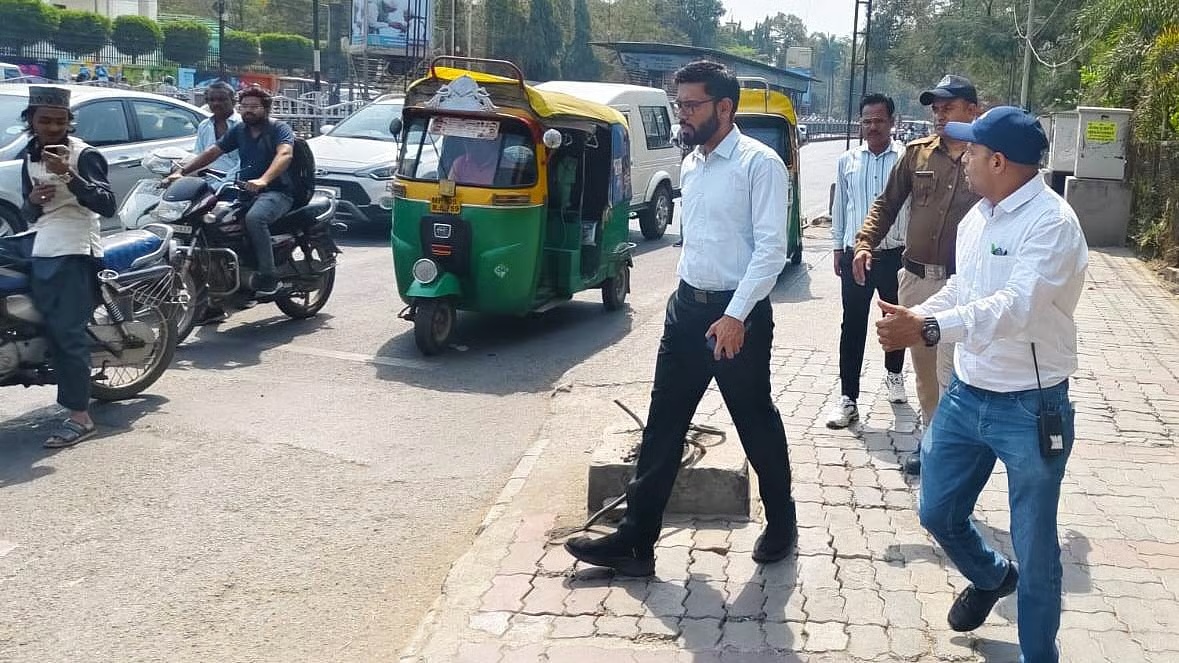
Indore smart traffic system has gone viral after a recent AI-powered signal control demonstration showed how congestion can be reduced in real time. The development has sparked national attention, positioning Indore as a leading Tier-2 city adopting intelligent traffic solutions.
AI Traffic Control in Indore Draws Public Attention
The Indore smart traffic system gained traction online after visuals of its AI-based signal control mechanism circulated widely on social media. The demonstration showcased how traffic lights automatically adjusted based on vehicle density at major intersections.
This initiative is part of Indore’s broader smart city infrastructure upgrades under the Indore Smart City Development Limited. The system uses cameras and sensors to monitor traffic flow and dynamically change signal timings, reducing unnecessary waiting periods.
Unlike traditional fixed timers, AI-driven signals respond instantly to real conditions. For example, a lane with higher congestion gets longer green time, while empty lanes are skipped quickly. This real-time optimization is what triggered the viral response, with many users comparing it to systems used in global cities.
How the AI-Based Traffic Management System Works
The AI traffic system in Indore relies on video analytics and machine learning models to process live traffic data. Cameras installed at intersections capture continuous footage, which is analyzed to estimate vehicle count and movement patterns.
Based on this data, the system recalibrates signal cycles every few seconds. This ensures smoother flow, especially during peak hours. The goal is to minimize idle time at signals and reduce overall travel duration across the city.
Officials have indicated that the system is currently active at select high-traffic junctions. Early observations suggest improved vehicle movement and reduced congestion during busy hours.
Such systems are already being tested in metro cities, but Indore’s implementation stands out because of its scale within a Tier-2 city environment.
Impact on Traffic Congestion and Urban Mobility
Indore has consistently ranked high in cleanliness and urban management, and this move adds another layer to its smart governance model. Traffic congestion has been a growing concern due to rising vehicle numbers and urban expansion.
The AI signal system is expected to address bottlenecks at key intersections. Reduced waiting time can also lead to lower fuel consumption and decreased vehicular emissions, contributing to better air quality.
Commuters have responded positively to initial trials, especially in areas where signal delays were previously a daily issue. However, full impact assessment will depend on long-term data and wider deployment.
Urban mobility experts note that such systems work best when combined with disciplined driving behavior and proper lane management.
Why Tier-2 Cities Are Adopting Smart Traffic Solutions
The viral response to Indore’s system highlights a larger trend where Tier-2 cities are rapidly adopting smart infrastructure. With increasing urbanization, cities like Indore, Nagpur, and Surat are facing challenges similar to metro areas but with fewer legacy constraints.
This allows them to implement modern solutions more quickly. AI-based traffic management is part of a broader shift towards data-driven governance, where decisions are based on real-time inputs rather than static planning.
Government-backed smart city projects have accelerated this transition by funding digital infrastructure and pilot programs. Indore’s success could encourage other cities to adopt similar systems.
Challenges and What Comes Next for Indore
Despite the positive response, there are challenges to scaling AI traffic systems. These include maintenance of hardware, data accuracy, and integration with existing infrastructure.
Weather conditions, camera blind spots, and unpredictable road behavior can also affect system efficiency. Authorities will need to continuously refine algorithms and ensure proper monitoring.
The next phase for Indore will likely involve expanding the system to more intersections and integrating it with emergency response services. For instance, prioritizing ambulance movement through signal overrides could be a key upgrade.
If executed effectively, Indore could set a benchmark for mid-sized Indian cities looking to modernize traffic management without massive infrastructure overhauls.
Takeaways
• Indore’s AI-based traffic signal system went viral after a real-time demo showed reduced congestion
• The system uses cameras and machine learning to adjust signal timings dynamically
• Early results indicate improved traffic flow and reduced waiting time at key junctions
• Indore’s model may influence other Tier-2 cities to adopt similar smart solutions
FAQs
Q1. What is the Indore smart traffic system?
It is an AI-powered traffic management system that adjusts signal timings based on real-time vehicle density.
Q2. Why did the system go viral?
A demonstration video showing smooth traffic flow and intelligent signal changes gained widespread attention on social media.
Q3. How does AI help in traffic control?
AI analyzes live camera data to estimate congestion and dynamically modifies signal cycles to improve movement.
Q4. Is the system fully implemented across Indore?
Currently, it is active at selected intersections, with plans for gradual expansion.










Leave a comment