

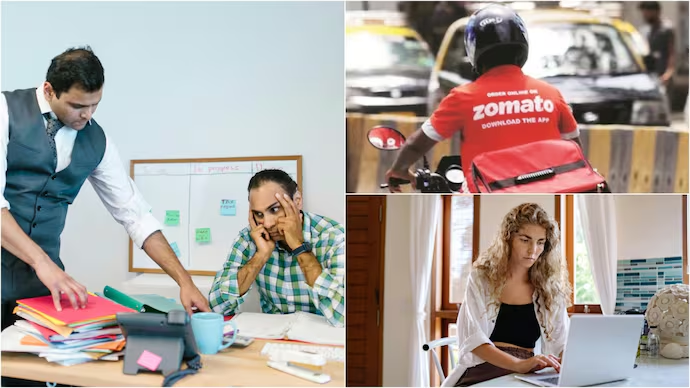
Side hustle culture in Tier-2 India is rapidly expanding as more young professionals shift from traditional jobs to freelance and independent work. Driven by digital access, income flexibility, and changing career priorities, this trend is reshaping how youth approach work and financial growth.
Why Side Hustle Culture Is Growing in Tier-2 India
Side hustle culture in Tier-2 India is no longer a niche trend. It is becoming a mainstream career strategy among Gen Z and millennials. Cities like Nagpur, Indore, Surat, and Lucknow are witnessing a surge in freelance designers, content creators, digital marketers, and online sellers.
The primary driver is access to affordable internet and platforms such as Upwork, Fiverr, and Instagram, which allow individuals to find clients without relocating to metro cities.
Another key factor is the rising cost of living combined with stagnant entry-level salaries. Many young professionals find that a single job is not sufficient to meet financial goals, pushing them towards additional income streams.
Unlike earlier generations, today’s youth are more open to experimenting with non-traditional careers, even if it involves uncertainty.
Freelance vs Full-Time Jobs: Changing Career Preferences
The shift from full-time employment to freelancing is driven by a change in priorities. Flexibility, control over time, and the ability to scale income are major advantages of freelance work.
In traditional jobs, especially in Tier-2 cities, salary growth can be slow and role flexibility limited. Freelancing, on the other hand, offers the possibility of earning based on skills rather than fixed pay structures.
For example, a graphic designer working a full-time job in a city like Jaipur might earn a fixed monthly salary. By taking freelance projects, the same individual can double income by working with multiple clients.
However, freelancing also comes with risks such as income instability, lack of job security, and absence of employee benefits. This is why many professionals initially treat side hustles as supplementary income before transitioning fully.
Role of Digital Platforms and Remote Work Opportunities
Digital platforms have made it easier for individuals in smaller cities to access global opportunities. Remote work has eliminated the need to move to metros for better-paying jobs.
Platforms like YouTube and LinkedIn are also enabling individuals to build personal brands and attract clients directly.
Content creation has emerged as a major side hustle category. From educational videos to local business promotions, creators are monetizing content through ads, sponsorships, and affiliate marketing.
E-commerce and reselling are also gaining traction. Many young entrepreneurs in Tier-2 cities are using platforms to sell products online without maintaining physical stores.
This digital ecosystem has reduced entry barriers, allowing more people to participate in the gig economy.
Financial Motivation and Lifestyle Shifts Among Youth
Financial independence is a strong motivator behind the rise of side hustles. Many young individuals aim to achieve early financial stability, save more, and reduce dependence on a single income source.
Lifestyle aspirations have also changed. Travel, gadgets, and personal experiences are priorities for many, requiring additional income beyond standard salaries.
Side hustles provide a way to fund these aspirations without waiting for long-term career progression.
There is also a psychological aspect. Freelancing offers a sense of ownership and creative control that traditional jobs may lack. This aligns with the mindset of younger generations who value autonomy over hierarchy.
In Tier-2 cities, where opportunities were once limited, this shift is particularly significant.
Challenges and Risks in the Side Hustle Economy
Despite its advantages, side hustle culture comes with challenges. Income inconsistency is one of the biggest concerns. Freelancers may experience fluctuating earnings depending on client demand.
Time management is another issue. Balancing a full-time job with a side hustle can lead to burnout if not managed properly.
There is also intense competition. As more people enter the freelance space, pricing pressure increases, especially for beginners.
Additionally, lack of formal contracts and delayed payments can create financial uncertainty. Unlike salaried jobs, freelancers must handle their own taxes, savings, and insurance.
These risks highlight the need for a structured approach rather than impulsive entry into freelancing.
What This Trend Means for the Future of Work in India
The growth of side hustle culture in Tier-2 India signals a broader shift in the country’s employment landscape. The traditional model of one stable job is gradually being replaced by multiple income streams.
Companies are also adapting by hiring freelancers and contract workers instead of full-time employees for certain roles. This creates more opportunities but also changes job security dynamics.
Educational institutions and skill platforms are increasingly focusing on practical, job-ready skills rather than theoretical learning.
For policymakers, this trend raises questions about social security, taxation, and labor laws in a gig-driven economy.
Overall, the rise of freelancing in smaller cities reflects a more flexible and decentralized future of work.
Takeaways
- Side hustle culture in Tier-2 India is driven by digital access and income needs
- Freelancing offers flexibility and higher earning potential but comes with risks
- Digital platforms and remote work are enabling global opportunities from smaller cities
- The trend signals a long-term shift towards a gig-based work economy
FAQs
1. Why are more youth in Tier-2 cities choosing freelancing?
Due to flexibility, higher earning potential, and access to online platforms that provide global opportunities.
2. Is freelancing more profitable than a full-time job?
It can be, depending on skills and client base, but income is not always stable.
3. What are common side hustles in Tier-2 India?
Content creation, graphic design, digital marketing, online selling, and freelance writing.
4. What are the risks of side hustles?
Income instability, lack of benefits, competition, and time management challenges.









Leave a comment