

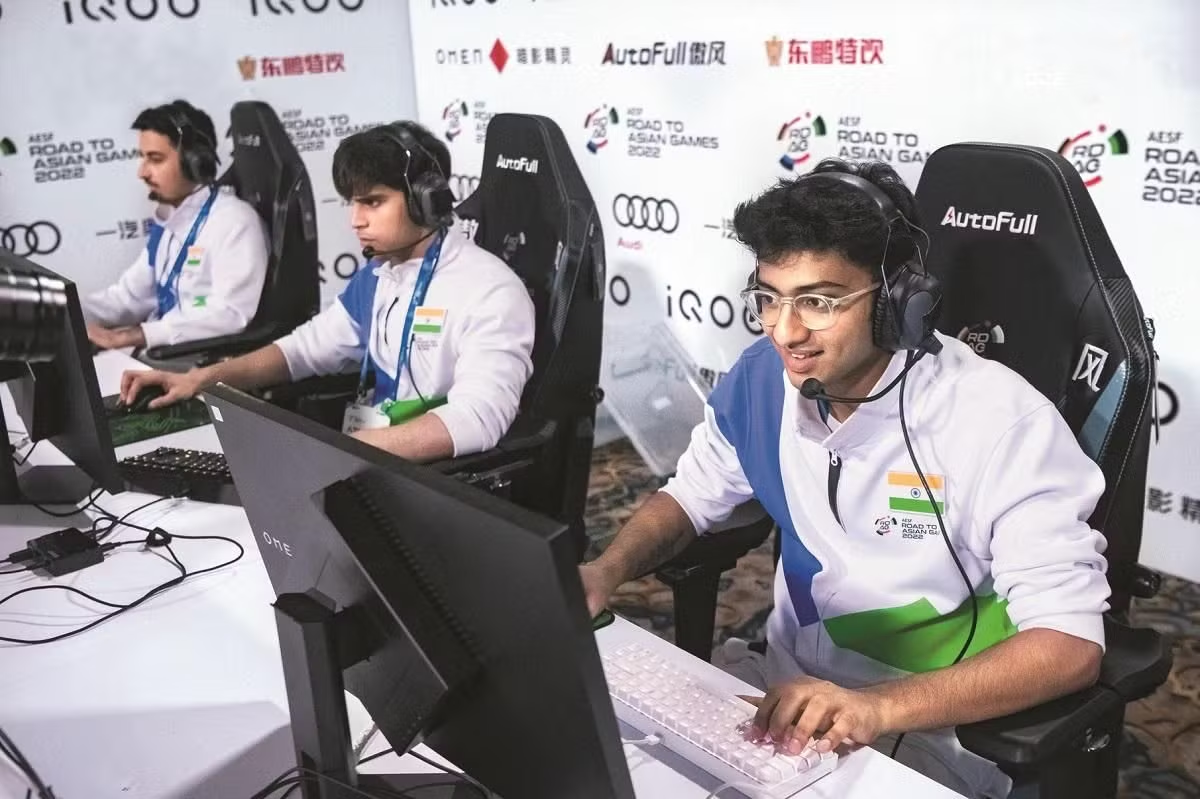
Competitive gaming is gradually gaining recognition as a legitimate career option in India. Rising prize pools, professional teams, sponsorship opportunities, and growing industry awareness are encouraging more families to view esports as a serious profession rather than just a recreational activity.
Esports as a career path is becoming an increasingly relevant topic in India as competitive gaming transforms from a niche hobby into a rapidly growing industry. For years, gaming was often viewed by parents as a distraction from education and traditional career goals. Today, that perception is slowly changing. Professional gamers, esports athletes, streamers, coaches, analysts, and content creators are building successful careers, prompting many Indian families to reconsider their views on competitive gaming.
The shift is being driven by industry growth, higher earnings potential, international recognition, and increasing exposure to esports through digital platforms. While concerns around balance and career stability remain, esports is steadily gaining acceptance among a new generation of Indian households.
The Rapid Growth of India’s Esports Industry
India’s esports industry has expanded significantly over the past decade due to increasing smartphone penetration, affordable internet access, and growing interest in online multiplayer games. Competitive gaming tournaments now attract millions of viewers across streaming platforms and social media channels.
Professional esports organizations have established structured teams, coaching systems, training schedules, and talent development programs. Major tournaments offer substantial prize pools and sponsorship opportunities, creating financial incentives for talented players.
The industry’s growth has also attracted investment from technology companies, gaming publishers, and brands looking to connect with younger audiences. As esports becomes more organized and professional, families are beginning to recognize that competitive gaming operates similarly to traditional sports in many respects.
This increased visibility has played a key role in changing public perception and building trust among parents.
Professional Opportunities Extend Beyond Playing Games
One reason esports is gaining family acceptance is the growing range of career opportunities associated with the industry. Success in esports is no longer limited to becoming a professional player.
The ecosystem includes team managers, coaches, commentators, analysts, tournament organizers, broadcasters, event managers, content creators, graphic designers, marketers, and social media professionals. Many individuals work in esports without competing professionally.
This broader career landscape provides reassurance to families concerned about the limited lifespan of professional gaming careers. Skills developed within the esports ecosystem often overlap with technology, media, marketing, event management, and digital content industries.
As a result, esports is increasingly viewed as part of the larger digital economy rather than a standalone gaming activity.
Increased Awareness Is Changing Family Perceptions
Parental attitudes toward esports have evolved as more information about the industry becomes available. Earlier generations often associated gaming solely with entertainment and leisure. Today, news coverage, industry reports, and success stories have helped explain the professional structure behind competitive gaming.
Several Indian gamers and esports professionals have built significant online followings and established successful careers through tournaments, streaming, and content creation. These examples have demonstrated that gaming can generate income when approached professionally.
Families are also becoming more familiar with concepts such as sponsorships, brand partnerships, broadcasting rights, and professional team contracts. As understanding improves, skepticism tends to decrease.
Many parents who once opposed gaming are now encouraging balanced participation when they see clear goals, discipline, and skill development involved.
Skill Development and Digital Competencies Matter
Competitive gaming requires more than entertainment value. Professional esports athletes often spend years developing skills related to teamwork, communication, strategic thinking, decision-making, adaptability, and mental focus.
High-level competition demands discipline, consistent practice, performance analysis, and time management. These qualities are increasingly recognized by educators and employers as valuable transferable skills.
The esports ecosystem also exposes participants to technology platforms, digital tools, online communities, and content production processes. For young people interested in digital careers, this experience can provide useful practical knowledge.
Families are beginning to understand that participation in esports can contribute to broader skill development when balanced with education and personal growth.
Challenges Still Remain for Aspiring Esports Professionals
Despite growing acceptance, esports continues to face challenges. Career longevity remains uncertain for many players, and competition is extremely intense. Only a small percentage of gamers reach professional levels capable of generating substantial earnings.
Parents often express concerns regarding screen time, academic performance, health, and financial stability. These concerns remain valid and highlight the importance of maintaining realistic expectations.
Industry experts generally recommend treating esports similarly to other competitive fields. Success requires talent, discipline, training, and backup career planning. Education continues to play an important role even for aspiring esports professionals.
The most successful individuals often combine gaming expertise with skills in communication, content creation, business, or technology to create sustainable long-term careers.
The Future of Esports Careers in India
The future of esports in India appears increasingly promising as technology adoption continues to expand. Growing audiences, improved infrastructure, corporate investment, and professional tournament ecosystems are creating more opportunities across the sector.
Government recognition of esports as a distinct category separate from traditional gaming has also contributed to increased legitimacy. Industry stakeholders continue to advocate for skill development programs, grassroots competitions, and professional standards.
As awareness grows, more Indian families are likely to view esports as a viable career option when pursued responsibly and strategically. While it may not replace conventional professions for most people, it is becoming a realistic pathway for talented individuals willing to invest time and effort into the field.
The conversation within Indian households is changing. Competitive gaming is no longer seen solely as a pastime. For a growing number of young people, it represents a legitimate career opportunity in the digital age.
Key Takeaways
- Esports is gaining acceptance among Indian families due to industry growth and professional opportunities.
- Career options extend beyond players to include coaching, content creation, event management, and broadcasting.
- Competitive gaming develops skills such as teamwork, strategic thinking, and communication.
- Education, discipline, and realistic career planning remain essential for long-term success.
FAQ
Is esports considered a legitimate career in India?
Yes. The industry has become increasingly professional, offering opportunities in competition, content creation, management, broadcasting, and related fields.
Why are Indian families becoming more supportive of esports?
Growing awareness, professional success stories, sponsorship opportunities, and industry expansion have improved public perception.
Can someone earn a living through esports?
Some professionals earn income through tournaments, streaming, sponsorships, content creation, and esports-related jobs, although competition remains intense.
What skills are important for esports careers?
Teamwork, communication, strategic thinking, discipline, adaptability, and digital literacy are among the key skills required.
(esports career India, competitive gaming India, esports industry growth, gaming careers India, professional gamers India, esports opportunities, digital careers India, gaming industry trends, esports ecosystem India, future of esports)












Leave a comment