

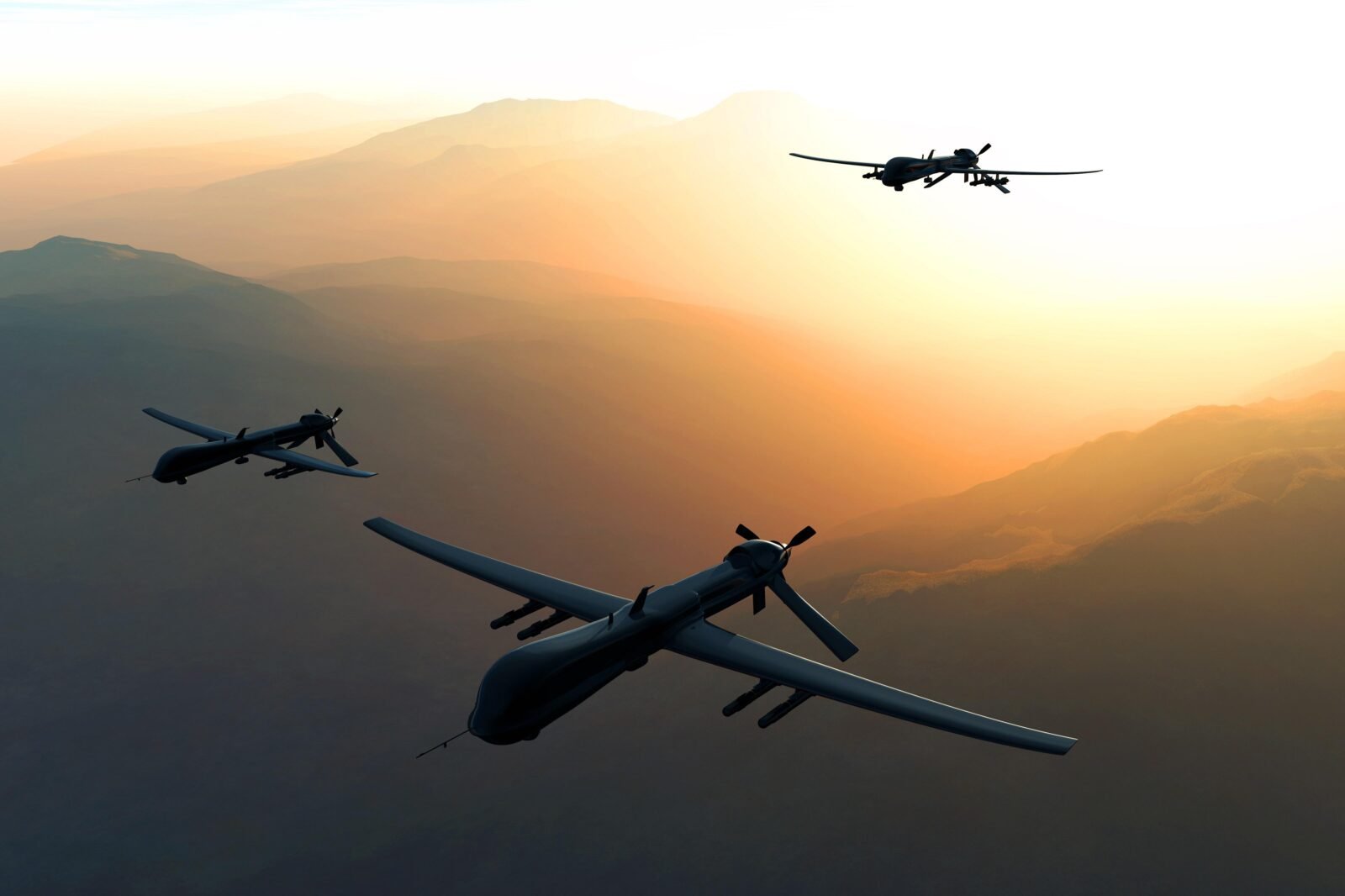
India’s investment in drone technology is reshaping not only defence capabilities but also disaster response, agriculture, infrastructure, and innovation. As indigenous drone development accelerates, its benefits are extending well beyond military operations, creating new opportunities for businesses, researchers, and citizens.
Drone technology in India’s defence sector has evolved into one of the country’s most significant technological advancements. While drones are primarily associated with surveillance, reconnaissance, and national security, their development is creating ripple effects across multiple civilian industries. Investments made for defence purposes are now supporting innovation in agriculture, disaster management, logistics, infrastructure monitoring, and startup ecosystems.
India has placed increasing emphasis on developing indigenous unmanned aerial systems under the broader vision of self-reliance in defence manufacturing. As drone capabilities improve, experts believe the technology will continue to strengthen both national security and economic development.
India’s Defence Drone Programme Is Expanding Rapidly
India’s defence sector has steadily increased the use of drones for intelligence gathering, border surveillance, target identification, logistics support, and monitoring difficult terrain. Unmanned aerial vehicles, commonly known as drones, provide armed forces with real-time information while reducing the risks faced by personnel during sensitive operations.
The Indian Army, Indian Navy, and Indian Air Force are expanding their drone capabilities to address evolving security challenges across land, sea, and air. Indigenous drone manufacturing has also gained momentum through government initiatives encouraging domestic production and innovation.
Modern defence drones are equipped with advanced cameras, thermal imaging systems, artificial intelligence, GPS navigation, and long-range communication technologies. These features allow security agencies to monitor remote areas more efficiently while improving operational awareness.
The increasing adoption of locally developed drone platforms also supports India’s long-term objective of reducing dependence on imported defence equipment.
Defence Innovation Is Driving Civilian Applications
One of the biggest advantages of defence-led drone development is its impact on civilian sectors. Technologies originally designed for military operations often find valuable applications in everyday life.
High-resolution imaging systems developed for surveillance are now helping farmers monitor crop health. Mapping technologies are supporting urban planning, mining operations, and infrastructure inspections. Drones are also being used to survey highways, railways, power transmission lines, pipelines, and construction projects with greater speed and accuracy.
Government agencies increasingly rely on drones for land record digitisation, environmental monitoring, forest conservation, and disaster assessment. These applications improve efficiency while reducing costs compared to traditional surveying methods.
The transfer of defence innovations into civilian industries demonstrates how strategic investments can create wider economic benefits.
Boosting India’s Startup and Manufacturing Ecosystem
India’s growing drone industry has created opportunities for startups, technology companies, component manufacturers, software developers, and research institutions.
The government’s policy support for domestic drone manufacturing has encouraged innovation in hardware, artificial intelligence, navigation systems, sensors, batteries, and drone software platforms. Many Indian startups are developing solutions for defence as well as commercial applications.
This growth is generating skilled employment opportunities for engineers, drone pilots, software professionals, data analysts, and manufacturing specialists.
Tier-2 and Tier-3 cities are also becoming important centres for drone innovation as engineering colleges, incubators, and technology parks expand beyond major metropolitan areas. Smaller cities are increasingly participating in India’s technology ecosystem by contributing research, manufacturing, and skilled talent.
As demand continues to rise, India’s drone sector is expected to play a larger role in advanced manufacturing and exports.
Drone Technology Strengthens Disaster Response and Public Safety
The importance of drones extends far beyond defence and business. During natural disasters such as floods, earthquakes, landslides, and cyclones, drones provide rapid aerial assessments that help authorities identify affected areas and plan rescue operations.
Emergency teams use drones to locate stranded individuals, monitor floodwaters, assess structural damage, and deliver essential supplies to locations that may be difficult to access by road.
Law enforcement agencies also use drones for crowd management during public events, traffic monitoring, and emergency response. These capabilities improve situational awareness while enabling quicker decision-making.
In healthcare, experimental drone delivery systems have demonstrated the potential to transport medicines, vaccines, blood samples, and emergency medical supplies to remote regions where conventional transportation may be delayed.
Challenges That Still Need Attention
Despite rapid progress, India’s drone ecosystem faces several challenges that require continued attention.
Cybersecurity remains a critical concern as drones rely heavily on digital communication systems and satellite navigation. Protecting these systems from hacking or signal interference is essential for both military and civilian operations.
Privacy concerns have also emerged as drone usage becomes more widespread. Appropriate regulations are necessary to ensure that surveillance technologies are used responsibly while protecting citizens’ rights.
Training skilled drone operators, developing reliable domestic supply chains, and maintaining strict safety standards will remain important as drone adoption expands across industries.
Continued research and responsible regulation will help ensure that technological growth remains secure and sustainable.
Looking Ahead
Drone technology is becoming one of the defining innovations shaping India’s future. While defence remains its primary driver, the technology’s influence now extends into agriculture, infrastructure, logistics, disaster management, environmental monitoring, healthcare, and entrepreneurship.
As indigenous manufacturing grows and research continues, India is well positioned to become a global leader in drone innovation. The success of the sector will depend not only on stronger defence capabilities but also on its ability to improve public services, create jobs, support startups, and strengthen the broader economy.
What began as a strategic defence technology is rapidly evolving into a tool that benefits multiple sectors of society, making drones an important part of India’s technological transformation.
Takeaways
- Defence investments in drone technology are creating benefits across several civilian industries.
- Indigenous drone manufacturing supports India’s self-reliance goals and strengthens the domestic technology ecosystem.
- Drones are improving disaster response, agriculture, infrastructure monitoring, and public safety.
- Continued innovation, cybersecurity, regulation, and skill development will shape the future of India’s drone industry.
FAQs
Q1. Why is drone technology important for India’s defence sector?
Drones improve surveillance, intelligence gathering, border monitoring, logistics, and operational efficiency while reducing risks to military personnel.
Q2. How do defence drones benefit civilian sectors?
The same technologies are used in agriculture, infrastructure inspection, disaster management, environmental monitoring, mapping, healthcare logistics, and urban planning.
Q3. Is India manufacturing its own defence drones?
Yes. India is expanding indigenous drone development through government initiatives that encourage domestic manufacturing, research, and private sector participation.
Q4. What challenges does India’s drone industry face?
Key challenges include cybersecurity, privacy protection, regulatory compliance, operator training, and developing robust domestic manufacturing capabilities.
(Internal keyword suggestions: drone technology in India, India’s defence drones, defence technology India, indigenous drone manufacturing, drone startups India, unmanned aerial vehicles India, defence innovation, drone applications, disaster management drones, Make in India defence, Indian drone ecosystem, AI drones India)











Leave a comment