

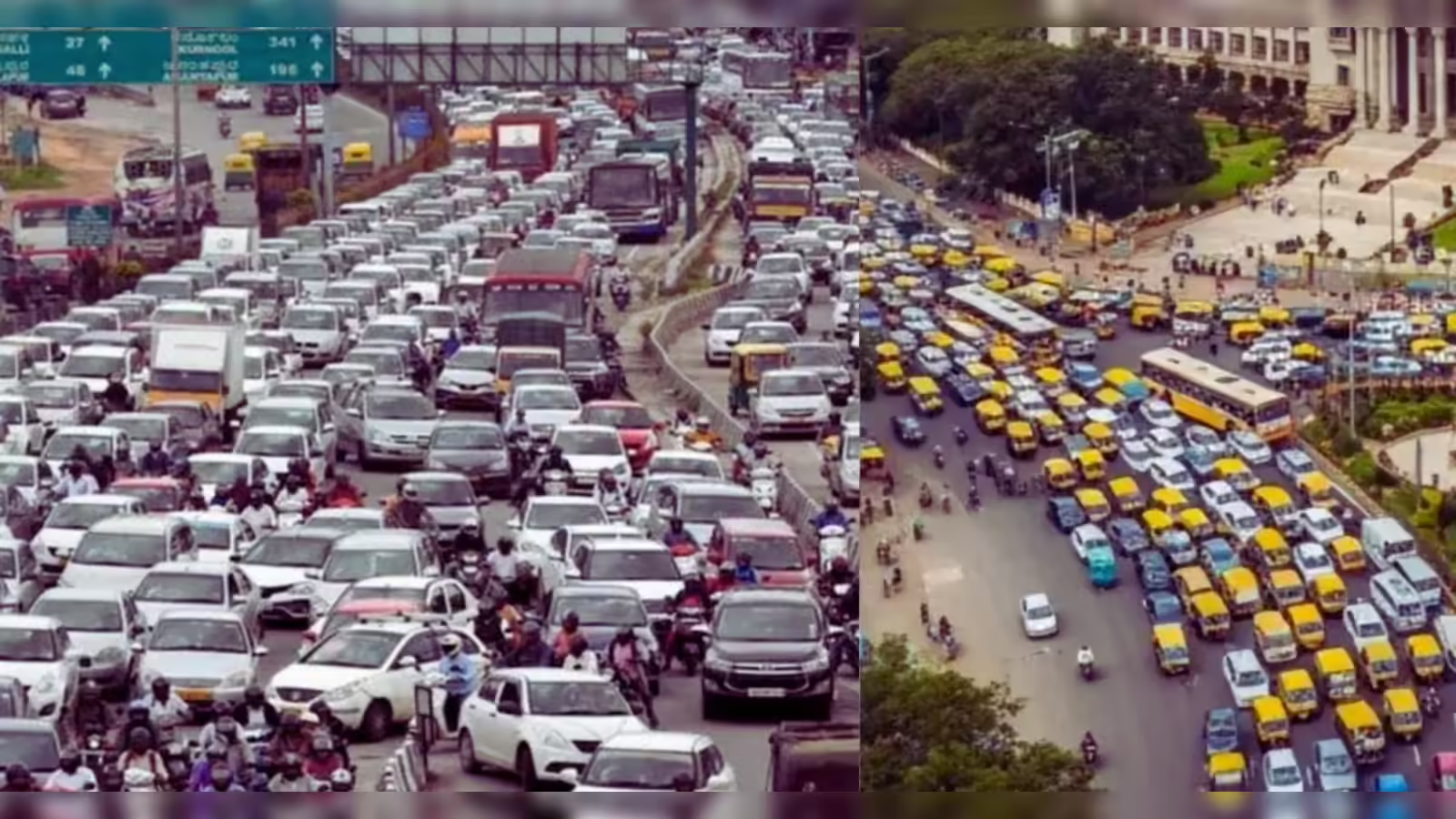
Digital congestion in urban India is becoming a growing concern as call drops, slow internet speeds, failed digital payments, and overloaded networks increasingly disrupt daily life. As cities become more connected, digital infrastructure is emerging as a critical civic service alongside roads, water, and electricity.
The issue of digital congestion in urban India is gaining attention as millions of people rely on smartphones, online banking, UPI transactions, cloud services, and digital communication for everyday activities. While Indian cities have made significant progress in digital adoption over the past decade, network capacity and infrastructure are struggling to keep pace with rising demand. What was once viewed as a minor inconvenience is now affecting businesses, commuters, students, and public services on a daily basis.
Why Digital Congestion Is Becoming a Modern Urban Problem
Traditional urban congestion refers to traffic jams, overcrowded public transport, or overloaded civic infrastructure. Today, a similar challenge is emerging in the digital space.
Urban residents frequently encounter dropped calls, buffering videos, delayed app responses, and failed online transactions during peak hours. The problem becomes particularly visible during festivals, major events, rush hours, or emergencies when millions of users access networks simultaneously.
The rapid growth of smartphones, digital payments, video streaming, remote work, and online education has significantly increased data consumption. According to telecom industry trends, India remains one of the world’s largest mobile data consumers, placing immense pressure on telecom infrastructure.
As a result, digital connectivity is increasingly being viewed as an essential public utility rather than a luxury service.
Call Drops Continue Despite Network Expansion
Telecom operators have invested heavily in expanding 4G coverage and rolling out 5G services across India. Despite these efforts, call drops remain a recurring complaint in many urban areas.
Several factors contribute to the problem. Dense populations create high network demand, while limited availability of mobile towers in some locations affects signal quality. High-rise buildings, underground parking facilities, and crowded commercial zones can further weaken connectivity.
In rapidly growing Tier-2 cities such as Nagpur, Indore, Surat, and Lucknow, urban expansion often outpaces telecom infrastructure upgrades. As residential and commercial developments increase, network providers face the challenge of maintaining service quality across expanding urban landscapes.
The issue is not always a lack of coverage. In many cases, network congestion occurs because too many users are accessing the same infrastructure at the same time.
UPI Payment Failures and Digital Transaction Delays
One of the most visible signs of digital congestion is the occasional failure of digital payment systems. India has become a global leader in real-time digital transactions through the Unified Payments Interface (UPI), with billions of transactions processed every month.
However, during periods of unusually high traffic, users sometimes experience delayed confirmations, pending payments, or failed transactions. While most transactions are eventually completed or reversed, even short disruptions can affect consumers and small businesses.
For street vendors, local retailers, delivery workers, and service providers who increasingly depend on cashless payments, digital downtime can translate directly into lost sales or customer frustration.
As digital payments become the default mode of transaction in many cities, reliability is becoming just as important as accessibility.
Impact on Businesses, Education, and Daily Life
The consequences of digital congestion extend beyond personal inconvenience. Businesses rely on uninterrupted internet connectivity for customer service, inventory management, online orders, and digital communication.
Remote workers depend on stable video conferencing and cloud-based applications. Students attending online classes or accessing digital learning platforms require reliable internet access.
Healthcare services are also becoming increasingly digital, with telemedicine consultations, online appointments, and digital health records now common in many urban centers.
When networks slow down or fail, the impact can ripple across multiple sectors simultaneously. This is why urban planners and policy experts are increasingly discussing digital infrastructure alongside physical infrastructure.
Can 5G and Smart Infrastructure Solve the Problem?
The rollout of 5G technology offers opportunities to reduce network congestion by increasing capacity and improving data speeds. However, experts note that technology alone may not solve the issue.
Cities will require continued investment in fiber networks, telecom towers, data centers, and intelligent network management systems. The growth of connected devices, smart city applications, artificial intelligence services, and Internet of Things technologies will further increase demand on digital infrastructure.
Smart city projects are already integrating digital command centers, public Wi-Fi networks, and intelligent traffic systems. Similar approaches may be needed to monitor and manage digital congestion in real time.
The challenge will be ensuring that infrastructure growth keeps pace with rising digital consumption.
Digital Infrastructure Is the New Urban Necessity
Urban development discussions have traditionally focused on roads, bridges, public transport, and water supply. Today, digital infrastructure deserves equal attention.
As citizens increasingly depend on mobile connectivity and digital services, network reliability directly affects productivity, commerce, education, and governance. A dropped call or failed payment may seem minor in isolation, but when experienced by millions of users daily, it becomes a larger civic concern.
The future of urban India will depend not only on physical infrastructure but also on the strength, resilience, and scalability of its digital networks. Addressing digital congestion early could help cities remain efficient, competitive, and connected in an increasingly digital economy.
Key Takeaways
• Digital congestion is emerging as a significant urban challenge alongside traditional civic issues.
• Call drops and slow network performance often result from rising demand rather than lack of coverage.
• UPI payment failures and transaction delays highlight the importance of reliable digital infrastructure.
• Future solutions will require investment in 5G, fiber networks, telecom infrastructure, and smart city technologies.
FAQ
What is digital congestion?
Digital congestion occurs when communication networks become overloaded due to high user demand, resulting in slower speeds, call drops, and service disruptions.
Why do call drops still happen in cities?
Call drops can occur due to network congestion, limited tower capacity, building interference, and increasing demand from smartphone users.
Do UPI payment failures indicate system weakness?
Not necessarily. Most failures occur during peak traffic periods or temporary technical disruptions, and many transactions are automatically resolved or reversed.
How can cities reduce digital congestion?
Cities can improve network reliability through investments in telecom infrastructure, fiber connectivity, 5G deployment, data centers, and smart network management systems.
(Internal Keywords: digital congestion in urban India, call drops India, UPI payment failures, telecom infrastructure India, smart city technology, digital infrastructure, urban connectivity, 5G India, network congestion, digital payments India)










Leave a comment