

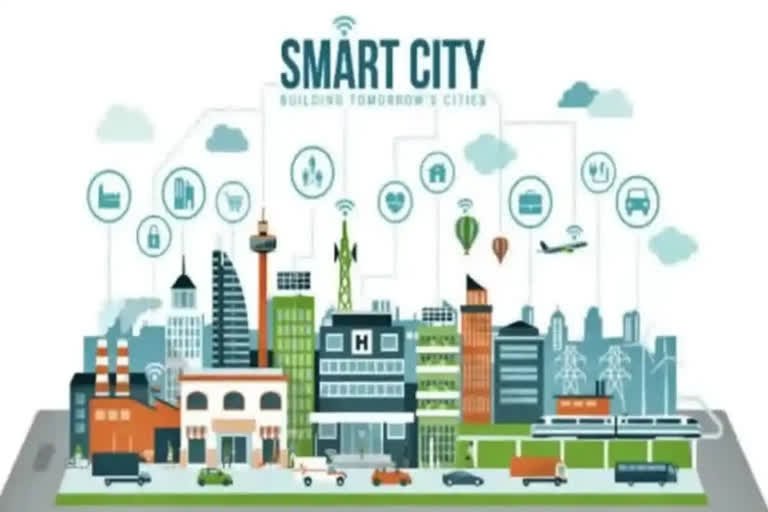
India’s Smart Cities Mission has completed a decade, making it an important moment to assess how urban development has evolved beyond major metropolitan areas. While cities like Delhi, Mumbai, and Bengaluru often dominate discussions about infrastructure, many Tier-2 cities have witnessed significant transformation through technology-driven governance, improved public services, and modern urban planning.
A Decade of Smart City Development
Launched in 2015 by the Government of India, the Smart Cities Mission aimed to improve the quality of life in urban areas through better infrastructure, sustainable development, and technology-enabled governance. One hundred cities were selected across the country to receive funding and support for projects focused on transportation, water management, public safety, energy efficiency, and digital services.
Ten years later, the mission has reshaped the development priorities of several Tier-2 cities including Indore, Surat, Nagpur, Bhopal, Visakhapatnam, Coimbatore, Udaipur, and Bhubaneswar. Many of these cities have emerged as examples of how targeted investments can improve urban living without the scale and budget available to larger metros.
Smart Infrastructure Has Become More Visible
One of the biggest changes has been the expansion of smart urban infrastructure. Cities that once struggled with outdated systems have introduced integrated command and control centers, smart traffic management, intelligent street lighting, and digital monitoring systems.
In cities such as Nagpur and Surat, command centers now help authorities monitor traffic movement, emergency response services, public transport operations, and civic complaints from a single location. These systems allow faster decision-making and improve coordination between departments.
Smart LED street lighting projects have also reduced electricity consumption while improving safety in public areas. Several cities have reported significant savings in energy costs after replacing conventional streetlights with energy-efficient alternatives.
Digital Governance Is Improving Citizen Services
Another major achievement of the Smart Cities Mission has been the growth of digital governance platforms. Many municipal services that previously required physical visits can now be accessed online through mobile applications and digital portals.
Residents can pay property taxes, apply for certificates, report civic issues, and track service requests without visiting government offices. This shift has helped reduce administrative delays and increased transparency in local governance.
For citizens living in Tier-2 cities, the adoption of digital services has narrowed the gap between urban centers and metropolitan regions. Municipal administrations are increasingly using data-driven approaches to identify issues and allocate resources more efficiently.
Better Mobility and Public Transport Systems
Urban mobility has become a key focus area under the Smart Cities Mission. Several cities have invested in intelligent traffic management systems, smart bus shelters, public bicycle-sharing programs, and upgraded public transport infrastructure.
Indore, often recognized for its urban management initiatives, has improved traffic monitoring and public transportation facilities. Nagpur has expanded its multimodal transport network through metro connectivity and digital ticketing systems.
These projects have helped reduce travel times, improve commuter convenience, and encourage the use of public transport. While challenges remain, especially in rapidly growing urban centers, mobility planning has become more structured than it was a decade ago.
Sustainability Is Becoming a Priority
The Smart Cities Mission has also encouraged cities to focus on environmental sustainability. Projects related to solar energy, wastewater treatment, lake rejuvenation, green spaces, and waste management have gained momentum.
Indore’s success in waste segregation and cleanliness has become a model for other cities. Several urban local bodies are investing in renewable energy solutions and climate-resilient infrastructure to address future environmental challenges.
Public parks, open spaces, cycling tracks, and urban forests have been developed in multiple cities, improving both environmental quality and public health outcomes.
Challenges Continue Despite Progress
Despite visible improvements, not all objectives have been achieved uniformly across the country. Some projects faced delays due to land acquisition issues, funding constraints, technical challenges, and administrative hurdles.
Experts also point out that infrastructure development must be accompanied by stronger urban planning, affordable housing, and long-term maintenance strategies. The digital divide remains a concern in some regions where access to technology and internet connectivity is still limited.
Additionally, rapid population growth in many Tier-2 cities continues to put pressure on roads, water supply systems, and public services.
What the Next Decade Could Look Like
The next phase of urban development is likely to focus on sustainability, artificial intelligence, smart mobility, climate resilience, and citizen-centric governance. As India’s urban population continues to grow, Tier-2 cities will play an increasingly important role in economic growth and regional development.
Many experts believe that the future of India’s urban transformation will depend less on mega metros and more on emerging cities that can balance growth with quality of life. The experience gained through the Smart Cities Mission provides a foundation for these cities to continue evolving into more efficient, connected, and livable urban centers.
Key Takeaways
• The Smart Cities Mission has completed 10 years since its launch in 2015.
• Tier-2 cities have benefited from smart infrastructure, digital governance, and improved public services.
• Urban mobility, sustainability, and technology adoption have become major development priorities.
• Challenges such as project delays, population growth, and infrastructure maintenance still require attention.
FAQ
What is the Smart Cities Mission?
The Smart Cities Mission is a Government of India initiative launched in 2015 to improve urban infrastructure, governance, sustainability, and quality of life through technology-driven development.
How many cities were selected under the mission?
A total of 100 cities across India were selected to participate in the Smart Cities Mission.
Which Tier-2 cities have shown notable progress?
Cities such as Indore, Nagpur, Surat, Bhubaneswar, Coimbatore, Visakhapatnam, and Udaipur are often cited for significant progress in various smart city projects.
What are the main challenges facing smart cities today?
Key challenges include project execution delays, infrastructure maintenance, rapid urbanization, funding requirements, and ensuring inclusive access to digital services.
(Internal Keywords: Smart Cities Mission 2025, Smart Cities Mission 10 years, Tier-2 city development India, smart infrastructure India, digital governance cities, urban development India, smart city projects, Nagpur smart city, Indore smart city, urban mobility India)









Leave a comment