

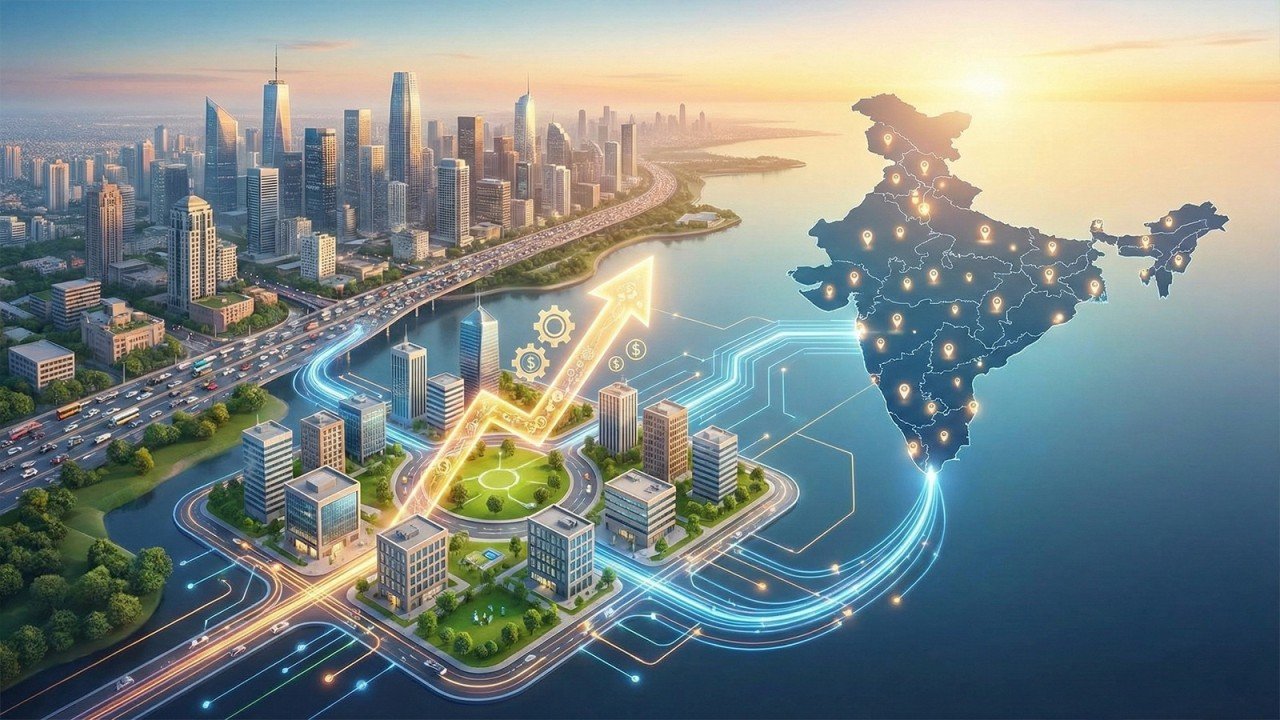
India’s Tier-2 cities are emerging as powerful drivers of economic growth, attracting startups, manufacturers, IT firms, and real estate investments. Lower operating costs, improving infrastructure, and rising consumer demand are helping cities like Nagpur, Indore, Coimbatore, and Bhubaneswar play a larger role in the country’s development story.
Why Tier-2 Cities Matter More Than Ever
The rise of Tier-2 cities in India is no longer a future trend. It is already reshaping the country’s economy. Cities such as Nagpur, Jaipur, Lucknow, Surat, Kochi, and Visakhapatnam are attracting businesses that once focused almost entirely on metros like Mumbai, Delhi, and Bengaluru.
The reasons are practical. Land is cheaper, salaries are more manageable, and congestion is lower. At the same time, internet access, road connectivity, airports, and digital payment adoption have improved significantly.
For companies, this means they can expand at lower cost. For residents, it creates more local job opportunities and reduces the need to migrate to expensive metro cities.
Infrastructure Investment Is Fueling Regional Growth
One of the biggest factors behind the growth of Tier-2 cities is public infrastructure investment.
The central and state governments have expanded highways, industrial corridors, metro rail systems, and airports across smaller cities. Projects such as the Delhi-Mumbai Industrial Corridor, Bharatmala road network, and logistics parks are improving connectivity.
Nagpur, for example, has benefited from the MIHAN project, a large multi-modal logistics and industrial hub. Indore has strengthened its position as a manufacturing and startup center. Coimbatore continues to grow as a major engineering and textile hub.
Better infrastructure lowers business costs and makes regional cities more attractive to investors.
Startups in Tier-2 Cities Are Scaling Quickly
The startup ecosystem in India is no longer limited to Bengaluru or Gurgaon. Founders in Tier-2 cities are building companies in sectors such as fintech, agritech, edtech, healthcare, and direct-to-consumer brands.
According to industry reports, a growing share of startups now originates from non-metro locations. Cities like Ahmedabad, Jaipur, Chandigarh, and Kochi are producing entrepreneurs who understand regional consumer needs.
These startups often solve practical problems such as farm supply chains, vernacular education, telemedicine, and affordable financial services.
Lower operating expenses also allow founders to stretch their capital further than they could in major metros.
Manufacturing and MSMEs Are Expanding Beyond Metros
Tier-2 cities have long been home to India’s micro, small, and medium enterprises. What has changed is the scale of opportunity.
The government’s Production Linked Incentive schemes, Make in India initiatives, and improved logistics are encouraging companies to set up operations in regional centers.
Surat remains a leader in diamonds and textiles. Rajkot has a strong engineering base. Aurangabad and Pune’s surrounding belt continue to attract auto and manufacturing investment.
As supply chains diversify, smaller cities are becoming critical nodes in India’s industrial ecosystem.
Rising Consumer Spending Is Creating New Markets
Tier-2 and Tier-3 cities are now among the fastest-growing consumer markets in India.
Higher incomes, better employment opportunities, and easy access to e-commerce platforms have transformed spending habits. Consumers in smaller cities are buying smartphones, electronics, branded apparel, and financial products at increasing rates.
This shift has led companies across retail, banking, insurance, and consumer goods to focus more on Bharat rather than only metro markets.
For many businesses, future growth will depend on how effectively they serve these emerging consumers.
Real Estate and Quality of Life Are Major Advantages
Housing affordability remains one of the strongest advantages of Tier-2 cities.
Young professionals and entrepreneurs can buy or rent larger homes at a fraction of metro prices. Commute times are shorter, pollution levels are often lower, and daily life can be less stressful.
These factors are encouraging professionals to build careers in cities like Nagpur, Indore, Mysuru, and Bhubaneswar instead of relocating to metros.
The spread of hybrid work has accelerated this trend by making location less important for many roles.
Challenges Tier-2 Cities Still Need to Address
Despite rapid progress, several challenges remain.
Many cities need stronger public transport, better waste management, and more high-skill job opportunities. Access to advanced healthcare and top educational institutions is improving but remains uneven.
Urban planning will be critical. Without careful development, regional cities could face the same congestion and infrastructure stress seen in larger metros.
Sustained investment and governance reforms will determine whether growth remains balanced and inclusive.
Why Tier-2 Cities Could Shape India’s Next Decade
India’s economic future will not be built only in its largest metros. It will increasingly be driven by regional cities that combine affordability, talent, and improving infrastructure.
Tier-2 cities are creating jobs, attracting investment, and expanding consumer demand. As businesses look for cost-effective expansion opportunities, these cities are becoming central to the country’s growth strategy.
For millions of Indians, this shift means better opportunities closer to home.
Key Takeaways
- Tier-2 cities are attracting startups, manufacturers, and service businesses.
- Infrastructure projects are improving connectivity and investment potential.
- Lower costs and better quality of life are drawing talent and entrepreneurs.
- Rising consumer demand is making regional markets essential for business growth.
FAQs
What are Tier-2 cities in India?
Tier-2 cities are mid-sized urban centers such as Nagpur, Indore, Jaipur, Lucknow, and Coimbatore that are smaller than major metros but play important economic roles.
Why are companies investing in Tier-2 cities?
They offer lower real estate and operating costs, improving infrastructure, and access to growing consumer markets.
Which sectors are growing the fastest in these cities?
Startups, manufacturing, logistics, IT services, healthcare, and retail are seeing strong growth.
How do Tier-2 cities benefit local residents?
They create jobs, improve infrastructure, and offer better career opportunities without the high living costs of metro cities.







Leave a comment