

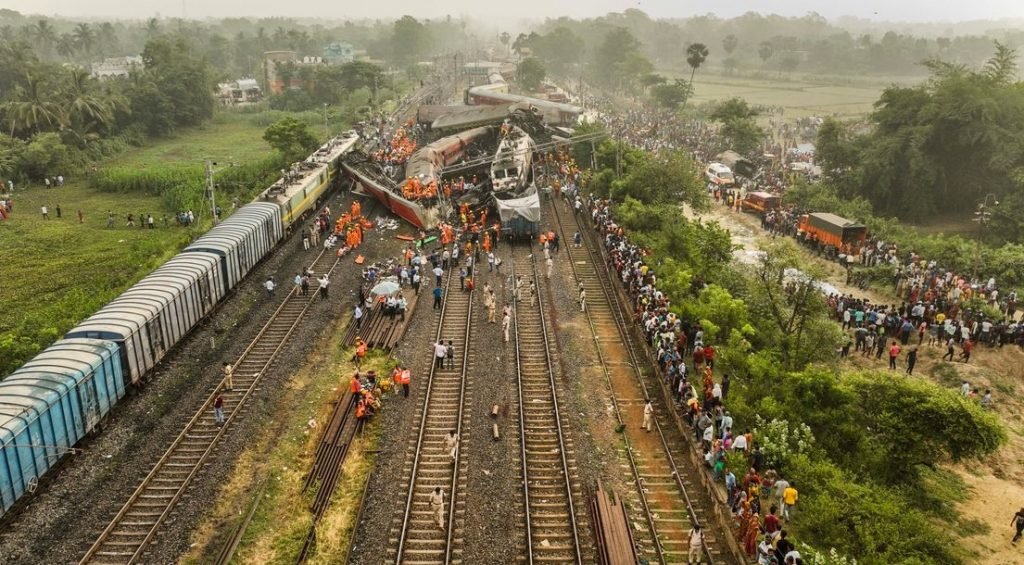
Railway safety has once again become a national priority as recent security concerns, accidents, and infrastructure challenges prompt renewed discussions about passenger protection. With millions relying on Indian Railways every day, experts believe a stronger focus on technology, surveillance, and preventive measures is essential for safer travel.
Railway safety in India has returned to the spotlight following a series of recent security concerns, operational incidents, and discussions surrounding the country’s vast railway network. As one of the world’s largest rail systems, Indian Railways carries millions of passengers daily across thousands of stations and routes. While the network has expanded significantly over the years, fresh concerns have highlighted the importance of strengthening security, improving infrastructure, and ensuring safer journeys for passengers.
The conversation is no longer limited to preventing accidents. Authorities are increasingly focusing on protecting railway assets, monitoring suspicious activities, improving emergency response systems, and using modern technology to reduce potential risks. For passengers, especially those travelling from Tier-2 and Tier-3 cities, railway safety remains one of the biggest factors influencing confidence in public transport.
Recent Security Concerns Bring Railway Safety Back into Focus
Recent incidents and heightened security alerts across different parts of the country have renewed attention on railway safety. While not every security concern results in disruption, each incident reinforces the need for continuous monitoring and preparedness.
India’s railway network stretches across remote villages, busy urban centres, industrial corridors, and border regions. This enormous geographical spread makes security management a complex task. Railway authorities regularly coordinate with the Railway Protection Force (RPF), Government Railway Police (GRP), local police departments, and intelligence agencies to identify potential threats and respond quickly when required.
Officials have also intensified inspections at major railway stations, increased baggage screening, expanded CCTV surveillance, and strengthened patrols on important routes to improve passenger security.
Technology Is Becoming a Key Part of Railway Security
Technology is playing an increasingly important role in modern railway safety. Indian Railways has gradually introduced AI-based surveillance systems, high-definition CCTV cameras, drone monitoring in selected locations, integrated security control rooms, and real-time monitoring of railway operations.
Advanced signalling systems are helping reduce the possibility of human error. The indigenous Kavach automatic train protection system is being deployed on more routes to help prevent train collisions by automatically controlling train movement under specific conditions.
Digital monitoring also allows authorities to identify unusual activities more quickly, helping security personnel respond faster during emergencies.
Experts believe that combining technology with regular maintenance and staff training offers the most effective approach to improving railway safety over the long term.
Infrastructure Upgrades Remain a Priority
While technology receives considerable attention, railway infrastructure continues to play an equally important role in passenger safety.
Track renewal, bridge inspections, modern signalling equipment, improved level crossings, and better station facilities remain ongoing priorities. Older infrastructure in several regions requires regular maintenance to keep pace with increasing passenger and freight traffic.
Many stations in Tier-2 and Tier-3 cities have witnessed major upgrades under station redevelopment projects. Improved lighting, wider platforms, better crowd management systems, digital information displays, and enhanced surveillance contribute to safer passenger movement.
Infrastructure investment also helps reduce operational delays and improves the overall reliability of railway services.
Passenger Awareness Is Equally Important
Railway safety is not solely the responsibility of authorities. Passenger awareness plays a significant role in preventing accidents and security incidents.
Travellers are encouraged to report unattended baggage, suspicious behaviour, damaged railway property, or any unusual activity through railway helplines or station officials. Following platform safety rules, avoiding crossing railway tracks illegally, and paying attention to public announcements also help reduce preventable accidents.
Indian Railways has been conducting awareness campaigns across stations and digital platforms to educate passengers about safe travel practices and emergency procedures.
As railway traffic continues to grow, informed passengers become valuable partners in maintaining overall security.
Balancing Growth with Safety
India is investing heavily in railway modernization through new trains, dedicated freight corridors, station redevelopment, electrification, and high-speed rail projects. Alongside expansion, maintaining high safety standards has become a central objective.
Large-scale infrastructure projects increase operational complexity, making continuous monitoring even more important. Experts note that every new technology, station upgrade, or railway corridor must be supported by robust safety protocols and regular audits.
The government’s continued investment in signalling systems, employee training, emergency preparedness, and digital monitoring reflects a broader effort to strengthen railway operations while supporting future growth.
As passenger expectations evolve, safety is increasingly viewed as an essential measure of service quality rather than simply a regulatory requirement.
Looking Ahead
Railway safety remains one of the most important priorities for India’s transport network. Recent security concerns have reinforced the need for constant vigilance, stronger coordination among security agencies, and continued investment in technology and infrastructure.
While Indian Railways has made substantial progress in modernising operations, maintaining passenger confidence requires sustained efforts across every level of the system. From advanced train protection technology to improved station security and greater public awareness, every initiative contributes to making rail travel safer for millions of Indians.
With one of the largest railway networks in the world continuing to expand, ensuring safe, reliable, and secure journeys will remain central to India’s transportation future.
Takeaways
- Railway safety has become a key national focus following recent security concerns and operational challenges.
- Technology such as CCTV surveillance, AI monitoring, and the Kavach train protection system is strengthening railway security.
- Infrastructure upgrades and regular maintenance remain essential for long-term passenger safety.
- Passenger awareness and timely reporting play an important role in preventing security incidents and accidents.
FAQs
Q1. Why is railway safety being discussed more frequently in India?
Recent security concerns, operational incidents, and ongoing railway modernization have brought renewed attention to passenger safety and infrastructure security.
Q2. What technologies are improving railway safety?
Indian Railways is expanding the use of CCTV surveillance, AI-based monitoring, integrated control centres, advanced signalling systems, and the indigenous Kavach automatic train protection system.
Q3. How can passengers contribute to railway safety?
Passengers should report suspicious activities or unattended baggage, follow station safety guidelines, avoid crossing railway tracks illegally, and remain alert during travel.
Q4. Are smaller cities also benefiting from railway safety improvements?
Yes. Many Tier-2 and Tier-3 cities are receiving station upgrades, improved surveillance systems, better lighting, enhanced passenger facilities, and stronger security arrangements as part of broader railway modernization efforts.
(Internal keyword suggestions: railway safety in India, Indian Railways security, railway security concerns, railway safety measures, Kavach train protection system, Railway Protection Force, railway infrastructure upgrades, passenger safety, railway modernization, railway surveillance technology, Tier-2 railway stations, Indian transport infrastructure)










Leave a comment