

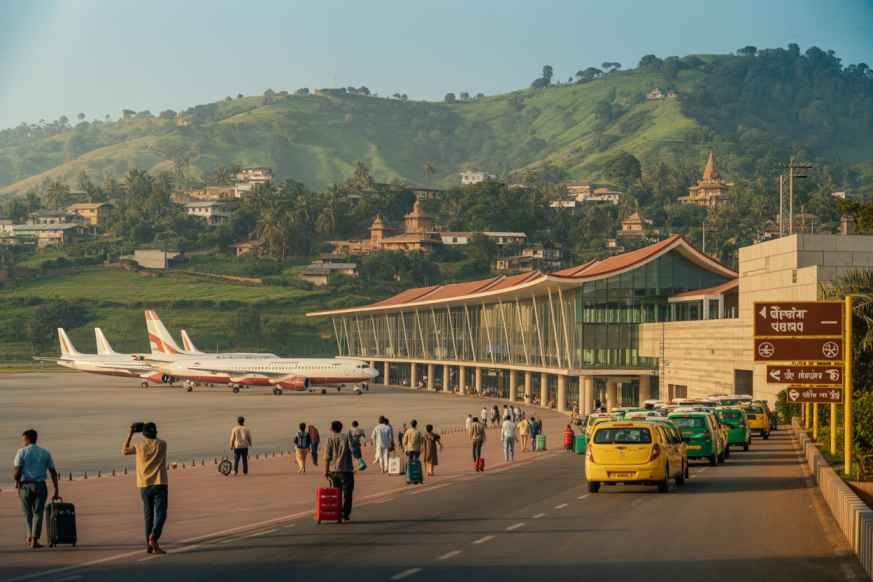
Regional airports are becoming powerful economic growth engines for smaller cities across India. Improved air connectivity is helping attract investment, boost tourism, create jobs, and support local businesses. As the government expands regional aviation networks, many Tier-2 and Tier-3 cities are witnessing faster economic development and stronger links to national and global markets.
Regional airports are playing an increasingly important role in India’s economic transformation. Once considered basic transportation facilities, these airports are now emerging as critical infrastructure assets that support business growth, tourism, trade, and employment. With the expansion of regional air connectivity under initiatives such as UDAN (Ude Desh ka Aam Nagrik), smaller cities are gaining access to opportunities that were previously concentrated in major metropolitan areas.
How Regional Air Connectivity Is Transforming Smaller Cities
Improved regional air connectivity has significantly reduced travel time between smaller cities and major economic centers. Businesses can now reach customers, suppliers, and investors more efficiently, making smaller cities more attractive for investment.
Cities such as Nagpur, Indore, Dehradun, Rajkot, and Hubballi have benefited from stronger aviation links over the past decade. Better connectivity allows companies to establish operations outside expensive metro areas while maintaining access to national markets.
For professionals, entrepreneurs, and investors, faster travel creates greater confidence in expanding business activities. This accessibility often becomes a deciding factor when companies evaluate potential locations for offices, manufacturing units, or logistics hubs.
As a result, airports are no longer viewed solely as transportation infrastructure but as catalysts for regional development.
Tourism Growth and Local Business Opportunities
One of the most visible impacts of regional airports is the growth of tourism. Improved air access makes destinations easier to reach, encouraging both domestic and international visitors.
Cities located near cultural, religious, historical, and natural attractions often see increased tourist arrivals after airport expansion. More visitors create demand for hotels, restaurants, transport services, tour operators, and local markets.
For example, airports serving destinations such as Ayodhya, Varanasi, Udaipur, and Port Blair have contributed to stronger tourism activity by improving accessibility.
Local businesses benefit from higher consumer spending, while artisans and small enterprises gain access to broader customer bases. Tourism-driven growth can generate economic activity across multiple sectors, creating a ripple effect throughout the local economy.
Employment Generation Around Airport Infrastructure
Airport development creates jobs both directly and indirectly. Construction projects generate temporary employment, while airport operations require permanent staff across various functions.
Direct employment includes airport management, security personnel, ground handling staff, maintenance teams, airline operations, and customer service roles. Indirect employment arises through hospitality, transportation, retail, logistics, and support services.
Many airport ecosystems also attract businesses that require proximity to aviation infrastructure. Warehousing companies, cargo operators, hotels, and conference facilities often establish operations near airports.
These developments create opportunities for local residents and help reduce migration to larger cities. As economic activity expands, demand for skilled and semi-skilled workers also increases, supporting broader workforce development.
Regional Airports and the Rise of Logistics Hubs
Another major advantage of regional airports is their growing role in logistics and cargo movement. India’s expanding e-commerce sector depends heavily on efficient transportation networks to deliver goods quickly.
Airports in smaller cities can support faster movement of high-value products, pharmaceuticals, electronics, agricultural exports, and perishable goods. Businesses benefit from reduced transit times and improved supply chain reliability.
Nagpur’s strategic location, for instance, has strengthened its position as an important logistics and cargo center. Similar opportunities are emerging in several other regional markets where connectivity is improving.
As cargo operations grow, supporting industries such as warehousing, packaging, transportation, and distribution services also expand, creating additional economic opportunities.
Government Initiatives Supporting Regional Aviation Growth
Government policies have played a key role in accelerating regional airport development. The UDAN scheme was introduced to improve air connectivity by making flights more affordable and connecting underserved and unserved airports.
Since its launch, the program has expanded access to air travel for millions of passengers while encouraging airlines to operate on regional routes. Airport modernization projects have also improved infrastructure across many smaller cities.
Investment in runways, terminals, navigation systems, and passenger facilities has strengthened the aviation ecosystem. These improvements support not only passenger traffic but also business and cargo operations.
Continued investment in aviation infrastructure is expected to further integrate smaller cities into India’s economic growth story.
Challenges and the Road Ahead
Despite the progress, challenges remain. Some regional airports continue to face issues related to passenger demand, airline viability, and operational costs. Maintaining profitability on certain routes can be difficult without sustained traffic growth.
Infrastructure outside airport premises, including road connectivity and public transport, also needs improvement in several locations. Successful airport-led development depends on integrated planning between aviation authorities, state governments, and local administrations.
However, long-term trends remain positive. Rising incomes, growing business activity, expanding tourism, and increasing demand for air travel are expected to strengthen the role of regional airports in the coming years.
As India continues to urbanize and diversify its economic base, regional airports are likely to become even more important drivers of growth, investment, and employment in smaller cities.
Key Takeaways
- Regional airports improve connectivity and attract business investment to smaller cities.
- Better air access boosts tourism, benefiting local businesses and service sectors.
- Airport development generates direct and indirect employment opportunities.
- Growing cargo and logistics operations are strengthening regional economies.
FAQ
Why are regional airports important for smaller cities?
Regional airports improve connectivity, attract investment, support tourism, and create employment opportunities, contributing to local economic development.
What is the UDAN scheme?
UDAN is a government initiative aimed at making air travel affordable and improving connectivity between underserved and unserved airports across India.
How do airports create jobs?
Airports create direct jobs in aviation operations and indirect jobs in hospitality, logistics, transportation, retail, and other supporting industries.
Can regional airports help local businesses grow?
Yes. Better connectivity gives businesses easier access to customers, suppliers, investors, and markets, helping them expand more efficiently.
(Keyword Suggestions: regional airports India, economic growth in smaller cities, regional air connectivity, UDAN scheme, airport infrastructure India, Tier-2 city development, airport-led economic growth, regional aviation India, logistics hubs India, tourism growth through airports)












Leave a comment