

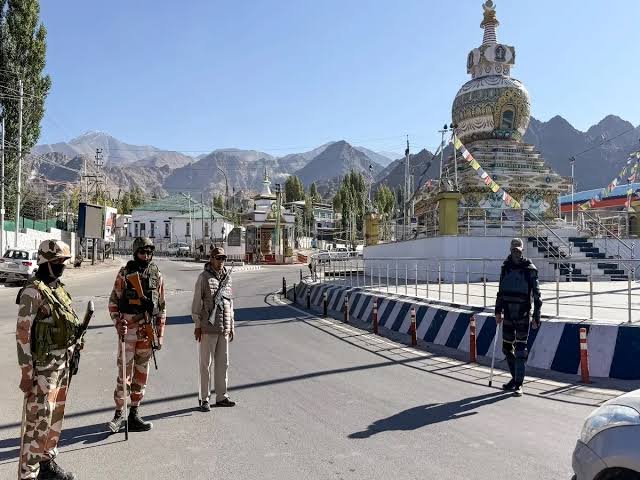
The Ladakh administration has announced that Autonomous Hill Development Councils will be established in all seven districts of the Union Territory, expanding a governance model that was previously limited to Leh and Kargil. The move is aimed at strengthening grassroots administration, improving local representation, and ensuring balanced development across the region.
The Ladakh Hill Development Councils plan has emerged as one of the most significant governance announcements for the Union Territory in 2026. The administration has confirmed that every district in Ladakh will have its own Autonomous Hill Development Council (AHDC), extending elected local governance beyond the existing councils in Leh and Kargil. The announcement comes after the creation of five new districts earlier this year and is being presented as a step toward deeper democratic decentralisation and more responsive local administration.
For residents, the proposal is expected to bring decision-making closer to local communities while giving each district a stronger voice in planning and development.
Why Is Ladakh Expanding Hill Development Councils?
Until recently, Ladakh had Autonomous Hill Development Councils only in Leh and Kargil. However, after the Union Territory expanded from two districts to seven with the creation of Sham, Nubra, Changthang, Zanskar and Drass, demands grew for equal local representation across all districts.
To address this, the Ladakh administration announced that every district will receive its own Hill Development Council under the provisions of the Ladakh Autonomous Hill Development Council Act. Officials have stated that only limited amendments to the existing law are required before implementation can begin.
The decision is intended to ensure that newly created districts receive governance structures comparable to those already functioning in Leh and Kargil.
What Are Autonomous Hill Development Councils?
An Autonomous Hill Development Council is an elected local governing institution created to address the unique administrative needs of geographically remote and strategically important hill regions.
These councils typically work alongside the Union Territory administration and focus on district-level planning and implementation. Their responsibilities generally include preparing development plans, overseeing local infrastructure projects, improving healthcare and education services, promoting tourism, supporting agriculture and rural livelihoods, and preserving the cultural heritage of the region.
The objective is to give local communities greater participation in governance while reducing administrative delays caused by highly centralised decision-making.
How Will the New Governance Model Work?
According to the administration, each of Ladakh’s seven districts will eventually have its own elected Hill Development Council exercising powers available under the LAHDC Act.
Alongside this expansion, officials have also outlined a proposal for a Union Territory-level institution under a customised constitutional framework that would coordinate policy among the seven councils. While discussions on the broader constitutional mechanism are still evolving, the immediate focus is on extending the existing council system uniformly across all districts.
This structure is expected to improve coordination between local administrations while allowing district-specific priorities to receive greater attention.
What Could Change for Local Residents?
If implemented successfully, the expanded Hill Council system could make governance more accessible for people living in remote regions of Ladakh.
Residents may benefit from quicker local decision-making on infrastructure projects, roads, drinking water supply, schools, health centres, tourism development and rural employment initiatives. District representatives would also have greater opportunities to raise local concerns directly through elected institutions instead of relying solely on central administrative channels.
The move is particularly significant because Ladakh covers a vast geographical area with scattered populations living in difficult terrain. Local governance institutions are often considered essential for delivering public services efficiently in such regions.
Why Is This Announcement Politically Important?
The announcement comes amid continuing discussions between Ladakh’s representatives and the Union Government on constitutional safeguards, administrative reforms and local representation.
Several civil society groups have sought stronger institutional protections for Ladakh after it became a Union Territory in 2019. Expanding Autonomous Hill Development Councils is being viewed as one measure aimed at strengthening democratic participation while broader constitutional proposals continue to be discussed.
Although the creation of the councils does not itself resolve every governance issue under discussion, it represents a notable administrative reform that could reshape how local development decisions are made across the Union Territory.
What Happens Next?
Before the councils become operational, the administration will need to complete legal amendments, delimit council constituencies where necessary and conduct elections for the newly established districts.
The government has indicated that the legal framework already allows councils in every district, meaning implementation may primarily involve procedural and legislative adjustments rather than creating an entirely new governance system.
Once completed, Ladakh will become one of India’s few regions where every district is represented through an Autonomous Hill Development Council, reflecting an expanded model of decentralised local governance.
Key Takeaways
- Ladakh plans to establish Autonomous Hill Development Councils in all seven districts.
- The move extends elected local governance beyond Leh and Kargil to five newly created districts.
- The initiative aims to strengthen grassroots administration and improve district-level development.
- Legal amendments and constituency delimitation are expected before elections and full implementation.
FAQ
Q1. Why is Ladakh creating new Hill Development Councils?
The administration wants every district to have equal access to elected local governance and development planning following the creation of five new districts.
Q2. How many Hill Development Councils will Ladakh have?
Once implemented, Ladakh will have seven Autonomous Hill Development Councils, one for each district.
Q3. What powers do these councils have?
They oversee district-level planning, development projects, local infrastructure, education, healthcare, tourism and other regional governance functions under the LAHDC Act.
Q4. Has the plan been fully implemented?
Not yet. The administration has announced the decision, but legal amendments, constituency delimitation and elections are still required before the new councils become operational.
(Internal keyword suggestions: Ladakh Hill Development Councils, Autonomous Hill Development Council, LAHDC Act, Ladakh governance, Ladakh new districts, democratic decentralisation, Ladakh administration, grassroots governance in Ladakh)










Leave a comment