

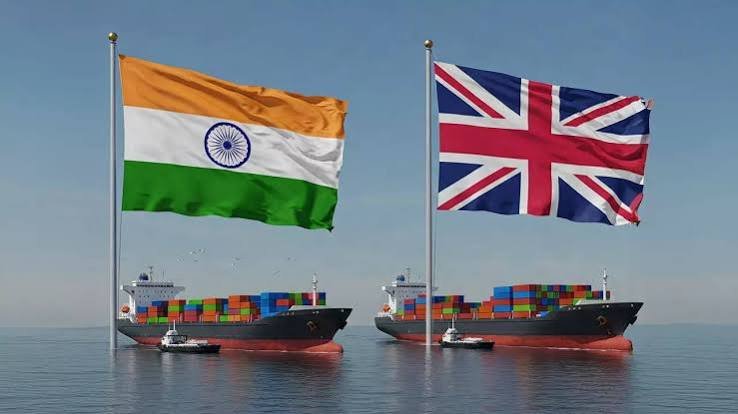
The India-UK Comprehensive Economic and Trade Agreement (CETA) officially came into force on July 15, 2026. The agreement gives duty-free access to nearly all Indian exports to the UK and is expected to benefit industries such as textiles, engineering goods, pharmaceuticals, food processing, IT services and gems and jewellery while strengthening bilateral trade.
The India-UK Trade Deal has entered a new phase with the Comprehensive Economic and Trade Agreement (CETA) coming into effect on July 15, 2026. The agreement is one of India’s most significant bilateral trade pacts with a developed economy and aims to make trade easier, reduce tariffs and improve market access for businesses on both sides. Under the agreement, about 99 percent of Indian exports by value will receive duty-free access to the UK market, opening fresh opportunities for exporters, manufacturers and service providers. The agreement also includes provisions to support professionals, simplify customs procedures and improve investment flows.
Why the India-UK Trade Deal Matters
India and the United Kingdom have maintained strong trade relations for decades, but tariffs and regulatory barriers often limited the full potential of bilateral commerce. The new agreement is designed to address many of these challenges by lowering trade costs and improving market access.
For India, the UK represents an important export destination for manufactured goods, textiles, engineering products, pharmaceuticals and professional services. Easier access to the British market is expected to make Indian products more competitive against suppliers from other countries.
The agreement is also expected to encourage greater collaboration in technology, education, financial services and innovation while strengthening supply chains between the two economies.
Textile, Apparel and Footwear Industries Could Be Major Winners
Among all sectors, India’s textile and apparel industry is expected to benefit significantly from the trade agreement.
With import duties largely eliminated, Indian garments, fabrics, home textiles and footwear can enter the UK market at more competitive prices. This provides an advantage for exporters from manufacturing hubs in Gujarat, Tamil Nadu, Punjab, Uttar Pradesh and Rajasthan.
The sector is labour-intensive and employs millions of workers across India. Higher exports could support manufacturing activity, create employment opportunities and encourage investment in production facilities.
For small and medium-sized exporters, the agreement offers an opportunity to expand into premium retail markets across the United Kingdom.
Engineering Goods, Pharmaceuticals and Food Processing Stand to Benefit
Engineering goods are another sector expected to see strong export growth.
India exports industrial machinery, automotive components, electrical equipment and precision engineering products to international markets. Reduced trade barriers could help these manufacturers increase their presence in the UK.
The pharmaceutical industry may also benefit through improved market access and streamlined regulatory cooperation. India already plays a major role in supplying affordable medicines globally, and stronger trade ties could further support exports.
Food processing companies producing tea, coffee, spices, processed foods and marine products are also expected to gain from reduced tariffs. These products have established demand among both British consumers and the Indian diaspora living in the UK.
Gems, Jewellery and Services Sector Receive a Boost
India’s gems and jewellery industry is likely to benefit from improved export competitiveness.
Jewellery manufacturers in Surat, Jaipur, Mumbai and other production centres may find better opportunities in the UK market as trade becomes more cost-effective.
Beyond goods, the agreement places considerable emphasis on services.
Information technology, IT-enabled services, consulting, financial services, education and professional services are expected to gain from improved market access and simplified business procedures. The accompanying Double Contribution Convention also reduces the burden of dual social security contributions for eligible professionals temporarily working in the UK, improving cost efficiency for Indian companies sending employees overseas.
MSMEs and Tier 2 Cities May See New Opportunities
One of the less discussed aspects of the agreement is its potential impact on micro, small and medium enterprises.
Many export-oriented MSMEs operate from Tier 2 and Tier 3 cities, producing engineering goods, handicrafts, leather products, food items and industrial components.
Lower tariffs and simpler export procedures can make these businesses more competitive in overseas markets. Cities such as Surat, Ludhiana, Moradabad, Kanpur, Tiruppur, Coimbatore, Rajkot and Jaipur already have strong export ecosystems that could benefit from rising UK demand.
Industry experts believe easier market access may also encourage more Indian businesses to explore exports for the first time.
Consumers and Importers Will Also Notice Changes
The agreement is not only about exports.
India has agreed to reduce tariffs on several British products in a phased manner. Over time, this is expected to make selected imported goods such as premium automobiles, Scotch whisky, gin and certain other British products more affordable for Indian consumers.
However, tariff reductions for many products will happen gradually rather than immediately, ensuring domestic industries have time to adjust to increased competition.
At the same time, rules of origin and quality standards remain part of the agreement to prevent misuse of trade preferences.
Challenges and the Road Ahead
While the agreement creates significant opportunities, its success will depend on how effectively businesses utilise the new market access.
Exporters will need to comply with quality standards, documentation requirements and product certification norms applicable in the UK. Investment in technology, logistics and product quality will remain essential for maintaining competitiveness.
Nevertheless, economists expect the agreement to strengthen bilateral trade over the coming years by expanding exports, supporting manufacturing, encouraging investment and creating employment across multiple sectors.
For India, the trade deal represents an important step in diversifying export markets and strengthening economic partnerships with developed economies.
Key Takeaways
- The India-UK Comprehensive Economic and Trade Agreement came into force on July 15, 2026.
- Nearly 99 percent of Indian exports by value now receive duty-free access to the UK market.
- Textiles, engineering goods, pharmaceuticals, food processing, jewellery and IT services are expected to benefit the most.
- Export-oriented MSMEs and manufacturers in Tier 2 and Tier 3 cities could gain new international business opportunities.
FAQ
Q1. When did the India-UK Trade Deal come into effect?
The Comprehensive Economic and Trade Agreement (CETA) officially came into force on July 15, 2026.
Q2. Which Indian industries are expected to benefit the most?
Textiles, apparel, engineering goods, pharmaceuticals, food processing, gems and jewellery, IT services and professional services are among the biggest beneficiaries.
Q3. Will Indian consumers also benefit?
Yes. Certain imported British goods, including premium cars and Scotch whisky, are expected to become more affordable over time as tariffs are reduced in phases.
Q4. How will MSMEs benefit from the agreement?
Lower tariffs, improved market access and simplified trade procedures could help small exporters expand their presence in the UK market.
(Internal keyword suggestions: India UK Trade Deal, India UK CETA, India UK Free Trade Agreement, Indian exports to UK, industries benefiting from India UK FTA, textile exports India, MSME exports, India UK trade 2026)












Leave a comment