

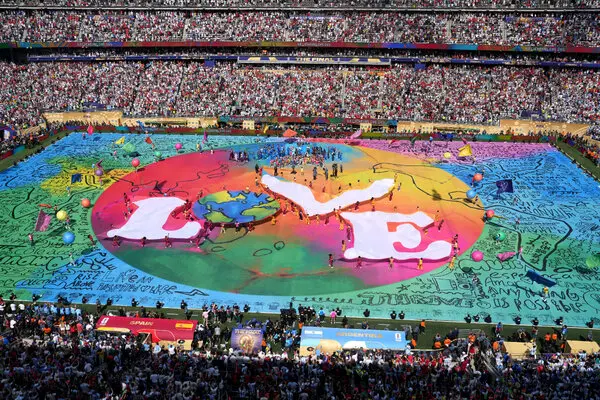
The FIFA World Cup 2026 Final introduced its first-ever halftime show, bringing together global music stars including Madonna, Shakira, BTS, Justin Bieber, and Burna Boy. The performance dominated social media, sparked mixed reactions among football fans, and marked a significant shift in how FIFA presents its biggest sporting event.
The FIFA World Cup 2026 halftime show became one of the biggest talking points of the tournament after FIFA introduced a Super Bowl-style entertainment segment during the World Cup Final on 19 July. The 11-minute performance featured an international lineup of artists including Madonna, Shakira, BTS, Justin Bieber, Burna Boy, and several surprise appearances, instantly becoming one of the most discussed moments across social media platforms. The historic show was curated by Chris Martin of Coldplay in partnership with Global Citizen and also supported the FIFA Global Citizen Education Fund.
FIFA Introduces a Historic First at the World Cup Final
For decades, the FIFA World Cup Final focused solely on football, with entertainment limited to opening and closing ceremonies. The 2026 edition changed that tradition by introducing the tournament’s first official halftime show, inspired by the format made popular by the NFL’s Super Bowl.
The performance took place during halftime at the New York New Jersey Stadium and was broadcast to millions of viewers worldwide. FIFA had announced the initiative months earlier, positioning it as a blend of football, music, and global social impact. The show also aimed to raise awareness and funding for education initiatives through the FIFA Global Citizen Education Fund.
Star-Studded Lineup Captivates Global Audiences
The halftime show featured one of the strongest entertainment lineups ever assembled for a football event.
Madonna opened the show with an energetic performance, while BTS performed one of their globally recognized hits. Justin Bieber delivered an acoustic segment before Shakira and Burna Boy performed the official World Cup anthem. The production also included appearances from football legends Ronaldo and Ronaldinho, actor Jason Sudeikis as Ted Lasso, the PS22 Chorus, and special contributions involving Coldplay and conductor Gustavo Dudamel.
The fast-paced production combined live music, celebrity appearances, choreography, and visual effects into an 11-minute performance designed for a worldwide television audience.
Social Media Explodes with Reactions
Within minutes of the performance ending, hashtags related to the FIFA World Cup halftime show began trending globally across X, Instagram, TikTok, and YouTube.
Fans shared performance clips, reaction videos, celebrity moments, and behind-the-scenes content. BTS fans celebrated the group’s appearance, while Shakira’s energetic stage performance attracted widespread praise. Madonna’s opening performance also generated significant discussion, with many calling it a memorable way to launch FIFA’s new tradition.
Justin Bieber’s acoustic performance divided viewers, with some appreciating the emotional approach while others felt it contrasted with the high-energy atmosphere created by the rest of the lineup. Viral clips featuring Ted Lasso and the surprise celebrity appearances also became widely shared across social media.
Football Fans Remain Divided Over the New Format
While entertainment fans welcomed the spectacle, reactions from traditional football supporters were more mixed.
Many viewers appreciated FIFA’s attempt to create a larger global entertainment event similar to the Super Bowl. Others argued that the World Cup Final should remain focused entirely on football without adopting entertainment formats from American sports.
Some critics felt the show featured too many performers within its limited runtime, making individual performances feel rushed. Others believed the halftime entertainment successfully expanded the global appeal of the tournament without significantly disrupting the match.
The debate itself contributed to the show’s enormous online visibility, with discussion continuing well after the final whistle.
Why the Halftime Show Matters Beyond Entertainment
The introduction of a halftime show reflects FIFA’s broader strategy of expanding the commercial and cultural reach of the World Cup.
Modern sporting events increasingly combine elite competition with large-scale entertainment experiences that attract viewers beyond traditional sports audiences. By bringing together globally recognized musicians from different regions, FIFA aimed to connect football with music, culture, and philanthropy.
The event also highlighted the FIFA Global Citizen Education Fund, which has raised millions of dollars to support education and football opportunities for children worldwide through ticket contributions and fundraising initiatives.
For brands, broadcasters, and digital platforms, the halftime show created valuable opportunities for audience engagement, live streaming, and real-time social media interaction.
What It Means for Future FIFA Tournaments
The success of the inaugural halftime show is likely to influence how FIFA approaches future World Cup finals.
Although opinions remain divided among football supporters, the performance demonstrated the enormous global interest generated when music and sport intersect on the world’s biggest sporting stage.
Whether FIFA expands the format or refines it in future editions will depend on audience feedback, broadcaster response, and fan reception. However, the 2026 World Cup Final has already secured a place in football history as the tournament that introduced halftime entertainment to the biggest match in international football.
For viewers across India and around the world, the halftime show became almost as widely discussed as the final itself, proving the growing influence of entertainment and social media in shaping major sporting events.
Key Takeaways
- FIFA introduced its first-ever World Cup Final halftime show during the 2026 final.
- Madonna, Shakira, BTS, Justin Bieber, Burna Boy, and other global stars headlined the performance.
- The show generated massive engagement across social media while receiving both praise and criticism from football fans.
- The event also supported the FIFA Global Citizen Education Fund, combining entertainment with a charitable initiative.
Frequently Asked Questions
1. Was this the first FIFA World Cup halftime show?
Yes. The 2026 FIFA World Cup Final featured the tournament’s first official halftime show.
2. Which artists performed at the FIFA World Cup 2026 halftime show?
The lineup included Madonna, Shakira, BTS, Justin Bieber, Burna Boy, the PS22 Chorus, and other special guests.
3. Why did the halftime show become so popular online?
Its celebrity lineup, surprise appearances, and the novelty of introducing a Super Bowl-style performance to the FIFA World Cup Final led to widespread discussion and viral social media content.
4. What was the purpose of the halftime show beyond entertainment?
The event helped promote the FIFA Global Citizen Education Fund, which supports education and football opportunities for children around the world.









Leave a comment