

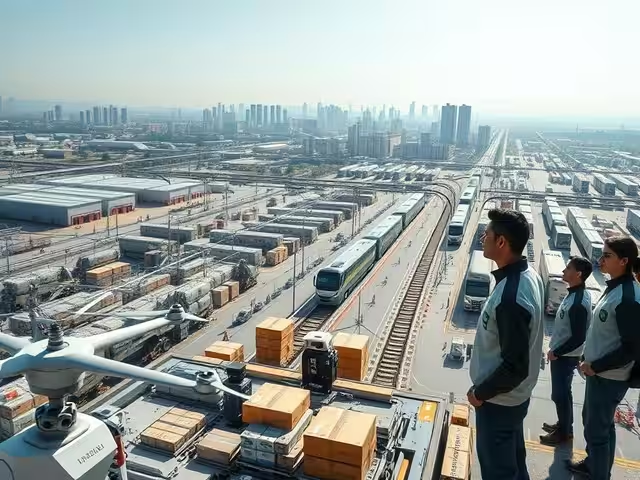
India’s new logistics corridors are reshaping the country’s supply chain by improving connectivity between manufacturing hubs, ports, and inland markets. These projects are expected to reduce transportation costs, speed up deliveries, and create fresh business opportunities, particularly for enterprises in Tier-2 and Tier-3 cities.
India’s New Logistics Corridors and Their Impact on Regional Businesses
Topic type: Evergreen with ongoing policy relevance. While logistics infrastructure projects continue to progress through phased implementation, the subject is best treated as an explanatory analysis rather than breaking news.
India’s new logistics corridors are emerging as one of the country’s biggest infrastructure transformations. Backed by government initiatives such as the PM Gati Shakti National Master Plan, the National Logistics Policy, Dedicated Freight Corridors, industrial corridors, and multimodal transport networks, these projects aim to improve the movement of goods across the country. For regional businesses, especially those located in Tier-2 and Tier-3 cities, better connectivity can reduce costs, expand market access, and improve competitiveness in both domestic and international markets.
Efficient logistics has long been one of India’s biggest economic challenges. High transportation costs, fragmented supply chains, and delays have affected businesses of all sizes. The new logistics corridors seek to address these issues through integrated planning, modern infrastructure, and digital coordination across multiple modes of transport.
Why India Is Investing in Logistics Infrastructure
India’s economy depends heavily on the efficient movement of goods between farms, factories, warehouses, ports, airports, and consumers. Traditionally, road transport has handled the majority of freight movement, creating congestion and increasing logistics expenses. The government has therefore focused on building a multimodal logistics network where roads, railways, inland waterways, ports, and airports work together.
Projects such as the Eastern Dedicated Freight Corridor and Western Dedicated Freight Corridor have already demonstrated how freight trains can move cargo faster while reducing congestion on passenger railway routes. Alongside these, industrial corridors including the Delhi Mumbai Industrial Corridor and other regional development corridors are designed to connect manufacturing clusters with transport infrastructure.
The National Logistics Policy complements these investments by encouraging digital integration, better warehousing, simplified regulations, and improved coordination between government departments.
Lower Transportation Costs Benefit Regional Businesses
One of the biggest advantages of logistics corridors is the reduction in transportation costs. When freight moves faster and more efficiently, businesses spend less on fuel, storage, inventory, and delivery delays.
For manufacturers in cities such as Nagpur, Indore, Coimbatore, Surat, Rajkot, Kanpur, Lucknow, Bhubaneswar, and Vijayawada, improved transport links can make products more competitive in national markets. Small and medium enterprises often struggle because logistics costs consume a significant portion of their operating expenses. Better infrastructure allows these businesses to deliver products more quickly while maintaining competitive pricing.
Faster delivery schedules also improve customer satisfaction, especially for businesses serving e-commerce platforms where quick fulfillment has become a key expectation.
Opportunities for MSMEs and Local Manufacturing
Micro, Small and Medium Enterprises, commonly known as MSMEs, are expected to benefit significantly from stronger logistics networks. Many MSMEs operate outside major metropolitan cities but often face challenges in reaching larger markets due to inadequate transportation facilities.
Improved freight corridors allow regional manufacturers to connect directly with warehouses, distribution centres, and export gateways. This creates opportunities to expand beyond local markets without requiring businesses to relocate.
The growth of logistics parks and integrated warehousing facilities near transport corridors is also encouraging supporting industries such as packaging, cold storage, inventory management, transportation services, and supply chain technology. Together, these developments can generate employment across multiple sectors.
Boost for Agriculture and Food Processing Industries
Agriculture is another sector likely to gain from improved logistics infrastructure. Farmers and food processing companies depend on timely transportation to preserve the quality of perishable products.
Modern logistics corridors can reduce transit time for fruits, vegetables, dairy products, seafood, and processed foods. Better cold chain facilities and multimodal transport networks help minimize wastage while enabling producers to access distant domestic and export markets.
Food processing companies located in smaller cities may find it easier to source raw materials and distribute finished products more efficiently. This supports both rural income growth and industrial development.
Digital Logistics Is Becoming Equally Important
Physical infrastructure alone is not enough to modernize supply chains. India is increasingly adopting digital logistics solutions that improve visibility and operational efficiency.
Technologies such as GPS-based vehicle tracking, warehouse automation, digital documentation, artificial intelligence for route optimization, and integrated logistics platforms help businesses monitor shipments in real time. These systems reduce paperwork, improve transparency, and support faster decision-making.
The PM Gati Shakti platform also promotes coordinated planning by bringing together infrastructure data from multiple ministries. This integrated approach helps identify connectivity gaps and supports more efficient project execution.
Challenges That Still Need Attention
Despite significant progress, several challenges remain. Large infrastructure projects require substantial investment and often take years to complete. Land acquisition, environmental clearances, and coordination between different agencies can delay implementation.
Regional businesses must also invest in digital capabilities, workforce training, and modern supply chain practices to fully benefit from improved infrastructure. Smaller enterprises may need financial support and technical guidance to adopt new logistics technologies.
Maintaining consistent infrastructure quality across states will also be essential for achieving seamless freight movement throughout the country.
The Road Ahead for India’s Regional Economy
India’s logistics transformation represents more than just new highways and railway lines. It reflects a broader effort to improve economic efficiency, strengthen manufacturing, support exports, and create balanced regional development.
As logistics corridors continue expanding, businesses located outside traditional metropolitan centres could gain greater access to customers, suppliers, and investment opportunities. Improved connectivity has the potential to make Tier-2 and Tier-3 cities stronger contributors to India’s manufacturing and services economy.
For entrepreneurs, MSMEs, farmers, and exporters, efficient logistics is becoming a strategic advantage rather than simply an operational necessity. If implementation continues alongside digital modernization and policy reforms, India’s logistics corridors could play a central role in supporting long-term economic growth and enhancing the competitiveness of regional businesses.
Key Takeaways
- India’s logistics corridors aim to reduce transportation costs through integrated road, rail, port, and multimodal infrastructure.
- MSMEs and regional manufacturers are expected to benefit from faster deliveries and improved market access.
- Agriculture and food processing sectors can reduce wastage through better freight connectivity and cold chain infrastructure.
- Digital logistics technologies will play an important role alongside physical infrastructure in improving supply chain efficiency.
Frequently Asked Questions
1. What are India’s logistics corridors?
They are integrated transport networks that connect industrial hubs, manufacturing centres, ports, airports, warehouses, and markets through roads, railways, waterways, and logistics parks to improve freight movement.
2. How do logistics corridors help small businesses?
They reduce transportation costs, shorten delivery times, improve access to national markets, and create opportunities for business expansion without requiring companies to relocate.
3. Which government initiatives support logistics development in India?
Major initiatives include the PM Gati Shakti National Master Plan, the National Logistics Policy, Dedicated Freight Corridors, Bharatmala, Sagarmala, and various industrial corridor projects.
4. Why are logistics corridors important for Tier-2 and Tier-3 cities?
Improved connectivity enables businesses in smaller cities to compete more effectively, attract investment, access larger customer markets, and generate employment through industrial growth.












Leave a comment