

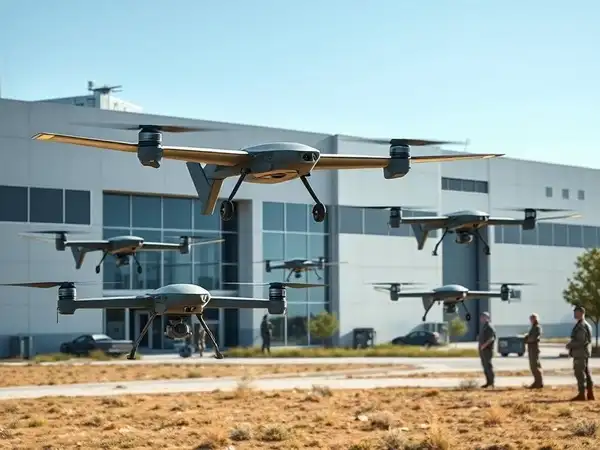
India’s growing drone economy is opening up new career opportunities across industries such as agriculture, logistics, infrastructure, healthcare, filmmaking, mining, disaster management, and public safety. Supported by government initiatives, expanding drone manufacturing, and favorable regulations, the sector is emerging as one of the country’s fastest-growing technology-driven industries.
The topic is evergreen with strong current relevance. India’s drone ecosystem continues to evolve through policy support, increasing commercial adoption, and investments in domestic manufacturing. This article follows an explanatory approach based on verified industry trends and current developments.
Only a few years ago, drones were largely associated with aerial photography and recreational use. Today, unmanned aerial vehicles, commonly known as drones, are becoming valuable business tools that improve productivity, reduce operational costs, and enhance safety across multiple sectors. As adoption increases, companies are looking for skilled professionals who can build, operate, maintain, and manage drone technologies.
Government Policies Are Accelerating Drone Adoption
One of the biggest reasons behind the rapid expansion of India’s drone economy is supportive government policy.
The Government of India has introduced several measures to encourage domestic drone manufacturing and commercial usage. The Drone Rules 2021 simplified regulations by reducing paperwork, digitizing approvals, and making it easier for businesses to operate drones legally. The Production Linked Incentive (PLI) Scheme for drones and drone components has further encouraged local manufacturing and innovation.
The Digital Sky platform has also streamlined drone registration, licensing, and airspace permissions, creating a more transparent operating environment.
Together, these initiatives have encouraged startups, established companies, educational institutions, and investors to actively participate in India’s expanding drone ecosystem.
Drones Are Transforming Multiple Industries
The demand for drone technology extends far beyond aerial photography.
In agriculture, drones are used for crop monitoring, precision spraying, soil assessment, and irrigation planning. Farmers can identify crop health issues more efficiently while reducing fertilizer and pesticide usage.
Infrastructure companies use drones for land surveys, highway construction, railway inspections, bridge monitoring, and power transmission line inspections. Mining companies employ drones to create detailed site maps and monitor excavation activities.
Emergency response agencies increasingly deploy drones for disaster assessment, flood monitoring, search and rescue operations, and wildfire surveillance.
The logistics sector is also experimenting with drone-based deliveries in selected areas, particularly for medical supplies and time-sensitive deliveries to remote locations.
This growing range of applications continues to create demand for specialized professionals across industries.
New Career Opportunities Are Emerging
India’s drone economy is generating employment across technical as well as non-technical roles.
Certified drone pilots are among the most sought-after professionals, particularly in agriculture, infrastructure, surveying, real estate, filmmaking, and industrial inspections. Licensed operators conduct commercial flights while ensuring compliance with aviation regulations.
Drone maintenance engineers inspect, repair, and service unmanned aircraft to maintain operational safety. Software developers create navigation systems, flight control applications, artificial intelligence solutions, and autonomous drone technologies.
Geospatial analysts process aerial imagery collected by drones to generate maps, conduct environmental assessments, and support urban planning projects.
Additional opportunities exist in drone manufacturing, quality assurance, research and development, sales, training, cybersecurity, aviation compliance, and project management.
As the industry expands, professionals with multidisciplinary skills are expected to remain in high demand.
Tier 2 and Tier 3 Cities Are Benefiting
The growth of India’s drone industry is no longer limited to major metropolitan areas.
Educational institutions in smaller cities are introducing drone training programmes, while startup incubators are supporting entrepreneurs developing drone-based solutions for agriculture, logistics, and rural development.
Agriculture remains one of the strongest growth areas because many Tier 2 and Tier 3 regions have large farming communities. Drone service providers now assist farmers with crop monitoring, pesticide spraying, yield estimation, and field mapping.
State governments are also exploring drone technology for land record digitisation, infrastructure planning, forest management, and disaster response.
This regional expansion is creating employment opportunities closer to home, reducing the need for skilled professionals to relocate to major cities.
Skills Required to Build a Career in the Drone Industry
Success in the drone sector requires a combination of technical knowledge and practical training.
Aspiring professionals often benefit from learning drone operation, aviation safety regulations, GIS mapping, GPS technology, aerial photography, data analysis, artificial intelligence, robotics, and electronics.
Certified training from institutions approved by the Directorate General of Civil Aviation (DGCA) is essential for individuals planning to operate commercial drones legally in India.
Engineering graduates, IT professionals, surveyors, agriculture specialists, photographers, and aviation enthusiasts are among those increasingly entering the industry.
Continuous learning remains important because drone technology continues to evolve rapidly through advancements in automation, sensors, machine learning, and battery efficiency.
Challenges and the Road Ahead
Despite strong growth, India’s drone ecosystem still faces several challenges.
High equipment costs, limited public awareness, skilled workforce shortages, battery limitations, weather-related operational constraints, and cybersecurity concerns continue to affect large-scale adoption.
Airspace restrictions and operational safety also require businesses to follow regulatory guidelines carefully.
However, improvements in domestic manufacturing, better battery technology, expanding training infrastructure, and increasing commercial demand are expected to address many of these challenges over time.
Industry analysts believe drones will become increasingly integrated into everyday business operations across sectors ranging from agriculture and logistics to environmental monitoring and smart city development.
As innovation continues, India’s drone economy has the potential to generate thousands of high-value jobs while strengthening the country’s position as a global technology and manufacturing hub.
Key Takeaways
- Government policies and domestic manufacturing are driving rapid growth in India’s drone economy.
- Drones are being used across agriculture, infrastructure, logistics, healthcare, and disaster management.
- New career opportunities include drone pilots, engineers, software developers, surveyors, and geospatial analysts.
- Tier 2 and Tier 3 cities are emerging as important centres for drone services and skill development.
Frequently Asked Questions
Q1. What industries use drones in India?
Drones are widely used in agriculture, infrastructure, construction, mining, logistics, healthcare, filmmaking, environmental monitoring, disaster management, and public safety.
Q2. Who regulates commercial drone operations in India?
Commercial drone operations are regulated by the Directorate General of Civil Aviation (DGCA) under the Drone Rules and the Digital Sky platform.
Q3. What qualifications are needed to become a drone pilot?
Individuals must complete training through a DGCA-authorised Remote Pilot Training Organisation and obtain the required certification for commercial drone operations.
Q4. Why is the drone industry growing rapidly in India?
Supportive government policies, increased investment, expanding commercial applications, domestic manufacturing, and rising demand across multiple industries are driving the sector’s growth.
(Internal Keywords: India’s drone economy, drone careers India, DGCA drone pilot, Drone Rules 2021, drone jobs India, drone manufacturing India, agricultural drones, drone technology careers, Digital Sky platform, drone industry India)










Leave a comment