

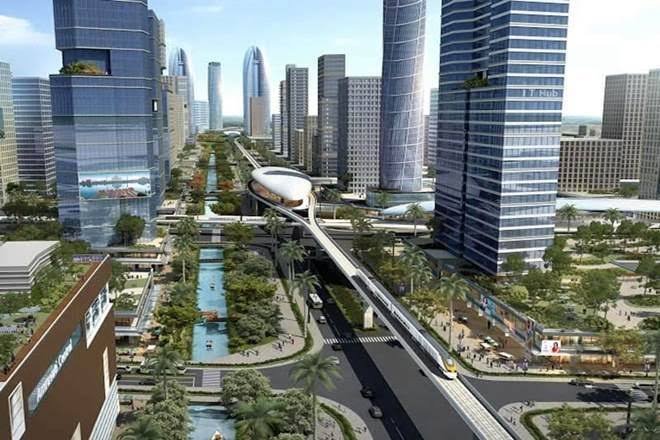
India’s Smart Cities Mission has transformed urban development across several Tier-2 cities through better infrastructure, digital governance, mobility, and public services. While progress varies from city to city, many emerging urban centres are beginning to see measurable improvements in quality of life and municipal efficiency.
The topic is evergreen with current relevance. Although Smart Cities Mission projects continue to evolve, this article is educational rather than tied to a single breaking news event. The tone is therefore analytical and informative.
Smart City Projects Are Reshaping India’s Tier-2 Cities
Smart City Projects have become a major driver of urban transformation across India’s Tier-2 cities. Since the launch of the Smart Cities Mission in 2015, the objective has been to improve urban infrastructure, strengthen public services, promote sustainable development, and use technology to make cities more efficient and citizen-friendly.
Unlike metro cities that already had relatively developed infrastructure, many Tier-2 cities have used Smart City funding to address long-standing challenges related to transportation, water supply, waste management, public safety, and digital governance. While implementation has not been uniform across all selected cities, several have made visible progress through completed projects and improved municipal services.
The mission demonstrates that urban development is increasingly reaching beyond India’s largest metropolitan areas.
Indore Continues to Lead Through Integrated Urban Development
Among Tier-2 cities, Indore has emerged as one of the strongest examples of successful smart city implementation.
The city has consistently earned recognition for cleanliness while also investing in integrated traffic management systems, intelligent surveillance, smart roads, public transport improvements, digital governance platforms, and modern waste processing facilities.
Indore has also introduced command and control centres that help authorities monitor traffic, emergency services, sanitation, and civic operations from a central location. These systems improve coordination between departments and allow quicker responses to public issues.
The city’s success shows that technology alone is not enough. Effective administration, citizen participation, and consistent execution have played equally important roles.
Surat and Coimbatore Have Improved Urban Infrastructure
Surat has focused on improving flood management, public transport, smart traffic systems, and digital civic services. Given the city’s history of urban flooding, investments in monitoring systems and infrastructure upgrades have strengthened disaster preparedness.
Similarly, Coimbatore has invested in intelligent traffic management, energy-efficient street lighting, upgraded public spaces, and improved water management systems. Digital platforms now allow residents to access several municipal services online, reducing paperwork and improving transparency.
Both cities demonstrate how Smart City Projects can address local priorities rather than applying identical solutions everywhere. Urban planning has become increasingly data-driven, allowing authorities to allocate resources more efficiently.
Bhubaneswar and Visakhapatnam Have Focused on Technology
Bhubaneswar, one of the first cities selected under the Smart Cities Mission, has developed integrated command centres, smart classrooms, digital governance initiatives, public Wi-Fi zones, and intelligent traffic monitoring.
The city has also invested in public spaces, pedestrian-friendly roads, cycling infrastructure, and disaster management systems due to its vulnerability to cyclones.
Visakhapatnam has concentrated on smart surveillance, digital public services, environmental monitoring, and urban mobility projects. These initiatives aim to improve both safety and service delivery while supporting future economic growth.
Technology has become a tool for improving governance rather than replacing traditional urban planning.
Nagpur, Udaipur and Other Cities Are Making Steady Progress
Cities such as Nagpur, Udaipur, Agra, Jabalpur, Vadodara, Belagavi, and Dharamshala have also completed several Smart City Projects, although progress varies depending on funding, project complexity, and local administrative capacity.
Nagpur has expanded intelligent traffic systems, digital governance services, LED street lighting, and public transport improvements. Udaipur has focused on heritage conservation alongside modern infrastructure upgrades, balancing tourism with urban development.
Several cities have modernised bus terminals, developed public parks, improved sewage treatment facilities, expanded CCTV surveillance, and introduced online municipal services that reduce waiting times for citizens.
While not every planned project has been completed, many cities have already delivered visible improvements in everyday urban life.
Challenges Continue Despite Significant Progress
Although Smart City Projects have achieved notable results, implementation has faced several challenges.
Land acquisition delays, contractor issues, funding constraints, coordination between government departments, and lengthy approval processes have slowed execution in some locations.
Critics also argue that certain projects have focused more on selected urban zones instead of benefiting entire cities. Long-term maintenance of smart infrastructure will remain equally important once projects are completed.
Another challenge involves ensuring that technology investments continue delivering value beyond the initial implementation phase. Digital systems require regular upgrades, cybersecurity measures, skilled personnel, and continuous monitoring.
Success ultimately depends not only on infrastructure but also on effective governance and citizen engagement.
The Future of Smart Cities in Tier-2 India
India’s urban population continues to grow rapidly, making efficient city management increasingly important. Tier-2 cities are expected to play a major role in accommodating economic growth, industrial expansion, and rising migration from smaller towns.
The experience gained through the Smart Cities Mission provides valuable lessons for future urban development. Cities that combine technology with good governance, sustainable planning, and community participation are more likely to achieve long-term success.
Rather than creating entirely new urban centres, the mission has focused on modernising existing cities while improving the quality of public services. As infrastructure projects continue to mature, Tier-2 cities are expected to become stronger economic and innovation hubs that support balanced regional development across India.
Key Takeaways
- Several Tier-2 cities have made measurable progress through Smart City Projects.
- Indore, Surat, Coimbatore, Bhubaneswar, and Nagpur are among the notable performers.
- Digital governance, smart mobility, and better public infrastructure remain major focus areas.
- Long-term success depends on maintenance, governance, and citizen participation alongside technology.
Frequently Asked Questions
1. What is the Smart Cities Mission?
The Smart Cities Mission is a Government of India initiative launched in 2015 to improve urban infrastructure, public services, sustainability, and digital governance across selected cities.
2. Which Tier-2 cities have shown strong progress?
Cities including Indore, Surat, Coimbatore, Bhubaneswar, Nagpur, Visakhapatnam, and Udaipur have completed multiple smart city projects with visible improvements in civic infrastructure and services.
3. What are the main goals of Smart City Projects?
The projects aim to improve transportation, water supply, waste management, digital governance, public safety, energy efficiency, and overall quality of life.
4. Are all Smart City Projects completed?
No. While many projects have been completed, several cities continue to work on remaining infrastructure developments. Progress varies depending on local conditions, funding, and project complexity.
(Internal keyword suggestions: Smart City Projects, Smart Cities Mission India, Tier-2 cities India, urban development India, smart infrastructure, digital governance, Indore Smart City, Nagpur Smart City, sustainable urban development, intelligent traffic management, municipal services India, smart city initiatives)








Leave a comment