

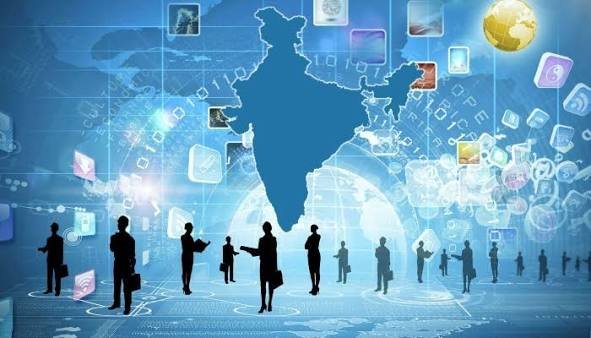
Digital governance is transforming public services across India’s district headquarters by making government processes faster, more transparent, and accessible. From online certificates and digital payments to integrated service portals, technology is improving how citizens interact with local administrations.
The topic is evergreen with ongoing relevance. While digital governance initiatives continue to expand across India, this subject is not tied to a single news event. The article is therefore presented in an informative and educational style.
Digital Governance Is Transforming District Headquarters Across India
Digital governance has become one of the biggest drivers of administrative reform in India’s district headquarters. Over the past decade, central and state governments have increasingly adopted technology to simplify public services, reduce paperwork, improve transparency, and make government offices more citizen-friendly.
District headquarters serve as administrative centres for millions of people who rely on government departments for certificates, licences, land records, welfare schemes, taxation, pensions, and grievance redressal. Traditionally, accessing these services often involved multiple office visits, long waiting times, and extensive documentation.
Today, digital platforms are changing that experience. Citizens can now complete many government processes online, track applications in real time, make digital payments, and receive updates without repeatedly visiting government offices.
Online Citizen Services Are Reducing Paperwork
One of the most visible changes brought by digital governance is the availability of online public services.
Many district administrations now allow citizens to apply for birth certificates, death certificates, income certificates, caste certificates, domicile certificates, and various licences through state service portals or Common Service Centres (CSCs). Applicants can upload documents digitally, pay fees online, and monitor application status from home.
Land record digitisation has also improved access to property information in many states. Farmers, property buyers, banks, and businesses can retrieve land-related records more quickly than before, reducing dependency on manual registers.
Although some services still require physical verification, digital applications have significantly reduced paperwork and processing time for many routine government tasks.
Common Service Centres Are Bridging the Digital Divide
Not every citizen has access to a smartphone, computer, or reliable internet connection. To address this challenge, Common Service Centres (CSCs) have become an important part of India’s digital governance ecosystem.
Located in villages, towns, and district headquarters, CSCs help citizens access government services, complete online applications, pay utility bills, register for welfare schemes, and obtain official documents.
These centres are especially valuable for senior citizens, rural residents, and first-time digital users who may require assistance with online procedures.
By combining digital technology with local support, CSCs have expanded access to government services beyond urban populations.
Digital Payments Have Improved Transparency
The adoption of digital payment systems has simplified financial transactions between citizens and government departments.
Fees for licences, registrations, taxes, utility bills, and public services can now often be paid through UPI, internet banking, debit cards, or authorised digital payment gateways. This reduces dependence on cash transactions while creating electronic payment records that improve financial transparency.
Government benefit transfers have also become more efficient through Direct Benefit Transfer (DBT) systems. Subsidies, pensions, scholarships, and welfare payments are increasingly transferred directly into beneficiaries’ bank accounts, reducing delays and minimising leakages.
These improvements have strengthened accountability while making public financial services more convenient for citizens.
Technology Is Improving Administration and Public Safety
Digital governance extends beyond citizen-facing services. District administrations increasingly use technology to improve internal operations and decision-making.
Integrated command and control centres in several districts help authorities monitor traffic, public safety, emergency response, sanitation, and civic infrastructure. Geographic Information Systems (GIS), satellite mapping, and digital dashboards assist officials in planning development projects and managing public resources.
Many district collectors also use digital grievance portals and social media platforms to receive citizen complaints, monitor departmental performance, and communicate important public announcements.
These tools enable faster responses to administrative issues while improving coordination between government departments.
Challenges Still Need to Be Addressed
Despite significant progress, digital governance continues to face practical challenges across several district headquarters.
Internet connectivity remains inconsistent in some rural and remote areas. Digital literacy varies widely among citizens, particularly older populations unfamiliar with online services. Technical issues, cybersecurity concerns, server downtime, and delays in integrating older records with digital systems also affect service delivery.
Some government processes still require physical verification or manual approvals due to legal requirements. As a result, complete digitisation remains a gradual process rather than an immediate transformation.
Continuous investment in infrastructure, employee training, cybersecurity, and citizen awareness will be essential to improve digital governance further.
The Future of Digital Governance in India
India’s digital governance journey is expected to accelerate as emerging technologies become more widely adopted. Artificial intelligence, data analytics, cloud computing, and secure digital identity systems have the potential to make government services even more efficient.
Future improvements may include faster application processing, predictive public service delivery, multilingual digital platforms, and greater integration between departments to reduce duplicate documentation.
District headquarters will continue to play an important role in this transformation because they serve as the primary administrative link between state governments and local communities.
As technology continues to simplify governance, citizens are likely to experience greater convenience, transparency, and accessibility while interacting with public institutions.
Key Takeaways
- Digital governance is making government services faster, more transparent, and easier to access.
- Online applications and digital payments have reduced paperwork and processing time.
- Common Service Centres help bridge the digital divide in smaller towns and rural areas.
- Continued investment in infrastructure, digital literacy, and cybersecurity remains essential for long-term success.
Frequently Asked Questions
1. What is digital governance?
Digital governance refers to the use of technology to deliver government services, improve administrative efficiency, increase transparency, and provide easier access to public services.
2. What services are commonly available online?
Many states offer online applications for certificates, licences, land records, utility payments, tax payments, welfare schemes, and grievance registration through official government portals.
3. What are Common Service Centres (CSCs)?
Common Service Centres are government-supported facilities that help citizens access digital public services, complete online applications, and use various government platforms, especially in rural and semi-urban areas.
4. What challenges does digital governance face?
Key challenges include uneven internet connectivity, varying levels of digital literacy, cybersecurity risks, technical issues, and the gradual digitisation of older government records.
(Internal keyword suggestions: digital governance India, district headquarters, e-governance, Common Service Centres, online government services, digital public services, land record digitisation, Direct Benefit Transfer, UPI government payments, citizen services India, Digital India, public administration technology)











Leave a comment