

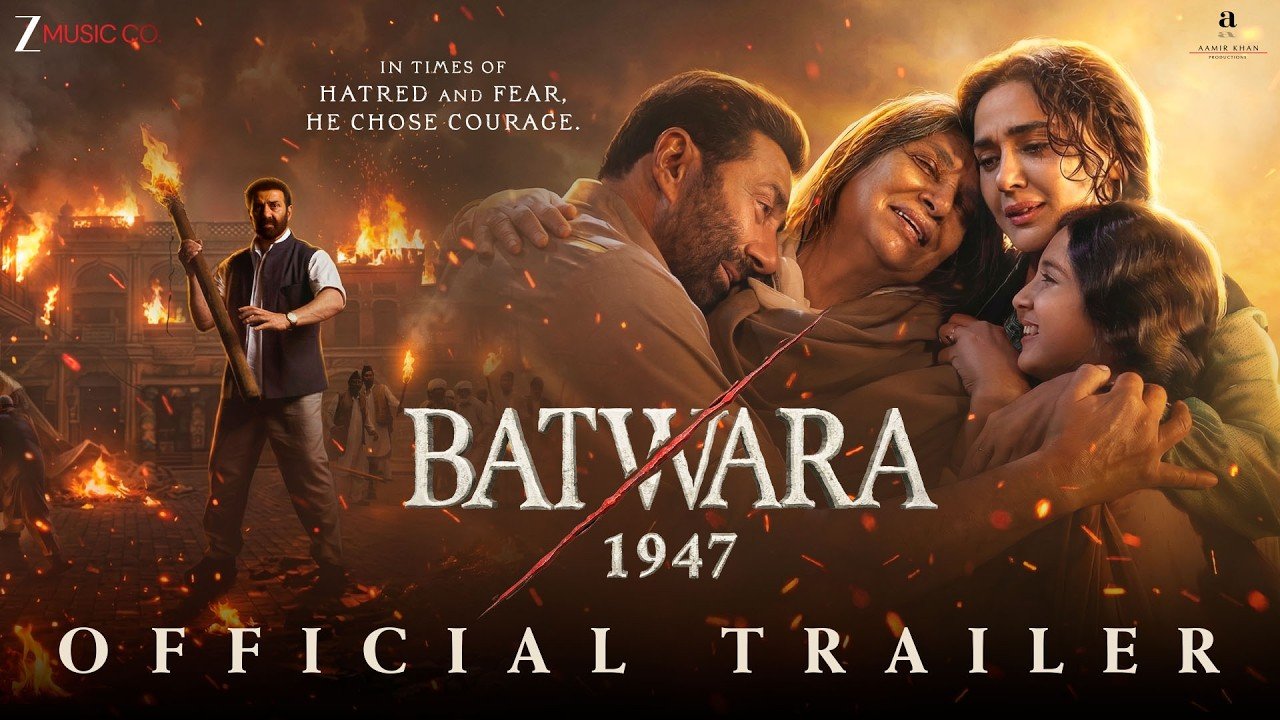
Historical films continue to attract Indian audiences by revisiting defining moments from the country’s past through compelling storytelling. With Batwara 1947 among the notable releases of 2026, interest in period dramas remains strong as viewers seek both entertainment and historical context.
Batwara 1947 has emerged as one of the notable historical films releasing around Independence Day 2026, highlighting once again why stories based on India’s past continue to resonate with audiences. The film, inspired by the events surrounding the Partition of India in 1947, joins a long list of period dramas that attempt to recreate significant chapters of Indian history through cinema.
The continued popularity of historical films reflects more than nostalgia. These movies often encourage discussions about national identity, social change, sacrifice, and the human impact of historical events. While filmmakers frequently use creative interpretation, audiences are increasingly interested in understanding the real history behind the stories shown on screen.
Batwara 1947 Brings Partition Back Into Public Conversation
The Partition of India remains one of the most significant and emotional events in the country’s modern history. In 1947, British India was divided into India and Pakistan, resulting in one of the largest migrations in human history. Millions of people crossed newly created borders, while widespread communal violence affected countless families.
Batwara 1947 draws attention to this period by focusing on the personal struggles and emotional consequences experienced by ordinary people during Partition. Rather than presenting history only through political decisions, such films often explore how historical events changed the lives of individuals, families, and entire communities.
The release timing around Independence Day also makes the subject especially relevant, as many viewers revisit stories connected to India’s freedom movement during this period.
Historical Films Continue to Find Strong Audiences
Indian cinema has consistently produced successful historical and period films across different languages. Whether based on ancient kingdoms, freedom fighters, military operations, royal families, or social reform movements, these stories continue to attract viewers across age groups.
One reason is that historical films combine education with entertainment. Younger audiences who may not have studied certain historical events in detail often become curious after watching a film. This frequently leads viewers to explore books, documentaries, interviews, and verified historical records.
At the same time, older generations often connect emotionally with stories they heard from parents or grandparents, especially when films portray events such as Partition, the freedom struggle, or post-Independence India.
Emotional Storytelling Makes History More Accessible
Facts alone do not always create lasting memories. Cinema adds emotion, visual storytelling, music, and performances that help audiences understand the human side of historical events.
Partition stories, for example, are not only about borders or political negotiations. They are also about families separated overnight, communities forced to migrate, friendships broken by conflict, and people rebuilding their lives under extraordinary circumstances.
Films like Batwara 1947 attempt to present these personal experiences through fictional or dramatized characters inspired by real historical settings. When handled responsibly, such storytelling helps viewers appreciate the scale of historical events without reducing them to textbook summaries.
Audiences Today Also Expect Historical Accuracy
Modern viewers have access to digital archives, online resources, expert interviews, and historical research. As a result, expectations for authenticity have increased significantly.
Audiences now pay closer attention to costumes, language, locations, timelines, and historical details. Historians and researchers frequently review major historical films, while discussions on social media often compare cinematic portrayals with documented facts.
Filmmakers therefore face the challenge of balancing engaging storytelling with historical responsibility. While creative liberties are common in cinema, audiences generally appreciate films that remain respectful to the historical context and avoid presenting fiction as established fact.
Independence Day Releases Strengthen Public Interest
Films based on India’s history are often scheduled around national holidays because public interest naturally increases during this period. Independence Day encourages reflection on the country’s journey, making historical subjects particularly relevant.
Schools, colleges, television channels, streaming platforms, and cultural organizations also revisit historical themes during August. This creates an environment where audiences are more receptive to films that explore India’s past.
For many families, watching historical films together has become part of the Independence Day weekend, encouraging conversations across generations about freedom, democracy, and the nation’s development.
Historical Cinema Is Evolving With Modern Filmmaking
Today’s historical films benefit from advanced visual effects, improved production design, and more detailed research than many earlier productions. Directors increasingly collaborate with historians, costume designers, language experts, and archivists to create authentic environments.
Streaming platforms have also expanded the audience for historical storytelling. Viewers who may have missed theatrical releases can now discover historical dramas through OTT services, increasing the longevity of such films.
This wider accessibility has encouraged filmmakers to explore lesser-known historical events and regional stories that previously received limited attention in mainstream cinema.
The Enduring Importance of Historical Storytelling
The continued popularity of films like Batwara 1947 demonstrates that audiences remain interested in stories rooted in India’s history. These films provide an opportunity to revisit important moments that shaped the country while encouraging viewers to explore historical facts beyond the screen.
Although cinema should not replace academic history, it often serves as an entry point for learning. When filmmakers combine responsible storytelling with accurate historical context, historical films can educate, inspire discussion, and preserve collective memory for future generations.
As India continues to produce historical dramas across multiple languages, audience interest suggests that stories from the past will remain an important part of the country’s cinematic landscape.
Key Takeaways
- Batwara 1947 revisits the human impact of the 1947 Partition through historical storytelling.
- Historical films remain popular because they combine entertainment with educational value.
- Modern audiences increasingly expect authenticity and factual accuracy in period dramas.
- Independence Day continues to be an important period for releasing history-based films in India.
Frequently Asked Questions
Q1. What is Batwara 1947 about?
The film is based on the backdrop of India’s Partition in 1947 and explores the emotional, social, and human consequences experienced by ordinary people during that period.
Q2. Why do historical films remain popular in India?
They allow audiences to understand important historical events through engaging storytelling while creating emotional connections with India’s past.
Q3. Are historical films completely accurate?
Not always. Many historical films include fictional characters or dramatized scenes for storytelling purposes, although they are generally inspired by real events.
Q4. Why are historical films often released around Independence Day?
Independence Day increases public interest in India’s history, freedom movement, and national identity, making it an appropriate period for releasing history-based films.












Leave a comment