

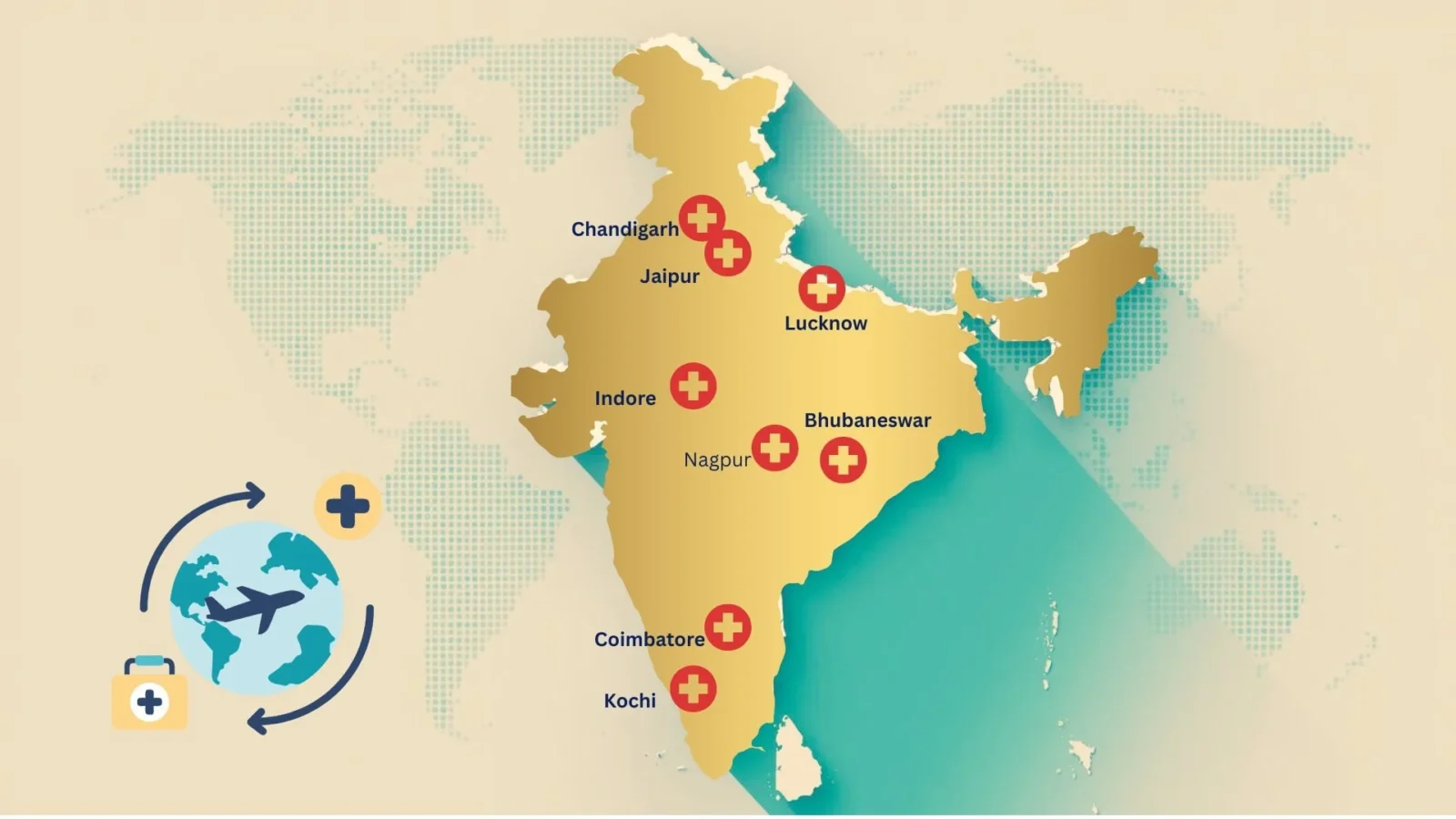
Tier-2 cities are becoming important healthcare centres as hospital capacity, diagnostics, public health infrastructure and specialist services expand beyond India’s biggest metros. The shift is helping address local demand while reducing the need for patients to travel to cities such as Delhi, Mumbai and Bengaluru.
Why healthcare is moving beyond India’s metros
India’s healthcare system has traditionally concentrated advanced medical treatment in large metropolitan cities. Patients from smaller towns often travelled long distances for cancer care, cardiac procedures, organ-related treatment, advanced diagnostics and other specialised services.
That pattern is gradually changing. Healthcare providers are expanding into Tier-2 and Tier-3 markets because patient demand is rising, infrastructure is improving and healthcare businesses see room for capacity expansion outside major metros.
A recent Business Standard report on cancer care found that hospitals, diagnostics companies and patient-support organisations are expanding oncology services into Tier-2 and Tier-3 cities. The expansion is being driven by rising demand, greater awareness, improved screening and the need to reduce migration to metros for treatment.
The broader healthcare sector is also expanding. EY-Parthenon’s FY26 healthcare update reported strong growth across hospitals and diagnostics, with hospital operators adding capacity as patient volumes and demand for higher-acuity treatment increased.
This creates an opportunity for regional cities to become healthcare hubs rather than simply serving as referral points for basic treatment.
Hospital expansion is creating new medical capacity
One of the clearest signs of this shift is the expansion of large hospitals into cities outside the traditional metropolitan healthcare network.
Prayagraj offers a recent example. Park Medi World has received a public-private partnership mandate to develop and operate a 550-bed multispeciality hospital in the city. The project is expected to involve an investment of about ₹200 crore and is planned for completion within two years.
The proposed facility is significant because it reflects the growing role of public-private partnerships in expanding specialised healthcare capacity in regional cities.
Park Group already has facilities in Prayagraj, Agra and Gorakhpur, taking its planned and existing capacity in Uttar Pradesh to 1,260 beds, according to the company announcement reported by Express Healthcare.
Such projects can change the local healthcare ecosystem. A large hospital can attract specialist doctors, nurses, technicians, pharmacies, diagnostic centres and medical suppliers, creating a wider healthcare economy around the facility.
Tier-2 healthcare can reduce medical travel
For patients and families, one of the biggest advantages of stronger regional healthcare infrastructure is reduced medical travel.
A patient living in a smaller city may previously have needed to travel to a metro for specialist consultation, surgery or long-term treatment. That journey can involve transportation costs, accommodation, lost wages and additional expenses for family members.
Cancer care illustrates the problem particularly clearly. Healthcare providers have been expanding oncology infrastructure into smaller cities partly because patients still travel to large metros for treatment.
If more diagnostic and treatment facilities become available locally, patients may be able to complete at least part of their treatment closer to home.
However, regional hospitals will not eliminate medical travel altogether. Highly complex procedures and rare specialties will continue to be concentrated in selected centres. The more realistic change is a reduction in unnecessary travel for conditions that can increasingly be diagnosed and treated locally.
Diagnostics are becoming a major part of the expansion
The growth of healthcare beyond metros is not limited to hospitals.
Diagnostics companies are also expanding their networks, allowing smaller cities to access pathology, imaging and preventive screening services closer to where patients live.
This matters because early diagnosis can determine whether a patient needs only routine treatment or referral to a specialised centre. Better diagnostic capacity can therefore strengthen the entire healthcare chain.
The expansion of technology-enabled diagnostics is also changing how regional healthcare providers operate. Redcliffe Labs, for example, reported in August 2026 that it had built a network of more than 80 laboratories and over 2,000 collection centres across India while focusing on pathology, radiology, AI-enabled insights and preventive care.
For Tier-2 and Tier-3 markets, such networks can connect local collection and diagnostic facilities with larger technology and clinical systems.
Government health infrastructure is supporting the shift
Private investment is only one part of the story. Government programmes are also expanding healthcare infrastructure outside major cities.
The Pradhan Mantri Ayushman Bharat Health Infrastructure Mission, or PM-ABHIM, was designed to strengthen healthcare infrastructure from primary to tertiary levels. A March 2026 government update said the scheme had approved 9,519 Ayushman Arogya Mandirs, 5,456 Urban Health Centres, 2,151 Block Public Health Units and 744 Integrated Public Health Laboratories. The scheme has an outlay of ₹64,180 crore for its scheme period.
These facilities are important because a strong healthcare system needs more than large hospitals. Primary care, diagnostics, public health laboratories and referral networks determine whether patients can receive appropriate treatment before their condition becomes more serious.
This layered approach can also help smaller cities function as regional healthcare centres for surrounding districts.
Ayushman Bharat is expanding access to hospital care
Healthcare expansion also depends on whether people can afford treatment.
The Pradhan Mantri Jan Arogya Yojana, or PM-JAY, has expanded the network of hospitals available to eligible beneficiaries. According to figures compiled from government data, 36,081 hospitals were empanelled under the programme as of May 14, 2026, while 43.98 crore Ayushman cards had been created.
The presence of public and private hospitals within such schemes can make regional healthcare facilities more accessible to lower-income households.
For smaller cities, this is particularly relevant because the value of new hospital capacity depends partly on whether local populations can actually use those services.
At the same time, insurance and government health schemes do not remove every healthcare cost. Transport, medicines, diagnostics outside covered packages and other expenses can still affect household budgets. Access therefore depends on both infrastructure and affordability.
More specialists could follow the hospital investment
A hospital is only as useful as the clinical expertise available inside it.
One challenge for Tier-2 healthcare has historically been the concentration of specialist doctors in major cities. Expanding hospitals can gradually change that equation by creating larger professional opportunities for doctors and other healthcare workers.
A growing regional medical market can support specialists in areas such as cardiology, oncology, nephrology, orthopaedics, neurology and gastroenterology.
Training and continuing medical education also matter. Recent healthcare initiatives are increasingly combining physical facilities with digital tools and professional networks. In August 2026, digital dentistry company Fredna Dental Systems reported expanding academic programmes across Tier-I and Tier-II cities, with plans to reach Tier-III and Tier-IV locations through a combination of online and offline training.
The broader point is that healthcare hubs require a workforce ecosystem, not just hospital buildings.
Technology can connect smaller cities with specialists
Telemedicine is another factor changing the geography of healthcare.
A specialist does not necessarily need to be physically present in every city for patients to receive specialist input. Digital consultations, electronic records, remote diagnostics and connected hospital systems can help doctors in smaller cities access expertise from larger centres.
India’s digital health infrastructure is also expanding. A recent analysis noted the scale of the Ayushman Bharat Digital Mission and the use of telemedicine and AI-based healthcare applications to extend clinical and public-health capabilities.
Technology is unlikely to replace hospitals or doctors. Its more practical role is to connect patients and clinicians, reduce delays and support decision-making.
For Tier-2 cities, this could be especially valuable where specialist availability remains uneven.
The biggest challenge remains quality and affordability
The expansion of healthcare infrastructure is encouraging, but more hospitals do not automatically mean better healthcare.
Regional healthcare hubs need trained staff, reliable emergency services, blood banks, intensive-care capacity, diagnostics, medicines and strong referral systems. They also need quality standards that patients can trust.
Affordability is another challenge. A sophisticated private hospital may offer advanced treatment but remain inaccessible to families without adequate insurance or financial support.
The government is also considering regulatory changes intended to encourage private investment in Tier-2 and Tier-3 healthcare markets. The Economic Times reported in July 2026 that the Centre was preparing a healthcare compliance overhaul aimed at simplifying licensing and reducing regulatory burdens, with the stated objective of encouraging investment and expansion into smaller cities.
If implemented effectively, such reforms could make it easier to add healthcare capacity. But regulation must still protect patient safety and quality of care.
What the rise of regional medical hubs means for India
The emergence of Tier-2 healthcare hubs is not about replacing Mumbai, Delhi, Bengaluru or other major medical centres.
India will continue to need highly specialised metropolitan hospitals for complex procedures, advanced research and rare diseases. The more important change is the creation of a stronger regional healthcare network around them.
Cities such as Prayagraj, Agra, Gorakhpur and other growing urban centres can increasingly provide secondary and tertiary care to patients from nearby districts. Better diagnostics can support earlier treatment, while telemedicine can connect local clinicians with specialists elsewhere.
For patients, the biggest benefit may simply be distance. A hospital that is two hours away instead of 10 hours away can make a significant difference during prolonged treatment.
For cities, healthcare investment can also generate skilled employment and support related industries. Doctors, nurses, technicians, pharmacists, administrators, ambulance services and medical suppliers all form part of the ecosystem.
The next phase of India’s healthcare expansion may therefore be defined not only by bigger hospitals in metros, but by stronger medical networks spread across regional India.
Key Takeaways
- Tier-2 and Tier-3 cities are attracting hospital, diagnostics and healthcare investment as demand for specialised treatment grows outside major metros.
- New projects, including a proposed 550-bed multispeciality hospital in Prayagraj, show how regional cities are becoming part of larger healthcare networks.
- Government infrastructure programmes and Ayushman Bharat are expanding the availability and potential affordability of healthcare services beyond major urban centres.
- The long-term success of smaller-city healthcare will depend on specialist availability, quality standards, affordability, diagnostics and strong referral networks.
Frequently Asked Questions
Q1. Why are hospitals expanding into Tier-2 cities in India?
Hospitals are expanding because patient demand is increasing, infrastructure is improving and many patients still travel to metros for specialised treatment. Healthcare providers see an opportunity to serve these populations closer to home.
Q2. Can Tier-2 cities provide specialised medical treatment?
Increasingly, yes. Larger regional hospitals are adding multispeciality and specialised services, while diagnostics and telemedicine can provide additional support. However, extremely complex and rare treatments may still require referral to major medical centres.
Q3. How is the government supporting healthcare infrastructure in smaller cities?
Programmes such as PM-ABHIM are strengthening primary and public health infrastructure, including Ayushman Arogya Mandirs, Urban Health Centres, Block Public Health Units and Integrated Public Health Laboratories.
Q4. Will better healthcare in Tier-2 cities reduce medical tourism within India?
It could reduce some domestic medical travel by allowing patients to receive routine and specialised care closer to home. However, major metropolitan hospitals will continue to handle highly complex procedures and cases requiring specialised expertise.
(Internal keywords: Tier-2 healthcare India, healthcare in smaller cities, Tier-3 cities medical hubs, hospitals in Tier-2 cities, healthcare infrastructure India 2026, medical facilities beyond metros, healthcare expansion India, Ayushman Bharat hospitals, PM-ABHIM, Tier-2 hospitals India, specialist healthcare India, healthcare investment India)








Leave a comment