

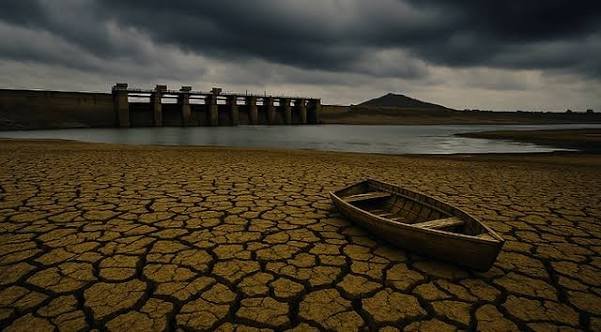
Vidarbha’s reservoir storage has fallen to around 63% as the region enters the final phase of the monsoon with a significant rainfall deficit. The situation is raising concerns over irrigation, drinking water and agricultural conditions, although it does not yet mean an immediate water crisis.
Vidarbha water storage falls to around 63%
The current Vidarbha reservoir situation is a time-sensitive regional water story because the monsoon is entering its final phase and the region has recorded below-normal rainfall. As of early September, water storage in reservoirs across Vidarbha is around 63%, according to a report published on September 3.
The figures are particularly important because reservoir levels at the end of the monsoon influence water availability during the months that follow. Farmers depend on stored water for irrigation after rainfall decreases, while cities rely on reservoirs and related water systems for drinking-water supplies.
The situation is not uniform across Maharashtra. Nagpur division currently has 63.06% water storage and Amravati division has 63.04%, according to the latest reported figures. Other divisions, including Konkan, Pune and Nashik, have substantially better availability.
For Vidarbha, therefore, the 63% figure should be read alongside rainfall patterns, reservoir inflows, crop requirements and the remaining monsoon period. A reservoir being 63% full does not automatically mean that cities will face immediate shortages. The bigger concern is whether there will be enough additional rainfall and inflow to build a comfortable buffer for the dry months.
Rainfall deficit is the bigger concern for Vidarbha
The most worrying part of the current situation is not the 63% storage figure alone. It is the combination of moderate reservoir storage and a substantial rainfall deficit.
From June 1 to August 31, Vidarbha received about 607.1 mm of rainfall against a normal of 779.8 mm, leaving a cumulative deficit of approximately 22%. August was particularly weak, with the region recording a rainfall deficit of around 58% for the month.
August did provide some rainfall and helped improve reservoir storage in parts of the region, but the recovery was uneven. Several districts continued to receive substantially less rain than normal.
The latest assessment identifies Yavatmal, Buldhana, Akola, Washim, Amravati, Wardha, Nagpur and Chandrapur among the Vidarbha districts facing significant rainfall deficiency.
This uneven distribution matters because reservoir storage is determined by local rainfall and catchment inflows rather than the regional average alone. A district can receive a few heavy showers without necessarily getting the sustained rainfall needed to replenish a reservoir system.
What the 63% storage level means for farmers
For farmers, the timing of the water shortage concern is important. Kharif crops are still progressing, and September rainfall can influence crop development in the final stages of the season.
Vidarbha has a large agricultural economy in which rainfall remains an important factor for cultivation. When rainfall is deficient, farmers may need additional irrigation at critical stages of crop growth. If reservoir levels and groundwater availability are also under pressure, the options for supplemental irrigation become more limited.
The latest reservoir figures do not indicate that irrigation water has already been exhausted. That would be an inaccurate interpretation. Instead, they indicate a narrower margin of safety going into the post-monsoon period, particularly if September rainfall remains below normal. The reported combination of deficient rainfall and lower-than-normal reservoir inflows is therefore a reason for farmers and water managers to remain cautious.
The situation could become more significant for crops that require water after the main monsoon rainfall declines. Farmers will need to watch local rainfall, irrigation releases and crop-specific advisories rather than relying only on the regional 63% figure.
September rainfall could decide the next phase
September is now particularly important because the southwest monsoon is entering its final stage.
A September 2 report citing the India Meteorological Department said some northern parts of Vidarbha could receive normal or slightly above-normal rainfall, while much of the region may continue to receive below-normal rainfall. The forecast also indicated the possibility of heavy to very heavy rain in some places between September 2 and 8, followed by a likely decline in rainfall.
This creates a mixed picture. Heavy rainfall events can temporarily improve reservoir inflows, but isolated intense showers do not necessarily compensate for a prolonged seasonal deficit. How much water actually reaches reservoirs depends on where rain falls, its intensity, catchment conditions and subsequent inflows.
For water planners, sustained rainfall is generally more useful for building dependable storage than a few isolated downpours. The next few weeks will therefore be important in determining whether current reservoir levels improve meaningfully or remain close to present levels.
Should Nagpur residents worry about drinking water?
For Nagpur residents, the 63% Vidarbha figure should not be interpreted as an announcement of an immediate drinking-water shortage.
Nagpur’s water supply depends on specific sources and reservoir systems rather than the combined storage percentage of every reservoir in Vidarbha. Totladoh, part of the Pench system, is one of the important water sources associated with Nagpur. The Maharashtra government’s Nagpur district website identifies Totladoh Dam as a dam on the Pench River in the district.
Recent data reported for the Pench system showed its combined live storage at about 61.31% on September 1, with Totladoh at 57.42% and Kamptee Khairi at 89.15%. These figures come from a secondary compilation citing Maharashtra Water Resources Department data and should be treated separately from the broader Vidarbha figure.
At the same time, Nagpur has another water-management challenge that makes conservation important. The Nagpur Municipal Corporation has reported non-revenue water of around 35% to 40%, meaning a substantial quantity of treated water is unaccounted for through leakage and other losses. The civic body has proposed a comprehensive water audit and consumer survey to identify these losses.
So while 63% storage does not mean Nagpur is facing an immediate water emergency, lower reservoir levels combined with distribution losses make efficient water management increasingly important.
Why reservoir storage matters after the monsoon
Reservoir storage becomes especially important once regular monsoon rainfall begins to decline.
During the rainy season, cities and irrigation systems can benefit from direct rainfall and fresh reservoir inflows. After the monsoon withdraws, however, stored water becomes a much more important buffer.
This is why the end-of-monsoon storage position matters. A reservoir at 63% is not simply a snapshot of current water availability. It is also an indication of how much reserve water could be available during the dry months.
The actual outlook depends on several factors, including how much water is released for irrigation, drinking water and other uses; how much additional rainfall occurs; and how quickly the stored water is consumed.
This makes comparisons with previous years useful but not sufficient on their own. A lower percentage can be manageable if rainfall arrives later or demand remains controlled. Conversely, even a relatively comfortable starting level can become problematic if the following months are unusually dry.
Which Vidarbha districts are under greater pressure?
The rainfall deficit is not spread evenly across Vidarbha. The latest assessment specifically identifies several districts with significant rainfall deficiency, including Yavatmal, Buldhana, Akola, Washim, Amravati, Wardha, Nagpur and Chandrapur.
This matters for local planning because agricultural conditions differ across districts. Crop patterns, irrigation infrastructure, groundwater conditions and reservoir dependence are not identical throughout the region.
Farmers in rainfall-deficient districts may therefore face greater pressure than the regional reservoir percentage suggests. A 63% average across a large geographical region can conceal substantial local variation.
For local administrations, the priority will be to monitor reservoir levels, drinking-water sources, irrigation requirements and rainfall forecasts together. If the rainfall deficit persists, contingency planning could become increasingly important for both agriculture and drinking water.
El Niño and the uneven monsoon pattern
The current rainfall pattern has also been linked in recent reporting to the lingering effects of El Niño-related weather conditions.
The important point for readers is that El Niño does not mean every part of India will receive less rain. Its influence can contribute to changes in atmospheric and oceanic conditions that affect rainfall patterns, but local outcomes vary considerably.
In Vidarbha, the practical issue this year has been the uneven distribution of rainfall and prolonged dry spells. The region received its highest rainfall during August, but that was not enough to eliminate the accumulated deficit.
This is why simply saying that the monsoon has arrived or that heavy rain has occurred in one week can give an incomplete picture. Reservoir management depends on the total rainfall received across catchments and the resulting inflows over time.
What could happen if rainfall remains weak?
If September rainfall remains below normal and reservoir inflows stay weak, pressure on stored water could increase during the post-monsoon months.
For agriculture, this could mean greater competition for irrigation water and increased dependence on groundwater or other local sources. For cities, authorities may need to pay closer attention to consumption, leakage and distribution efficiency.
However, it is too early to predict a widespread water crisis across Vidarbha solely from the current 63% storage level. The more accurate assessment is that the region has entered a period requiring close monitoring.
The coming weeks will provide more information. If substantial rainfall reaches reservoir catchments, storage could improve. If dry conditions continue, the current buffer could become less comfortable as irrigation and drinking-water demand continues.
For ordinary residents, the practical response is conservation rather than panic. For farmers and authorities, the priority is to track local reservoir data, rainfall forecasts and water releases closely.
Why Nagpur’s water losses add another layer
Nagpur’s reservoir position cannot be viewed independently of how efficiently the city uses the water it already receives.
The NMC’s decision to conduct a water audit comes as non-revenue water remains between 35% and 40%. At a reported supply level of around 700 million litres per day, that translates into roughly 245 MLD at 35% losses and about 280 MLD at 40%.
This is important because improving water availability does not always require finding a new source. Reducing leakage and unaccounted-for consumption can effectively increase the amount of water available to consumers without increasing reservoir storage.
The proposed audit is intended to map the distribution network, verify consumer connections and identify leaks and other sources of loss. The civic body’s standing committee was scheduled to consider the proposal on September 4.
If reservoir levels remain under pressure, such efficiency measures become more valuable.
Is Vidarbha facing a water crisis right now?
The current data points to concern, not an immediate region-wide water crisis.
Reservoir storage around 63% provides a significant quantity of water, but the rainfall deficit means the region has less cushion than it would have with stronger monsoon performance. The concern is therefore forward-looking.
Farmers are approaching an important phase of the kharif season, while cities need dependable supplies beyond the monsoon. If September produces meaningful rainfall and reservoir inflows improve, the situation could become more comfortable.
If the dry pattern continues, however, water managers may have to balance competing requirements more carefully in the months ahead. That is why reservoir levels, rainfall and irrigation demand will remain important indicators for Vidarbha.
For Nagpur in particular, the reservoir position should be watched alongside the city’s water losses. Better management of existing supplies can reduce pressure even when rainfall is below normal.
Key Takeaways
- Vidarbha’s reservoirs are currently around 63% full, with Nagpur and Amravati divisions at approximately 63.06% and 63.04%, respectively.
- Vidarbha received about 607.1 mm of rainfall from June 1 to August 31 against a normal 779.8 mm, resulting in a 22% cumulative deficit.
- The current figures do not by themselves indicate an immediate region-wide drinking-water crisis, but continued rainfall deficiency could put greater pressure on irrigation and post-monsoon supplies.
- Nagpur also faces significant water-distribution losses, with NMC estimating non-revenue water at 35% to 40%, making conservation and leakage reduction especially important.
FAQs
Are Vidarbha reservoirs really only 63% full?
Yes. The latest reported figures put reservoir storage across Vidarbha at around 63%. Nagpur division was at 63.06% and Amravati division at 63.04% in the reported assessment.
Does 63% storage mean Nagpur will face water cuts?
Not necessarily. The 63% figure covers a wider regional reservoir position and does not directly determine Nagpur’s daily drinking-water supply. Nagpur depends on specific water sources, including the Pench system. The city’s water position also depends on rainfall, reservoir inflows, releases, demand and distribution losses.
Why are farmers worried about the reservoir levels?
Farmers are concerned because the monsoon is entering its final phase while rainfall has remained significantly below normal. Lower reservoir inflows could reduce the water available for irrigation after regular monsoon rainfall declines, particularly if September does not bring substantial additional rain.
Can reservoir levels still improve in September?
Yes. Additional rainfall can increase inflows and raise reservoir storage. However, the amount of improvement will depend on where and how much rain falls, particularly across reservoir catchment areas. Current forecasts indicate that some parts of Vidarbha could receive rain early in September, while much of the region may still experience below-normal rainfall later in the month.
(Internal keyword suggestions: Vidarbha reservoir water level 2026, Vidarbha dams 63 percent, Nagpur water storage, Nagpur dam water level, Pench reservoir water level, Vidarbha rainfall deficit, Maharashtra water shortage, Vidarbha farmers water availability, Nagpur drinking water supply, September rainfall Vidarbha)










Leave a comment