

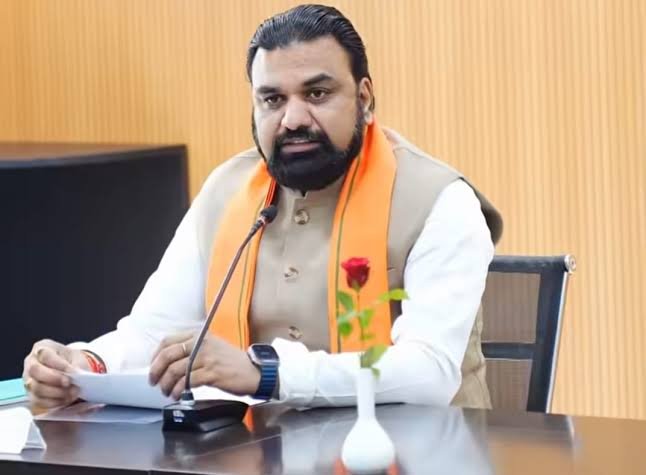
The Bihar Cabinet approved 27 proposals on September 2, covering education loans, roads, urban development, land transfers, healthcare, civil courts, welfare facilities and rural livelihoods. Several decisions could directly affect students, commuters, urban residents and families across the state.
Bihar Cabinet Approves 27 Decisions Across Key Sectors
The Bihar Cabinet, chaired by Chief Minister Samrat Choudhary, approved 27 agenda items at its September 2 meeting. The decisions span several departments rather than focusing on one policy area, with major announcements involving education, infrastructure, urban development, health, administration and rural economic activity.
For residents, the significance of the meeting lies in how different decisions could translate into changes on the ground. Students could benefit from the extension of the Bihar Student Credit Card Scheme, while commuters in Patna could see changes linked to road widening. The government has also approved land transfers for an industrial area and a medical college and hospital, potentially supporting longer-term employment and healthcare infrastructure.
Other decisions concern urban local bodies, civil court staffing, welfare facilities and the proposed collection of user fees on selected state-owned roads and bridges. Together, the approvals indicate a broad administrative and infrastructure agenda rather than a single flagship announcement.
Student Credit Card Scheme Extended Until 2030-31
One of the most significant decisions for young people is the extension of the Bihar Student Credit Card Scheme from 2026-27 to 2030-31.
The Cabinet gave ex-post facto approval for continuation of the existing arrangement under which eligible students can obtain education loans of up to ₹4 lakh through the Bihar State Education Finance Corporation. The extension means students will continue to have access to the scheme beyond the previously applicable period.
The decision is particularly relevant for students pursuing higher education who need financing for tuition and related educational expenses. However, the extension itself does not mean every student automatically receives ₹4 lakh. Eligibility and the existing application and financing framework continue to apply.
For families planning higher education over the next few years, the longer validity of the scheme provides greater certainty about the availability of this financing route.
Patna Road Widening Gets ₹39.80 Crore Approval
Another major decision concerns Nehru Path, popularly known as Bailey Road, in Patna.
The Cabinet approved ₹39.80 crore for widening the stretch between Dakbungalow Crossing and Rukanpura. The project covers about 7.20 kilometres and involves more than simply expanding the carriageway. Plans include shifting drains and footpaths, relocating boundary walls, utilities and trees, installing around five kilometres of grills and adding road-safety signage.
For commuters, the potential benefit is improved traffic movement along one of Patna’s important arterial corridors. The practical impact, however, will depend on how the construction and relocation work is executed.
Road-widening projects can temporarily create disruption before delivering longer-term capacity improvements. Residents and businesses along the corridor could therefore experience construction-related changes while the project is implemented.
Road User Fees Planned for State Highways and Bridges
The Cabinet has also moved towards introducing a road-user fee system on state-owned roads and bridges.
According to the approved proposal, consultancy services will be engaged for user-fee collection, monitoring, preparation of a fee structure, networking or bundling of collection contracts and related work. The estimated consultancy cost is ₹30.94715 crore.
Reports on the Cabinet decision indicate that 55 state highways and 47 bridges measuring more than 250 metres have been identified in the first phase for the proposed system. Toll collection will not begin immediately because surveys and technical arrangements are required first.
This could eventually matter to commercial vehicle operators and businesses that depend on road transport. The eventual financial impact on road users will depend on the fee structure that is finalised and the roads and bridges ultimately brought under collection.
Industrial Area and Medical College Land Transfers Approved
The Cabinet also approved two land transfers with potentially long-term economic and public-service implications.
Around 700 acres of gairmazarua khas land in Malhipur under Barauni circle in Begusarai district will be transferred permanently and free of cost to the Industries Department for establishing an industrial area.
A separate decision approved the transfer of 25 acres of gairmazarua malik and gairmazarua aam land at Belkhara in Arwal district to the Health Department. The land is intended for construction of a government medical college and hospital.
For residents, these decisions are more about future capacity than immediate benefits. An industrial area could support investment and employment if projects are successfully developed. A medical college and hospital could expand access to specialised healthcare and medical education in the region.
The actual benefits, however, will depend on subsequent construction, investment and operationalisation.
Urban Development Funding and Museum Maintenance
Urban infrastructure is another focus of the Cabinet’s decisions.
The government has extended the Mukhyamantri Samagra Shahari Vikas Yojana from 2026-27 to 2030-31. The scheme is intended to support infrastructure and development in urban areas across Bihar.
The Cabinet also approved ₹40 crore under the non-salary head for maintenance of the Bihar Museum and Patna Museum during 2026-27. The allocation covers upkeep and operational requirements rather than representing a new museum construction project.
The broader urban funding framework also includes grants linked to the 16th Finance Commission. According to UNI, ₹9,169 crore has been provided under basic and performance grants, with allocations to urban local bodies linked to population and own-source revenue in a 90:10 ratio after the relevant central grant is released.
New Posts and Civil Court Restructuring
Some of the Cabinet decisions focus on government administration and employment structures.
The Cabinet approved 14 posts for the Extremely Backward Class category in the Home Department and 16 Office Attendant posts at the headquarters of the General Administration Department in Patna.
It also approved restructuring of 7,527 sanctioned Upper Division Clerk posts in civil courts. Under the revised structure, 1,478 Grade III posts will be upgraded to Grade II and 1,098 will be upgraded to Grade I. This will leave 4,951 Grade III, 1,478 Grade II and 1,098 Grade I posts.
The civil court decision is primarily an administrative restructuring measure. It is aimed at creating a revised hierarchy and facilitating promotions rather than announcing 7,527 new government jobs.
Goat Rearing Cooperative Targets Rural Livelihoods
Under Saat Nischay-3, the Cabinet approved creation of the Bihar State Goat Rearing Cooperative Federation Limited.
The government has sanctioned ₹14.795 crore for the federation for the period from 2026-27 to 2028-29.
The cooperative model could help bring greater organisation to goat-rearing activities and potentially improve coordination among producers. Its eventual effect on rural incomes will depend on how effectively the federation operates, connects producers with markets and delivers support.
The Cabinet also approved two additional residential Aasra Grih facilities, each with capacity for 50 people, at Purnea and Gaya under the Directorate of Empowerment of Persons with Disabilities. The two facilities are expected to involve annual expenditure of about ₹1.44 crore.
What These Cabinet Decisions Could Mean for Residents
The 27 approvals affect different groups in different ways. Students have one of the clearest immediate benefits because the education loan scheme has been extended through 2030-31. Patna residents may eventually see changes to traffic movement after the Nehru Path widening project is completed.
For commercial transport operators, the proposed road-user fee system is an important development to watch because charges could affect operating costs once the structure is finalised.
The land transfers are longer-term decisions. The proposed industrial area in Begusarai could create economic opportunities if industries are established, while the medical college and hospital in Arwal could strengthen healthcare infrastructure once construction is completed.
The important distinction is between Cabinet approval and completed implementation. Approval creates the administrative basis for action, but residents will see the actual impact only as projects receive further clearances, construction progresses, schemes are implemented and services become operational.
Takeaways
- Bihar Cabinet approved 27 proposals covering education, roads, urban development, health, administration and rural livelihoods.
- The Bihar Student Credit Card Scheme has been extended from 2026-27 to 2030-31, with education loans of up to ₹4 lakh continuing under the existing arrangement.
- ₹39.80 crore has been approved for widening a 7.20-km stretch of Nehru Path in Patna, while a road-user fee system is being prepared for selected state highways and bridges.
- Land transfers for an industrial area in Begusarai and a government medical college and hospital in Arwal could have longer-term economic and public-service benefits.
FAQ
What did the Bihar Cabinet approve on September 2, 2026?
The Bihar Cabinet approved 27 agenda items covering education, urban development, roads, healthcare, land transfers, government staffing, welfare facilities, heritage institutions and rural livelihoods.
What is the new deadline for the Bihar Student Credit Card Scheme?
The Bihar Student Credit Card Scheme has been extended from 2026-27 to 2030-31. Eligible students can continue to access education loans of up to ₹4 lakh through the Bihar State Education Finance Corporation under the existing arrangement.
What road project has received ₹39.80 crore?
The Cabinet approved ₹39.80 crore for widening about 7.20 kilometres of Nehru Path in Patna, from Dakbungalow Crossing to Rukanpura. The work includes shifting drains, footpaths, utilities and other structures along with road-safety measures.
Will tolls immediately be charged on Bihar’s state highways?
No. The Cabinet has approved consultancy and preparatory work for a road-user fee system. Surveys and technical arrangements need to be completed before collection begins.










Leave a comment