
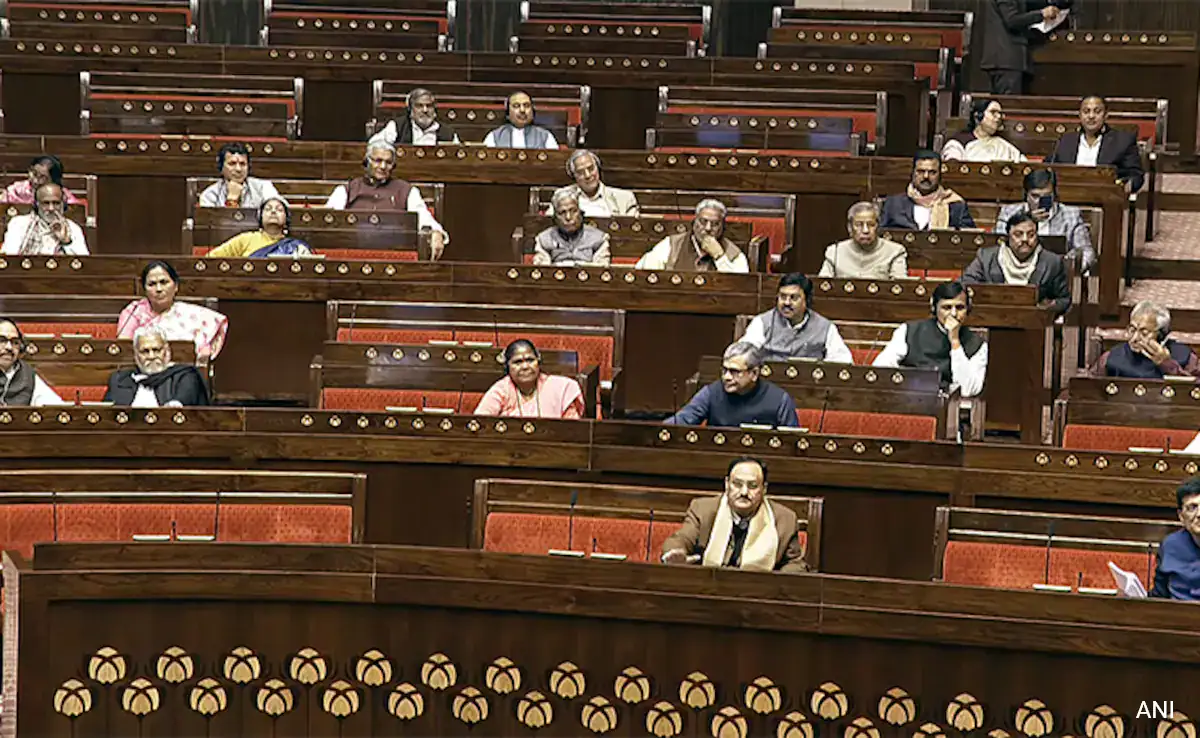
The latest UP Rajya Sabha polls numbers have removed the possibility of a direct contest, with eight BJP candidates and two Samajwadi Party nominees now set to be elected unopposed. The outcome has wider political significance as Uttar Pradesh prepares for its 2027 Assembly election.
UP Rajya Sabha Polls Set For Unopposed Outcome
The latest development in the UP Rajya Sabha polls is clear: there will be no contest for the 10 seats from Uttar Pradesh unless there is an unexpected change during the remaining election process.
The BJP has eight candidates, while the Samajwadi Party has fielded two. During scrutiny on October 7, the nominations of two Independent candidates were rejected. With 10 valid candidates remaining for 10 seats, all are now set to enter the Rajya Sabha unopposed.
The Election Commission had earlier scheduled polling for October 16 if voting became necessary. The 10 seats are falling vacant as the terms of the sitting members end in November.
The immediate result is therefore straightforward. The BJP is positioned to secure eight seats and the SP two. But the political meaning of the numbers goes beyond the Rajya Sabha itself.
Why The Number Eight Matters For BJP
The BJP’s eight-seat outcome is important because the party had initially faced a more complicated numbers game.
Under the proportional representation system with the single transferable vote, candidates need a specified number of first-preference votes to secure a seat. Current reports put that figure at 37 in Uttar Pradesh for these elections.
Before the nomination process closed, the BJP had enough support to secure seven seats comfortably and was looking to push for an eighth. The SP, meanwhile, had the numbers to secure two seats and had considered putting up a third candidate.
That possibility could have resulted in a contest involving cross-voting and negotiations among legislators.
Instead, the SP decided not to enter that battle. The BJP therefore gets the advantage of securing eight seats without having to test its numbers through an actual vote.
For the ruling party, this provides a useful political message ahead of the 2027 Assembly election. It demonstrates that its alliance has sufficient strength in the current Assembly to dominate the Rajya Sabha allocation from Uttar Pradesh.
Why SP Dropped Its Third Candidate
The Samajwadi Party’s decision is perhaps the most politically significant part of the episode.
The party had already nominated veteran leader Ram Gopal Yadav and Dhanraj Parimal Nathwani. It had considered adding a third candidate, which would have forced a contest for the 10 seats. Akhilesh Yadav ultimately decided against the move.
The central issue was arithmetic.
The SP and its allies had enough support for two candidates, but a third candidate would have required additional votes from outside the party’s secure numbers. That could have created the possibility of cross-voting by legislators.
Such a contest would also have exposed the party’s internal strength in public. Reports have linked the decision to concerns that cross-voting could create political embarrassment or reveal divisions ahead of the Assembly election.
For Akhilesh Yadav, avoiding a risky Rajya Sabha contest allows the party to preserve its existing numbers and concentrate on the much larger electoral battle ahead.
The BSP’s Changing Position In UP Politics
Another important consequence concerns the Bahujan Samaj Party.
Before the current Rajya Sabha election cycle, one of the 10 Uttar Pradesh seats was held by the BSP. The other nine were divided between the BJP and SP, with the BJP holding eight and the SP one.
With the latest allocation of eight seats to the BJP and two to the SP, the BSP is set to lose its representation from these 10 seats.
This does not by itself determine the BSP’s future in Uttar Pradesh politics, but it illustrates how its legislative presence has changed in recent years.
The development also matters because caste representation remains central to electoral calculations in the state. The BJP’s eight nominees include OBC, Dalit, Brahmin and Thakur representation, reflecting an effort to maintain a broad social balance in its candidate selection.
That composition is significant in the context of the BJP’s competition with the SP’s PDA strategy, which focuses on backward, Dalit and minority communities.
BJP’s Candidate Selection Sends A 2027 Signal
The BJP did not simply retain all of its outgoing Rajya Sabha members.
The party dropped all eight sitting members whose terms are ending, including Union ministers Hardeep Singh Puri and BL Verma. The new list includes state-level leaders, former MPs and organisational figures.
The selection also has a strong social and regional component.
Among the eight candidates are three OBC nominees, two Dalit candidates, two Brahmins and one Thakur, according to reports. The list includes Uttar Pradesh minister Dharampal Singh, former Barabanki MP Priyanka Singh Rawat, Shruti Gangwar, Radhakant Ojha, Prakash Pal, Vidyasagar Sonkar, Gopi Krishna Pandey and Ram Pratap Singh Chauhan.
The decision suggests that the BJP is using the Rajya Sabha nominations not only to fill vacant parliamentary seats but also to strengthen its political messaging before the 2027 Assembly election.
What It Means For The 2027 UP Assembly Election
The Rajya Sabha outcome should not be treated as a direct prediction of the Assembly election.
Rajya Sabha elections involve MLAs rather than direct voting by the public. The numbers therefore reflect the composition of the current Assembly and the alliances among elected representatives.
However, the political timing makes the outcome important.
Chief Minister Yogi Adityanath has already linked the Rajya Sabha developments with the upcoming Assembly contest. On October 7, he described the political situation through his previously used 80 versus 20 formulation and argued that the Rajya Sabha outcome had set the tone for the larger battle. That is a political claim, not an independent measure of voter sentiment.
For the BJP, the unopposed eight-seat outcome provides an opportunity to project organisational strength.
For the SP, avoiding a third candidate allows the party to avoid a potentially damaging cross-voting episode and keep its focus on the Assembly election.
The real test will come when voters, rather than MLAs, decide the future of Uttar Pradesh.
The Bigger Political Message From The Numbers
The latest UP Rajya Sabha polls have produced a result without an actual contest, but the political calculations behind that result are revealing.
The BJP’s eight seats underline its current strength in the Uttar Pradesh Assembly and within the NDA alliance. The SP’s two seats confirm its position as the principal opposition force with enough numbers to maintain a presence in the Upper House.
At the same time, the absence of a BSP seat highlights the changing balance among Uttar Pradesh’s major political parties.
The decision by the SP to avoid a third candidate also shows that the 2027 Assembly election is already shaping political decisions in the state. Neither side wanted to risk a result that could damage its organisation or expose internal weaknesses.
The Rajya Sabha episode is therefore less about who won a particular parliamentary seat and more about how BJP and SP are positioning themselves for the next major electoral battle.
Key Takeaways
- Eight BJP and two SP candidates are set to be elected unopposed for Uttar Pradesh’s 10 Rajya Sabha seats after two Independent nominations were rejected.
- The SP dropped plans for a third candidate, avoiding a contest that could have exposed cross-voting or internal divisions.
- The BJP’s candidate list includes representation from several major social groups and replaces all eight outgoing BJP Rajya Sabha members.
- The result gives the BJP a strong political talking point ahead of the 2027 Uttar Pradesh Assembly election, but Rajya Sabha numbers cannot by themselves predict the Assembly result.
Frequently Asked Questions
1. How many Rajya Sabha seats are being filled from Uttar Pradesh?
Ten Rajya Sabha seats from Uttar Pradesh are part of the current biennial election process. The Election Commission had scheduled voting for October 16 if a contest was required.
2. How many seats will the BJP and SP get?
Based on the valid nominations after scrutiny, the BJP has eight candidates and the Samajwadi Party has two. Since there are exactly 10 candidates for 10 seats, they are set to be elected unopposed.
3. Why did the SP not field a third candidate?
The SP had enough numbers for two seats but a third candidate would have needed support beyond its secure vote base. That raised the possibility of cross-voting and an embarrassing result ahead of the 2027 Assembly election.
4. Does the Rajya Sabha result mean BJP will win the 2027 UP Assembly election?
No. The Rajya Sabha result reflects the current strength and voting calculations of MLAs. The 2027 Assembly election will involve direct voting by the people of Uttar Pradesh, so the two elections should not be treated as equivalent.











Leave a comment