

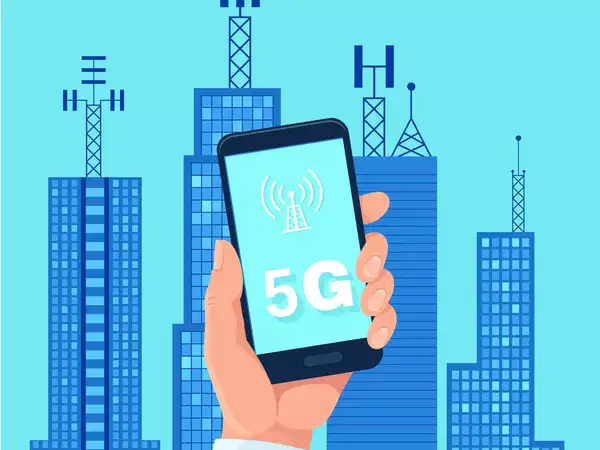
India’s affordable 5G expansion could help smaller cities and towns access faster internet, digital education, online healthcare and new employment opportunities. However, closing the digital divide requires more than network coverage. Affordable devices, reliable connectivity, digital literacy and access to useful online services remain equally important.
India’s 5G Expansion and the Digital Divide
India’s 5G expansion has changed how people access mobile internet, stream content, work remotely and use digital services. While major cities were among the early beneficiaries of 5G deployment, smaller cities and towns are also important to the next stage of India’s digital growth.
The challenge is no longer simply about bringing internet access to more people. It is about ensuring that people can use that access consistently, affordably and productively. For students in smaller towns, reliable connectivity can support online classes and competitive exam preparation. For local businesses, it can improve digital payments, customer communication and online sales.
The Telecom Regulatory Authority of India (TRAI) regularly publishes data on internet subscriptions and telecom services. Its reports provide a useful basis for understanding how connectivity is expanding across the country. The latest available subscription report as of October 19, 2026, covers August 2026
Yet national subscriber numbers alone cannot establish whether every town or household has dependable 5G access. The digital divide also depends on network quality, affordability and people’s ability to benefit from internet services.
5G Coverage in India: What the Latest Figures Reveal
India has made substantial progress in expanding its 5G infrastructure. According to the Ministry of Communications, 5G services were available in 99.9% of India’s districts as of February 2026, with 5.23 lakh 5G base transceiver stations installed by February 28, 2026.
These figures indicate the scale of the rollout, but district-level availability should not be confused with universal access. A district may have 5G service in selected locations without every village, neighbourhood or indoor space receiving a strong signal.
The government has also reported that 5G coverage reached approximately 85% of the population, highlighting the difference between the geographical presence of a network and the number of people it can serve.
For smaller cities, the next challenge is to improve the quality and consistency of service. Residents need dependable connections at home, in educational institutions, workplaces and public facilities. Network performance can vary according to tower placement, local demand, buildings and the spectrum used by an operator.
The figures demonstrate that infrastructure expansion is well underway. Whether it translates into equal digital opportunities will depend on how effectively operators extend and maintain service in underserved areas.
Affordable 5G Smartphones and Data Plans Matter
Network availability alone cannot guarantee adoption. Consumers need a compatible smartphone, an appropriate mobile plan and a reliable signal. For households managing tight budgets, the upfront cost of a 5G device may be a more significant barrier than the price of mobile data.
India’s competitive telecom market has helped make mobile internet relatively affordable. However, consumers must still balance recharge costs against household expenses, device purchases and other essential spending. A low-cost plan may also come with limits or conditions that affect how a person uses data.
Students who attend online classes, for example, may need enough data for video lessons, recorded lectures and digital study material. A small business owner might require a stable connection for digital payments, customer messages and online orders. The cost of a connection matters, but so does its suitability for these tasks.
Affordable 5G adoption therefore requires more than promotional handset prices. Consumers need transparent recharge options, reasonably priced compatible devices and clear information about coverage. Refurbished devices and shared community internet facilities can also help some users participate in the digital economy, provided they can access secure and dependable services.
How Smaller Cities Can Benefit From Faster Internet
For Tier-2 cities such as Nagpur, Indore, Jaipur, Lucknow and Coimbatore, reliable high-speed connectivity can support local economic activity rather than simply improve entertainment and social media access.
Small retailers can use digital inventory systems, online marketplaces and cloud-based accounting tools. Independent professionals can serve clients in other cities, while local manufacturers can communicate with suppliers and customers more efficiently. Faster internet can also support content creators, online tutors and home-based businesses.
Education is another important area. Students preparing for competitive examinations can access online lectures and practice tests without travelling to larger cities. Teachers can use digital resources to supplement classroom instruction, although access to devices and suitable learning environments remains essential.
Healthcare services may also benefit. Reliable connectivity can support teleconsultations, the transfer of medical records and remote consultations between local health facilities and specialists. These services can improve access in areas where specialist care is limited, but they cannot replace physical examinations or emergency treatment when those are necessary.
The economic benefits are not automatic. Businesses need digital skills, secure payment systems and customers who are comfortable using online services. Public institutions must also ensure that digital services remain accessible to people who have limited internet experience.
BharatNet and Public Wi-Fi Can Complement 5G
Mobile networks are only one part of India’s digital infrastructure. Fibre broadband and public Wi-Fi can help connect schools, local government offices, community facilities and households that may not have dependable mobile service.
The government’s BharatNet programme aims to expand broadband connectivity to Gram Panchayats and support further connections to rural areas. A Department of Telecommunications update reported that 2,14,904 Gram Panchayats had been made service-ready under BharatNet as of December 31, 2025.
Public Wi-Fi can provide another access option for students, commuters and small businesses. The PM-WANI framework was designed to expand public Wi-Fi through a network of access points, complementing mobile data services. Government reporting recorded more than 4.10 lakh Wi-Fi hotspots across states and Union Territories as of June 2026.
These systems serve different purposes. 5G provides mobile connectivity, while fibre can deliver high-capacity fixed broadband and support the infrastructure behind wireless networks. Public Wi-Fi can make internet access available in shared locations.
The priority is to ensure that infrastructure is operational, maintained and affordable for users. A fibre connection reaching a local government facility does not automatically mean that every household nearby has an internet connection.
The Remaining Challenges: Skills, Reliability and Digital Safety
Even when connectivity is available, people may struggle to use it effectively. Limited digital literacy can prevent users from accessing government services, identifying online fraud or making informed decisions about the information they encounter.
Cybersecurity is particularly important as more financial and administrative activities move online. Users need to recognise suspicious links, avoid sharing one-time passwords and verify requests for money before making digital payments. Schools, colleges, local organisations and Common Service Centres can help build these skills.
Network reliability is another concern. Congestion during busy hours, weak indoor signals and infrastructure disruptions can affect the experience of users who depend on mobile internet for work or education. Telecom operators must continue investing in capacity and maintenance as demand grows.
There is also a need to measure digital inclusion more meaningfully. Counting towers and districts with service is useful, but policymakers should also examine actual usage, connection quality, device ownership, affordability and the ability of people with disabilities to access digital services.
These measures would provide a clearer picture of whether smaller cities are benefiting from the expansion of India’s digital infrastructure.
Can Affordable 5G Close India’s Digital Divide?
Affordable 5G can help reduce India’s digital divide, but it cannot solve the problem independently. The country has made considerable progress in network deployment, and smaller cities have opportunities to benefit from faster connectivity. The next phase must focus on turning infrastructure into practical, everyday access.
That means improving coverage in underserved locations, keeping devices and plans affordable, expanding fibre and public Wi-Fi, and teaching people how to use digital services safely. It also means encouraging businesses, educational institutions and healthcare providers to develop services that address local needs.
For smaller cities, the real measure of success will not simply be how quickly a video loads. It will be whether students can access quality learning, entrepreneurs can reach new customers, patients can consult healthcare professionals and residents can use essential online services without unnecessary barriers.
India’s 5G expansion has created an opportunity. Closing the digital divide will depend on whether that opportunity reaches people across different income groups, communities and geographical locations.
Key Takeaways
- India had 5G services available in 99.9% of its districts as of February 2026, but district coverage does not guarantee reliable access everywhere.
- Affordable smartphones, suitable data plans and consistent network quality are essential for wider 5G adoption.
- BharatNet, fibre broadband and public Wi-Fi can complement mobile networks and improve access in underserved areas.
- Digital literacy, online safety and access to useful services are necessary to turn connectivity into meaningful economic and social benefits.
Frequently Asked Questions
1. Is 5G available in smaller Indian cities?
5G services have expanded across most Indian districts. However, availability and signal quality vary by location and telecom operator. Consumers should check local coverage before purchasing a 5G device or plan.
2. How can affordable 5G benefit Tier-2 and Tier-3 cities?
It can support online education, remote work, digital payments, teleconsultations and e-commerce. Local businesses may also use faster connectivity to reach customers beyond their immediate markets.
3. What is the difference between 5G coverage and digital inclusion?
Coverage refers to the availability of network services in a location. Digital inclusion also considers affordability, device access, digital skills, accessibility and whether people can use online services effectively.
4. How does BharatNet support India’s digital connectivity?
BharatNet aims to expand broadband infrastructure to Gram Panchayats and support further rural connectivity. Its fibre network can help public institutions, households and businesses access broadband services where connections are available.










Leave a comment