

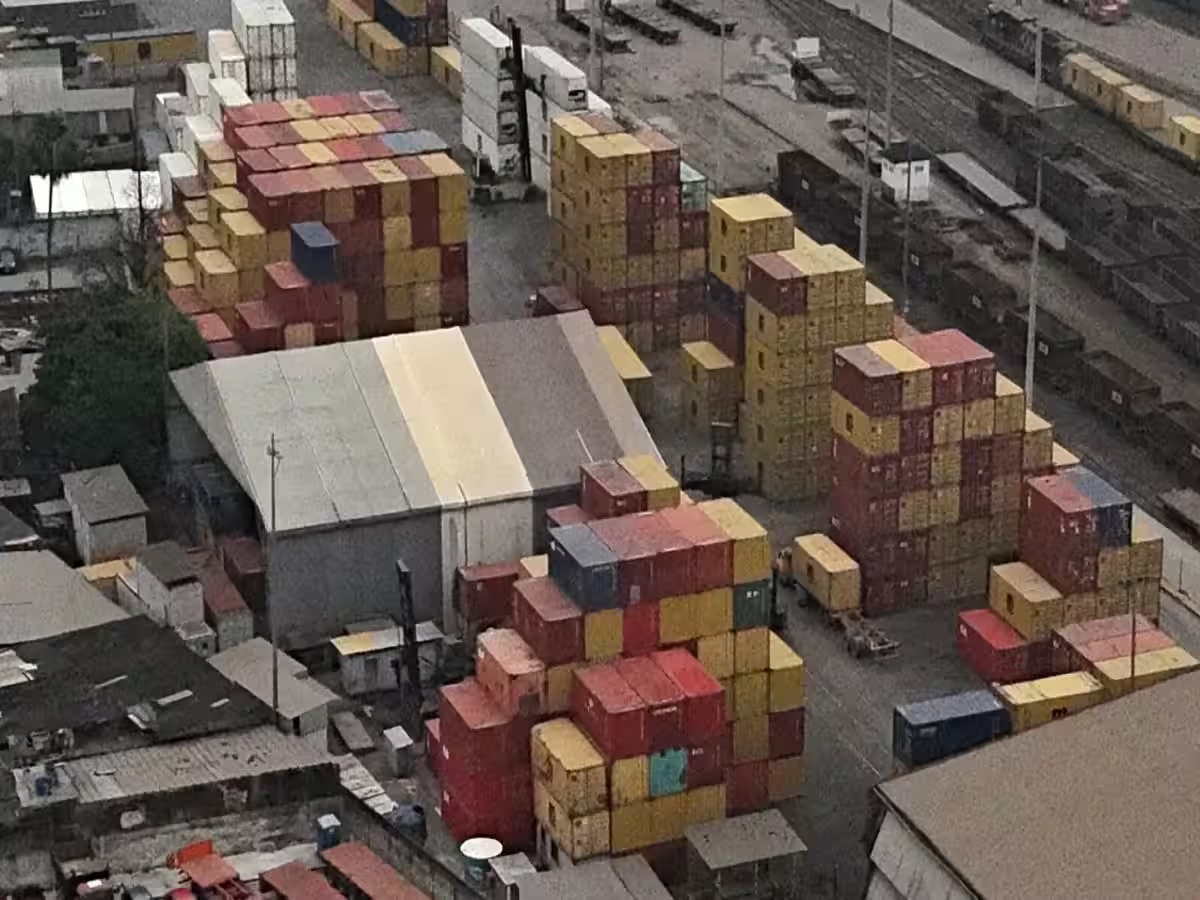
Summary: India has approved a ₹10,000 crore Container Manufacturing Promotion Scheme to expand domestic shipping container production and reduce import dependence. The initiative aims to increase annual manufacturing capacity nearly tenfold, strengthen supply chains and create employment opportunities across the manufacturing sector.
India Approves ₹10,000 Crore Container Manufacturing Scheme
India’s container manufacturing push has received a significant boost following the Union Cabinet’s approval of the ₹10,000 crore Container Manufacturing Promotion Scheme (CMPS) on October 28, 2026. The programme aims to establish a globally competitive shipping container manufacturing ecosystem, reduce reliance on imported containers and strengthen the country’s maritime logistics network.
The scheme will run from the financial year 2027-28 to 2039-40. According to the government’s announcement, India currently has an annual container manufacturing capacity of approximately 70,000 twenty-foot equivalent units (TEUs). The government wants to increase this capacity nearly tenfold to 7.5 lakh TEUs annually.
The initiative comes as India seeks to expand its manufacturing capabilities and support rising international trade. Shipping containers are essential for moving goods between ports, warehouses, factories and markets. A reliable domestic supply could help Indian businesses manage disruptions in international supply chains.
However, increasing manufacturing capacity will require more than financial assistance. India will need competitive production costs, dependable supplies of specialised materials, skilled workers and internationally accepted quality standards to establish itself as a major container manufacturing centre.
Why India Depends on Imported Shipping Containers
Shipping containers are standardised freight units used to transport goods by sea, rail and road. Their design allows cargo to move between different modes of transportation without requiring the goods to be unloaded and repacked at every stage.
India depends heavily on imported shipping containers, with China playing a dominant role in global container manufacturing. This dependence exposes Indian businesses to international production constraints, supply disruptions and changes in manufacturing costs.
The problem becomes particularly important when global trade experiences sudden disruptions. If container production or availability is affected in major manufacturing centres, businesses elsewhere may face difficulties securing the equipment needed to transport their goods.
For Indian exporters, container availability can influence shipment schedules and logistics planning. Agricultural exporters, engineering companies, textile manufacturers and other businesses that depend on international markets need predictable access to shipping services.
Import dependence also limits India’s control over an important part of its logistics infrastructure. Expanding domestic production could provide another source of supply and reduce exposure to external shocks.
Nevertheless, manufacturing containers locally will not automatically eliminate imports. Indian producers must be able to meet demand at competitive prices and maintain consistent quality before domestic production can replace a substantial share of imported containers.
Container Manufacturing Promotion Scheme: What Does It Offer?
The newly approved Container Manufacturing Promotion Scheme is designed to support both new manufacturing facilities and the expansion of existing units. It combines financial assistance with measures intended to improve production efficiency and quality.
The programme has a total outlay of ₹10,000 crore, divided among three major components.
Interest subvention assistance: The scheme allocates ₹859 crore to provide a 3% annual interest subsidy on eligible term loans. New manufacturing facilities must meet a minimum annual capacity threshold of 1 lakh TEUs, while existing facilities seeking expansion must add at least 25,000 TEUs of annual capacity.
Operational expenditure assistance: The largest component, worth ₹8,891 crore, is intended to help eligible manufacturers bridge the cost difference between domestically produced containers and competing imports. Assistance will be linked to containers manufactured to global standards and sold by eligible producers.
Testing and certification assistance: An allocation of ₹150 crore will support common testing and certification facilities. These facilities are important because shipping containers must meet international safety, durability and performance requirements.
The government has also specified minimum domestic content requirements. Eligible manufacturers must meet a local-content threshold of 70% through FY 2031-32, rising to 90% from FY 2032-33.
These provisions are intended to encourage manufacturers to develop a stronger domestic supplier network rather than relying extensively on imported components.
Can Domestic Production Compete With Chinese Manufacturers?
China’s established position in global container manufacturing presents one of the biggest challenges for India’s ambitions. Chinese producers benefit from large-scale manufacturing operations, established supplier networks and experience serving international shipping companies.
These advantages can help reduce production costs. A manufacturer operating at a large scale may purchase raw materials in bulk, use specialised equipment efficiently and maintain steady output.
Indian manufacturers will need to close this cost and scale gap if they want to compete effectively.
The government’s operational expenditure assistance is intended to address part of this challenge. By reducing the effective cost burden on eligible manufacturers, the scheme could make domestically produced containers more competitive.
However, subsidies alone cannot guarantee long-term competitiveness. Manufacturers will need efficient factories, reliable access to specialised steel, modern production systems and a dependable supply of components such as corner castings, locking mechanisms and container flooring.
Product quality will also be critical. Shipping companies and logistics operators require containers that can withstand repeated handling, changing weather conditions and long-distance transportation.
India’s long-term success will therefore depend on whether manufacturers can become commercially competitive while the industry gradually reduces its dependence on government support.
Growing Trade Creates an Opportunity for Indian Manufacturers
India’s expanding trade activity creates a potential market for domestic container producers. According to the government, container traffic is projected to rise from approximately 24 million TEUs in 2024 to 175 million TEUs by 2047.
This projection highlights the scale of the country’s long-term logistics ambitions. However, container traffic and container manufacturing capacity measure different things. Traffic measures the movement of containers through the logistics system, while manufacturing capacity measures how many container units factories can produce over a year.
The distinction matters because a container can be reused across multiple journeys. India’s future manufacturing requirements will depend on several factors, including trade growth, container utilisation, equipment replacement, shipping routes and the availability of leased containers.
Domestic manufacturers could serve Indian shipping companies, exporters, logistics operators and container leasing businesses. As production expands, they could also explore international markets if their products meet customer requirements and remain price competitive.
The opportunity is not limited to standard dry freight containers. Specialised containers may serve industries that require particular transport conditions, although their production involves different technical requirements and market demand.
For the industry to grow sustainably, manufacturers will need long-term customer relationships and predictable orders, not simply additional factory capacity.
Employment and Opportunities for Small Businesses
The container manufacturing scheme could create opportunities beyond the factories producing the finished units.
The government estimates that the initiative could generate approximately 3,000 direct jobs and more than 50,000 indirect jobs. These are projected outcomes, not jobs already created.
Direct employment could include positions in production, engineering, quality control, factory operations, maintenance and logistics. Indirect opportunities may emerge across supporting industries supplying materials, components, equipment and services.
The scheme identifies potential benefits for businesses producing specialised steel products, corner castings, wooden frames and paints. Other supporting activities could include industrial maintenance, packaging, transportation and technical services.
This creates a possible opening for small and medium-sized enterprises that can meet the quality and delivery requirements of large manufacturers.
Industrial regions with access to transport networks, skilled labour and supporting infrastructure could benefit from new investments. However, the actual distribution of employment will depend on where companies establish facilities and how much production they undertake locally.
For smaller industrial cities, the development of supplier networks may be as important as the establishment of large factories. Local businesses could gain opportunities to participate in manufacturing supply chains if they invest in the required equipment, skills and quality systems.
Challenges That Could Slow India’s Container Manufacturing Push
Despite the financial support, India faces several challenges in building a competitive container manufacturing industry.
The first is production cost. If locally manufactured containers remain substantially more expensive than imported alternatives, buyers may continue choosing foreign suppliers even when domestic products are available.
The second challenge is raw material availability. Shipping containers require steel and other specialised materials capable of meeting demanding durability and performance standards. Manufacturers will need reliable supplies at competitive prices.
The third is technology and quality assurance. International shipping requires standardised containers that can be safely stacked, lifted and transported across different modes of transport. Consistent testing and certification will be essential for building buyer confidence.
The fourth is demand certainty. Container manufacturing requires investment in factories, equipment and working capital. Companies will need sufficient orders to keep production lines operating efficiently.
Finally, domestic production must develop a broader supplier ecosystem. Increasing final assembly without building local component manufacturing would leave parts of the industry exposed to external supply disruptions.
These challenges suggest that the success of the scheme should be measured not only by the number of factories announced, but also by actual production, domestic value addition, costs, export orders and the industry’s ability to compete without excessive long-term assistance.
What the Scheme Means for India’s Maritime Future
The Container Manufacturing Promotion Scheme represents an attempt to strengthen an important but often overlooked part of India’s industrial infrastructure.
India has invested in expanding its ports, improving logistics connectivity and supporting manufacturing. Domestic container production could complement these efforts by providing greater control over the equipment required to move goods through international supply chains.
The initiative also reflects a broader industrial policy objective: developing domestic capabilities in sectors where dependence on a limited number of foreign suppliers can create vulnerabilities.
However, import substitution should not be treated as an end in itself. A successful industry must produce reliable products at competitive prices and meet the needs of domestic and international customers.
The government’s target of expanding annual manufacturing capacity to 7.5 lakh TEUs is ambitious. Achieving it will require private investment, effective implementation of the scheme, a stronger domestic component supply chain and sustained demand.
If these conditions are met, India could gradually reduce its dependence on imported containers and develop a stronger position in the global maritime manufacturing sector. If costs remain high or production fails to scale, the impact on import dependence could be more limited.
The coming years will show whether the financial support translates into commercially sustainable factories and a genuine increase in domestic manufacturing.
Key Takeaways
- The Union Cabinet approved a ₹10,000 crore Container Manufacturing Promotion Scheme on October 28, 2026.
- The programme aims to increase annual domestic container manufacturing capacity from approximately 70,000 TEUs to 7.5 lakh TEUs.
- Financial assistance, testing facilities and local-content requirements are intended to improve competitiveness and strengthen domestic supply chains.
- The scheme could create direct and indirect employment, but its success will depend on production costs, quality, investment and actual market demand.
Frequently Asked Questions
1. What is India’s Container Manufacturing Promotion Scheme?
The Container Manufacturing Promotion Scheme is a government initiative approved on October 28, 2026, with a financial outlay of ₹10,000 crore. It aims to expand domestic shipping container production, reduce import dependence and develop a globally competitive manufacturing industry.
2. How much container manufacturing capacity does India currently have?
The government’s announcement puts India’s existing annual manufacturing capacity at approximately 70,000 TEUs. The scheme aims to increase it to 7.5 lakh TEUs annually.
3. Will the scheme eliminate India’s dependence on imported containers?
Not immediately. Domestic production could reduce import dependence over time, but the extent will depend on manufacturing costs, production volumes, component availability, quality standards and demand from shipping and logistics companies.
4. How many jobs could the container manufacturing scheme create?
The government estimates that the scheme could generate around 3,000 direct jobs and more than 50,000 indirect jobs. These figures represent expected outcomes rather than confirmed employment numbers.








Leave a comment