

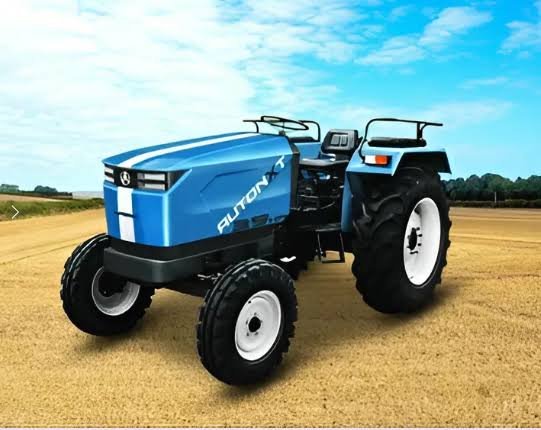
Short Summary: India’s electric tractor startups are moving from product development to commercial deployment, offering farmers an alternative to diesel-powered machinery. Lower operating costs and cleaner technology create opportunities, but high purchase prices, charging access and demanding farm conditions remain major challenges.
India’s Electric Tractor Startups Are Entering the Farming Market
India’s electric tractor startups are beginning to introduce battery-powered alternatives to conventional agricultural machinery. Companies such as AutoNxt Automation, Moonrider and Montra Electric are developing tractors designed for farming, transportation and industrial applications.
The opportunity is significant. India has a large agricultural sector, and tractors remain essential for activities such as ploughing, tilling, hauling and land preparation. However, most tractors currently operating in the country rely on diesel engines.
Electric models promise lower running costs, reduced local emissions and fewer engine-related maintenance requirements. These benefits could be particularly useful for farmers and commercial operators who use tractors regularly.
The market is still at an early stage. Business Standard reported that India recorded 248 electric tractor registrations between January and October 2026, compared with 219 registrations during the whole of 2025. This remains a very small number compared with the country’s conventional tractor market.
The question is no longer whether electric tractors can be developed. It is whether manufacturers can make them affordable, reliable and practical for everyday agricultural work.
Why Electric Tractors Could Reduce Farming Costs
Fuel expenses are an important part of operating a diesel tractor. Farmers who use machinery frequently must account for diesel consumption, engine servicing, lubricants and other maintenance requirements.
Electric tractors replace diesel engines with battery-powered motors. Charging the battery using electricity can cost less than purchasing diesel for equivalent work, depending on electricity tariffs, operating conditions and the task being performed.
Business Standard reported that a diesel tractor may consume fuel worth ₹1,500 to ₹2,000 while rotavating three acres. An electric tractor could perform the same task using electricity worth approximately ₹300 to ₹400, according to industry estimates cited in the report.
These figures indicate the potential for substantial operating savings, but actual costs will vary. Soil conditions, implement requirements, tractor power, battery capacity and working hours can all affect energy consumption.
Electric tractors also have fewer conventional engine components, potentially reducing some maintenance expenses. However, battery replacement, electronics servicing and specialised repairs must be included when calculating long-term ownership costs.
For farmers, the relevant question is not simply how much electricity costs. It is how much money they can save over the tractor’s entire working life.
Moonrider: Bengaluru Startup Expands Electric Tractor Deployments
Moonrider is among the startups attracting attention in India’s electric tractor segment. Founded in 2023 by Anoop Srikantaswamy and Ravi Kulkarni, the Bengaluru-based company develops battery-powered tractors for agricultural and industrial applications.
According to a November 24, 2026 report by The Times of India, Moonrider had deployed nearly 100 electric tractors across these applications. Its customers include institutional operators, individual farmers in Karnataka and Reliance’s compressed biogas facilities.
The company offers three tractor categories:
- 27 HP model: Equipped with a 24 kWh battery and priced from approximately ₹7.9 lakh.
- 50 HP model: Designed for heavier agricultural and industrial work, with a reported price of around ₹14 lakh.
- 75 HP model: A higher-powered model expected to cost approximately ₹20 lakh.
Moonrider has developed its own electric powertrains, battery packs and vehicle electronics. This approach gives the company greater control over the technology used in its tractors.
The startup raised $6 million in Series A funding in December 2025, led by pi Ventures, with participation from Singularity AMC and existing investors.
Its deployment figures are important because they show that electric tractors are being tested in actual operating environments rather than remaining limited to demonstrations.
AutoNxt and Montra Electric Are Building India’s E-Tractor Market
Moonrider is not the only company developing electric agricultural machinery.
AutoNxt Automation, based in Thane, Maharashtra, is another important player. The company develops electric tractors for farming and industrial applications. Its models include higher-powered options designed to handle demanding work.
Business Standard reported that AutoNxt accounted for approximately 145 electric tractor registrations between January and October 2026, representing around 58% of the total recorded during that period.
The company has also reported a growing order book and plans to expand its manufacturing capacity as demand develops.
Montra Electric, the clean mobility brand of the Murugappa Group’s TI Clean Mobility, is another major manufacturer. Its E-27 model delivers 27 HP equivalent power and is designed for activities such as ploughing, tilling, spraying and haulage.
The company announced the E-27’s entry into northern Indian markets in November 2025. It has described the model as India’s first ARAI-certified electric tractor.
These manufacturers are approaching the market through different business strategies, but both are working to establish electric tractors as commercially usable agricultural equipment.
Electric Tractor Prices: Are They Affordable for Indian Farmers?
Purchase price remains one of the biggest barriers to electric tractor adoption.
Diesel tractors have an established manufacturing and dealership ecosystem. Farmers can compare models, access financing and obtain repairs through networks that have developed over several decades.
Electric tractors are generally more expensive at the initial purchase stage. Business Standard reported that electric models in the market were priced at approximately ₹15.5 lakh to ₹16 lakh, compared with around ₹7 lakh to ₹8 lakh for comparable diesel models in the segment it examined.
However, prices vary significantly according to horsepower, battery capacity, manufacturer and application. Moonrider’s entry-level 27 HP model, for example, is reported to start at ₹7.9 lakh, while Montra’s E-27 was launched at ₹10.75 lakh.
This price difference creates a financial challenge for small and marginal farmers, many of whom cannot afford a large upfront investment.
The total cost of ownership may tell a different story. Lower energy and maintenance expenses can help recover the initial price difference over time, particularly for tractors used frequently.
But the calculation depends on annual usage. A farmer who operates a tractor for only a limited number of hours may take longer to recover the higher purchase cost than a commercial operator using it every day.
Charging Infrastructure and Battery Life Remain Major Challenges
Electric tractors need reliable charging facilities, particularly during busy agricultural seasons when delays can affect farm operations.
Unlike cars and two-wheelers, tractors often work in fields located away from established charging networks. Farmers may need to charge vehicles at their farms or homes, which makes access to suitable electricity connections important.
Battery capacity and charging time also influence how long a tractor can operate between charging sessions.
Agricultural work is demanding. Ploughing heavy soil, operating implements and transporting loads can consume significant energy. Battery performance may also change depending on temperature, terrain and the condition of the machinery.
Manufacturers must therefore demonstrate that their tractors can complete practical farming tasks without frequent interruptions.
Battery durability is another concern. Farmers need clear information about warranties, expected battery life, replacement costs and the availability of service support.
For widespread adoption, companies will have to build dependable after-sales networks and make spare parts accessible beyond major cities.
Government Policy and Testing Standards Could Support Adoption
Government policy can influence the cost and reliability of electric agricultural machinery.
In December 2025, the Bureau of Indian Standards introduced IS 19262:2025, titled Electric Agricultural Tractors: Test Code. The standard establishes testing procedures covering areas such as power take-off performance, drawbar power and the performance of belts and pulleys.
Such standards are important because agricultural tractors must perform demanding tasks under different operating conditions. Consistent testing can help buyers compare products and assess their suitability for farm work.
The Ministry of Agriculture’s Sub-Mission on Agricultural Mechanization also provides financial assistance for agricultural machinery and supports Custom Hiring Centres. The government stated in August 2026 that assistance under the scheme ranges from 40% to 50% of machinery costs for eligible farmers, while Custom Hiring Centre projects can receive support under specified conditions.
However, this should not be interpreted as a universal subsidy specifically available for every electric tractor. Eligibility depends on the scheme’s rules, approved machinery and state-level implementation.
Some states have introduced additional electric vehicle incentives. Maharashtra’s EV Policy 2025, for example, includes support for electric tractors.
Clearer and more consistent incentives could help reduce the upfront cost for farmers, particularly those who are interested in switching but cannot afford the initial investment.
Can Electric Tractors Work for Small and Marginal Farmers?
Small and marginal farmers represent a major potential market, but individual ownership may not always be financially practical.
Many farmers operate relatively small landholdings and may not use a tractor throughout the year. Purchasing an expensive electric tractor for occasional use could result in a long payback period.
Custom Hiring Centres offer one possible solution. These centres allow farmers to rent agricultural machinery instead of purchasing it.
An electric tractor available through a local hiring centre could help farmers access modern equipment without taking on the full purchase cost. It could also improve utilisation because one machine can serve multiple farms.
Cooperative farming groups and farmer-producer organisations could explore similar arrangements.
For manufacturers, this model could create demand beyond individual tractor sales. It may also help companies understand how their vehicles perform under different soil conditions and agricultural practices.
The success of this approach will depend on rental pricing, machine availability, local service facilities and the ability to complete work within agricultural schedules.
Why Industrial Applications Could Accelerate Electric Tractor Adoption
Electric tractors may find commercial opportunities beyond conventional farming.
Factories, warehouses, sugar mills, paper mills and compressed biogas facilities often require vehicles for material movement and internal transportation. These operations can involve repetitive routes and predictable working schedules.
Such environments may be suitable for electric tractors because charging can be organised around operating shifts.
Moonrider’s deployment at Reliance’s compressed biogas facilities illustrates this wider application. Its tractors are being used across both agricultural and industrial settings.
Industrial customers may also be able to calculate operating savings more easily because vehicle usage and work requirements are often more predictable.
This could give manufacturers an opportunity to establish commercial demand while continuing to improve their products for farm use.
However, industrial deployment does not automatically prove that a tractor is suitable for every agricultural task. Field performance, battery endurance and implement compatibility still need to be evaluated separately.
Can Electric Tractors Transform Rural Farming?
Electric tractors have the potential to change the economics of agricultural machinery, but widespread adoption will take time.
Lower running costs are attractive, especially for farmers and commercial operators who use tractors frequently. Cleaner operation may also benefit workplaces where vehicles operate indoors or near workers.
Yet the market faces practical challenges. Electric models must become more affordable, charging must be convenient, and manufacturers need to provide reliable servicing in rural areas.
Financing will also matter. Farmers need loan products and repayment structures that reflect agricultural income patterns rather than only the purchase price of the machine.
The next stage of growth will depend on real-world performance rather than product announcements alone. Manufacturers must demonstrate that electric tractors can handle regular farming workloads, operate reliably across seasons and deliver savings after accounting for battery costs.
India’s electric tractor market is still small, but the arrival of commercial deployments and specialised manufacturers suggests that the sector is moving towards a more practical phase of development.
Key Takeaways
- Indian electric tractor startups such as Moonrider, AutoNxt and Montra Electric are expanding commercial development and deployments.
- Electric tractors can reduce energy and maintenance expenses, although actual savings depend on usage and operating conditions.
- High upfront prices, charging access, battery life and rural servicing remain major barriers to adoption.
- Government testing standards, eligible machinery support and Custom Hiring Centres could help make electric tractors more accessible.
Frequently Asked Questions
1. Which companies are making electric tractors in India?
Major companies and startups include AutoNxt Automation, Moonrider, Montra Electric, Bullwork Mobility, Shree Marut E-Agrotech and other specialised manufacturers.
2. How much does an electric tractor cost in India?
Prices vary by horsepower, battery capacity and manufacturer. Recent reported examples include Moonrider’s 27 HP model starting at approximately ₹7.9 lakh and Montra Electric’s E-27 launched at ₹10.75 lakh.
3. Are electric tractors cheaper to operate than diesel tractors?
They can be cheaper to operate because electricity may cost less than diesel for equivalent work, and electric powertrains have fewer conventional engine components. Actual savings depend on usage, electricity rates, battery life and maintenance requirements.
4. Can small farmers use electric tractors?
Yes, but the initial purchase price may be difficult for some small farmers. Custom Hiring Centres, cooperative ownership and machinery rental services could make electric tractors more accessible without requiring individual ownership.
(Internal keywords: electric tractors in India, Indian electric tractor startups, electric tractor price in India, Moonrider electric tractor, AutoNxt Automation, Montra Electric E-27, electric farming machinery, EV tractors for farmers, electric tractor subsidy India, rural farming technology, sustainable agriculture India)










Leave a comment