


India’s deeptech startup ecosystem is attracting investor attention as companies move beyond traditional software, fintech and e-commerce into advanced technologies. Artificial intelligence, semiconductors, space technology, robotics and biotechnology are emerging as important areas for long-term investment.
India’s Deeptech Startup Ecosystem Is Entering a New Phase
India’s deeptech startup ecosystem is gaining momentum as investors increasingly explore businesses built around scientific research, engineering breakthroughs and proprietary technology. Unlike conventional startups that often focus on digital platforms, online services or consumer applications, deeptech companies develop solutions that can take years of research, testing and commercialisation.
The shift is visible across sectors such as artificial intelligence, semiconductor design, space technology, robotics, biotechnology, quantum computing and advanced manufacturing.
According to an industry overview published by the India Brand Equity Foundation (IBEF) in November 2026, India’s deeptech startups attracted approximately ₹20,047 crore, or $2.30 billion, in investment during 2025. This represented a 37% increase compared with 2024, based on NASSCOM and Zinnov data.
The same overview identified more than 4,200 deeptech startups in India, including over 550 companies established during 2025.
These developments indicate that India’s startup ecosystem is gradually expanding beyond businesses built primarily around digital adoption and consumer convenience.
What Makes Deeptech Startups Different From Traditional Technology Businesses?
Deeptech companies are distinguished by the scientific or engineering innovation at the centre of their products.
A traditional software startup may develop an application that connects customers with service providers. A deeptech company, on the other hand, may develop a new semiconductor architecture, an advanced battery material, a medical diagnostic technology or a specialised robotics system.
The difference is important because deeptech businesses face longer development cycles and higher technical uncertainty. Their products may require laboratory research, prototypes, specialised equipment, regulatory approvals and extensive testing before they can reach customers.
They also tend to require more capital before generating meaningful revenue.
However, successful deeptech products can create strong technological advantages because competitors may find it difficult to reproduce the underlying research, patents or engineering capabilities.
This is one reason investors are examining businesses with proprietary technology and intellectual property rather than focusing only on user growth or short-term revenue.
AI, Semiconductors and Space Technology Attract Investor Attention
Several sectors are contributing to the growth of India’s deeptech ecosystem.
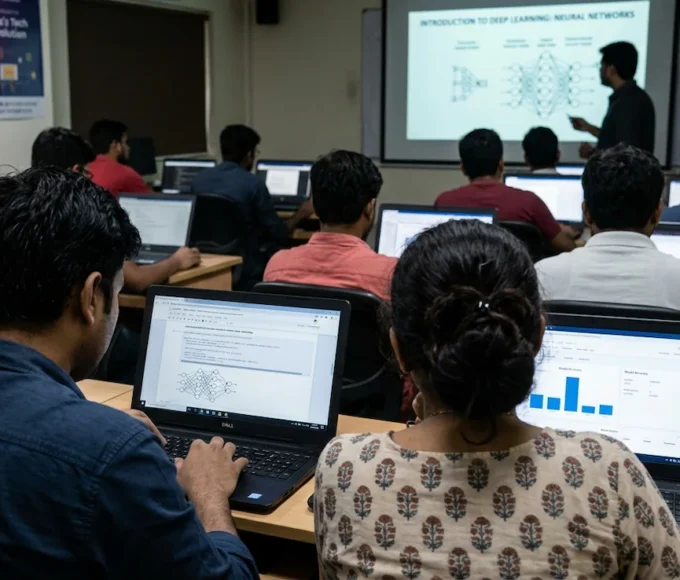
Artificial Intelligence: AI is being applied across healthcare, manufacturing, financial services, agriculture and enterprise operations. Indian startups are working on specialised AI models, automation tools and applications designed for local languages and industry requirements.
Semiconductors: Semiconductor startups are exploring chip design, specialised processors and related technologies. India’s growing electronics manufacturing ambitions have increased interest in domestic capabilities, although building a competitive semiconductor ecosystem requires significant investment and technical expertise.
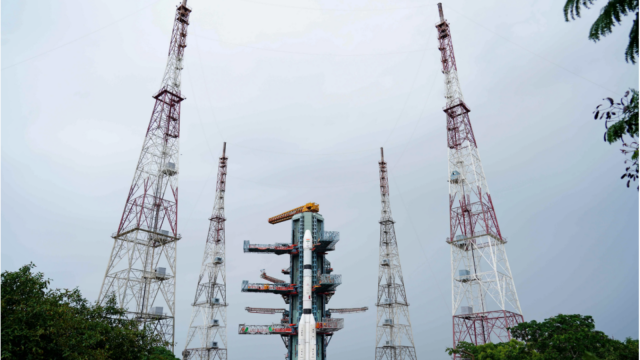
Space Technology: Private companies are developing launch vehicles, satellite systems, earth observation products and space-based data services. These technologies have potential applications in agriculture, communication, logistics, weather monitoring and national security.
Robotics and Automation: Startups are developing robots and automated systems for factories, warehouses, healthcare and other industrial applications. Demand for productivity improvements is creating opportunities for specialised automation businesses.
Biotechnology: Companies working in drug discovery, diagnostics, medical devices and industrial biotechnology are also part of the deeptech landscape. Their progress often depends on scientific validation and regulatory processes.
These sectors have different commercial requirements, but they share a dependence on research, specialised talent and long-term investment.
Why Investors Are Looking Beyond Fintech and E-Commerce
Fintech and e-commerce helped shape India’s startup boom by addressing large consumer markets and benefiting from growing smartphone and internet adoption.
However, investor interest is expanding towards businesses that develop underlying technologies rather than simply improving access to existing services.
A report on India’s technology investment landscape by the India Deep Tech Alliance and Venture Intelligence found that AI startups attracted $1.2 billion across 188 investments in 2025. The report also noted that AI’s share of total venture capital funding increased from less than 5% in 2020 to approximately 12% in 2025.
The broader deeptech opportunity includes technologies that can support multiple industries. For example, semiconductor design can contribute to consumer electronics, automobiles, industrial equipment and communication systems. Robotics can improve manufacturing and logistics, while biotechnology can support healthcare and agriculture.
Investors may also see opportunities in technology that reduces dependence on imported components or specialised foreign systems.
However, deeptech investments are not automatically less risky than traditional technology investments. Their technical uncertainty, capital requirements and longer commercialisation periods make careful evaluation essential.
Government Support Is Expanding Through New Funding Programmes
Government initiatives are playing an important role in India’s deeptech ambitions.
In February 2026, the Union Cabinet approved Startup India Fund of Funds 2.0 with a total corpus of ₹10,000 crore. The programme is designed to mobilise venture capital for startups, with specific attention to deeptech, innovative manufacturing and early-growth-stage businesses.
The government notified the scheme in April 2026. It works by committing capital to eligible Alternative Investment Funds, which can then invest in startups. This means the entire corpus is not distributed directly to individual companies.
Another major initiative is the Research, Development and Innovation (RDI) Scheme, approved in July 2025. It has an envisaged corpus of ₹1 lakh crore over six years to encourage private-sector participation in research and development.
The programme covers high-risk, high-impact innovation, including quantum computing, robotics, space technology, biotechnology, artificial intelligence and advanced manufacturing.
These initiatives address a major challenge for deeptech companies: the difficulty of securing patient capital for research that may not produce immediate commercial returns.
Funding Gaps Remain a Challenge for Indian Deeptech Startups
Despite growing investment, access to capital remains uneven across the deeptech ecosystem.
A startup may secure early funding to develop a prototype but struggle to raise the larger amount required for testing, manufacturing, regulatory approvals and commercial expansion.
A November 2026 report by Speciale Invest, cited by YourStory, highlighted this challenge. Using Tracxn data through August 31, 2026, the report noted that Indian deeptech startups accounted for 12.8% of global deeptech funding rounds in 2025 but received only 1.6% of the capital.
It also identified a gap between early-stage funding and later investment rounds. For every 100 seed rounds in India, there were 23 Series A or B rounds, compared with 105 globally, according to the report’s methodology.
These figures underline why early research funding alone cannot build a globally competitive deeptech industry.
Companies also need access to growth-stage investors, testing facilities, manufacturing partners and customers willing to adopt technologies that may still be evolving.
Universities and Research Institutions Can Strengthen Innovation
India’s universities and research institutions have an important role in building the deeptech pipeline.
Institutions such as the IITs, Indian Institute of Science and specialised research centres produce scientific research, patents and engineering talent. Their laboratories can also help startups test technologies before investing in expensive commercial facilities.
The challenge is converting research into products that businesses and consumers can actually use.
This requires stronger collaboration between researchers, entrepreneurs, manufacturers and investors. Technology transfer offices, incubation centres and industry partnerships can help identify promising research and support its commercial development.
The National Deep Tech Startup Policy framework also recognises the importance of research commercialisation, intellectual property protection, regulatory sandboxes and specialised talent development.
A stronger connection between academic research and private industry could help more Indian innovations move from laboratory experiments to commercially viable products.
Can Smaller Indian Cities Become Deeptech Startup Hubs?
Deeptech development is not limited to established technology centres such as Bengaluru, Hyderabad, Pune and Chennai.
Cities with engineering colleges, research institutions, manufacturing facilities and specialised industrial clusters can also develop deeptech businesses.
For example, Pune has an established engineering and automobile manufacturing ecosystem that can support opportunities in robotics, electric mobility, advanced materials and industrial automation. Hyderabad has a strong research and biotechnology base, while Chennai has a significant automotive and electronics manufacturing presence.
Smaller cities may also offer access to specialised talent, lower operating costs and proximity to particular industries.
However, building a successful deeptech cluster requires more than affordable office space. Startups need advanced laboratories, reliable infrastructure, research funding, experienced mentors and access to investors.
Regional incubators and partnerships between universities and manufacturers could help distribute deeptech activity beyond India’s largest startup hubs.
What Lies Ahead for India’s Deeptech Startup Ecosystem?
India’s deeptech opportunity will depend on its ability to turn research and technical capabilities into products that can compete in domestic and international markets.
Government funding programmes and growing investor interest provide support, but the ecosystem still needs stronger growth-stage financing, research infrastructure and commercialisation pathways.
The next phase will also require startups to demonstrate measurable progress. Investors will look beyond research announcements and prototypes to assess product performance, customer adoption, manufacturing readiness and revenue potential.
India has an opportunity to build companies that contribute to critical technologies across healthcare, electronics, energy, space and industrial production.
Whether this opportunity translates into long-term global competitiveness will depend on how effectively research institutions, founders, investors and policymakers work together.
Key Takeaways
- India’s deeptech startups attracted approximately ₹20,047 crore in investment during 2025, according to NASSCOM and Zinnov data cited by IBEF.
- AI, semiconductors, space technology, robotics and biotechnology are among the sectors attracting investor attention.
- Government initiatives include the ₹10,000 crore Startup India Fund of Funds 2.0 and the ₹1 lakh crore Research, Development and Innovation Scheme.
- Funding gaps, long development cycles, research commercialisation and access to specialised infrastructure remain major challenges.
Frequently Asked Questions
1. What is a deeptech startup?
A deeptech startup develops products or services based on advanced scientific research or engineering innovation. Examples include semiconductor design, robotics, biotechnology, quantum computing and space technology.
2. Which deeptech sectors are growing in India?
Artificial intelligence, semiconductor technology, space technology, robotics, biotechnology, advanced materials and climate technology are among the important areas of activity.
3. How much did India’s deeptech startups raise in 2025?
According to NASSCOM and Zinnov data cited by IBEF, Indian deeptech startups received approximately ₹20,047 crore, or $2.30 billion, in investment during 2025, representing 37% growth over 2024.
4. What government support is available for deeptech startups in India?
Major initiatives include Startup India Fund of Funds 2.0, with a ₹10,000 crore corpus, and the Research, Development and Innovation Scheme, which envisages ₹1 lakh crore over six years.
(Internal keywords: India’s deeptech startup ecosystem, deeptech startups in India, Indian deeptech funding, AI startups India, semiconductor startups India, space technology startups, robotics startups India, biotechnology innovation India, Startup India Fund of Funds 2.0, Research Development and Innovation Scheme, Indian venture capital trends)










Leave a comment