

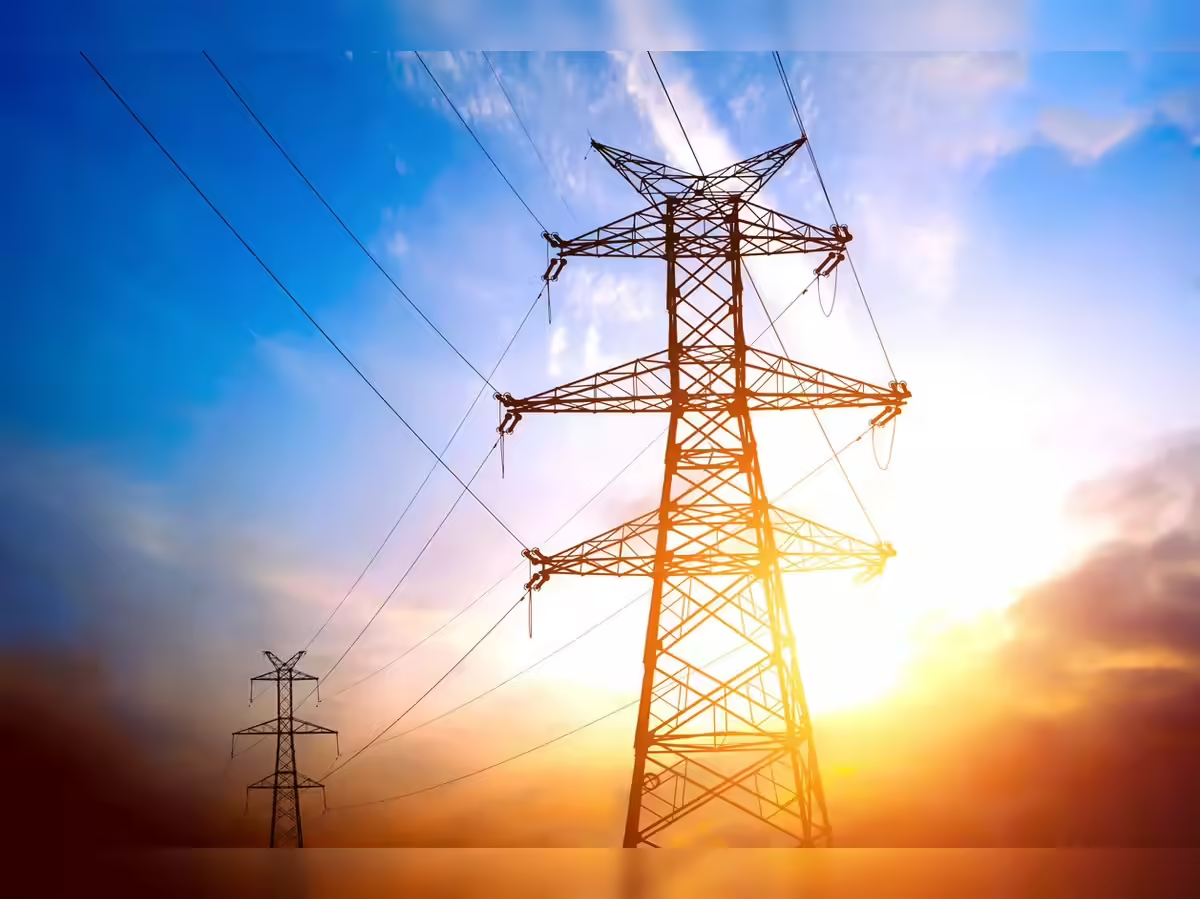
Draft National Electricity Policy 2026 introduces proposed changes that could directly impact MSMEs across India. The policy focuses on reliability, renewable integration, and cost efficiency, with potential effects on power tariffs, access, and operational planning for small and medium enterprises.
Draft National Electricity Policy 2026 is a time-sensitive development currently under discussion, making it a policy-driven news topic with direct implications for businesses. The proposed framework aims to align India’s power sector with future demand, sustainability goals, and infrastructure upgrades, all of which influence MSME operations.
Focus on Reliable Power Supply for Small Businesses
One of the key aspects of the Draft National Electricity Policy 2026 is improving power reliability. MSMEs, especially in Tier-2 and industrial clusters, often face inconsistent electricity supply, which affects production schedules and efficiency.
The policy emphasises strengthening distribution networks and reducing outages. For MSMEs, this could translate into fewer disruptions and lower dependency on backup power sources such as diesel generators.
Reliable power supply is critical for sectors like manufacturing, textiles, and food processing, where even short interruptions can lead to financial losses. If implemented effectively, this change could improve productivity and reduce operational risks.
Renewable Energy Push and Cost Implications
The policy also prioritises renewable energy integration as part of India’s long-term energy strategy. Increased use of solar and wind power is expected to reduce dependence on fossil fuels and stabilise costs over time.
For MSMEs, this creates both opportunities and challenges. Businesses may be encouraged or required to adopt renewable energy solutions such as rooftop solar installations. While this can lower long-term electricity expenses, the initial investment may be a barrier for smaller enterprises.
Government incentives and financing support will play a crucial role in determining adoption rates. MSMEs that transition early could benefit from reduced energy costs and improved sustainability compliance.
Tariff Rationalisation and Financial Impact on MSMEs
Tariff rationalisation is another important area in the Draft National Electricity Policy 2026. The policy aims to create a more balanced pricing structure by reducing cross-subsidies between consumer categories.
Currently, many MSMEs pay higher tariffs compared to residential users due to cross-subsidy mechanisms. Rationalisation could lead to more transparent pricing, but the exact impact will depend on how states implement the changes.
In some cases, MSMEs may see reduced electricity costs, while in others, adjustments could increase tariffs. This uncertainty makes it important for businesses to monitor policy developments closely.
Electricity pricing directly affects profitability, making tariff changes a critical factor for MSME planning.
Open Access and Power Procurement Flexibility
The Draft National Electricity Policy 2026 also highlights expanding open access to electricity. This allows businesses to purchase power directly from producers rather than relying solely on local distribution companies.
For MSMEs, open access can offer cost advantages and greater control over energy sourcing. It also enables businesses to choose renewable energy providers, aligning with sustainability goals.
However, practical challenges such as infrastructure limitations, regulatory approvals, and additional charges may affect adoption. Smaller MSMEs may find it difficult to navigate these complexities without external support.
Despite these challenges, increased flexibility in power procurement is a significant step toward modernising the electricity market.
Infrastructure Modernisation and Digital Integration
Another focus area of the policy is modernising power infrastructure through digital technologies. Smart meters, grid automation, and improved monitoring systems are expected to enhance efficiency and reduce losses.
For MSMEs, digital integration could lead to better energy management and more accurate billing. Smart systems can help businesses track consumption patterns and identify areas for cost savings.
Improved infrastructure also supports faster issue resolution and better service quality from distribution companies. This is particularly relevant in Tier-2 regions where infrastructure gaps have historically affected power reliability.
Challenges and Implementation Risks for MSMEs
While the Draft National Electricity Policy 2026 outlines several positive changes, implementation remains a key challenge. Electricity is a concurrent subject in India, meaning states play a major role in execution.
Variations in state-level policies and infrastructure readiness could lead to uneven benefits for MSMEs across regions. Some areas may see faster improvements, while others may lag.
Additionally, compliance requirements related to renewable energy or open access could increase administrative complexity for small businesses.
MSMEs will need to stay informed and adapt to evolving regulations to fully benefit from the policy.
Takeaways
– Draft National Electricity Policy 2026 aims to improve power reliability for MSMEs
– Renewable energy adoption could reduce long-term costs but requires initial investment
– Tariff rationalisation may change electricity pricing dynamics for small businesses
– Open access and digital infrastructure can improve flexibility and efficiency
FAQs
Q1. What is the Draft National Electricity Policy 2026?
It is a proposed framework to guide India’s power sector development, focusing on reliability, sustainability, and efficiency.
Q2. How will the policy affect MSMEs?
It could impact electricity costs, supply reliability, and access to alternative energy sources.
Q3. What is tariff rationalisation?
It is the process of balancing electricity pricing by reducing cross-subsidies between different consumer categories.
Q4. Can MSMEs benefit from renewable energy under this policy?
Yes, but adoption depends on affordability, incentives, and access to financing.










Leave a comment