

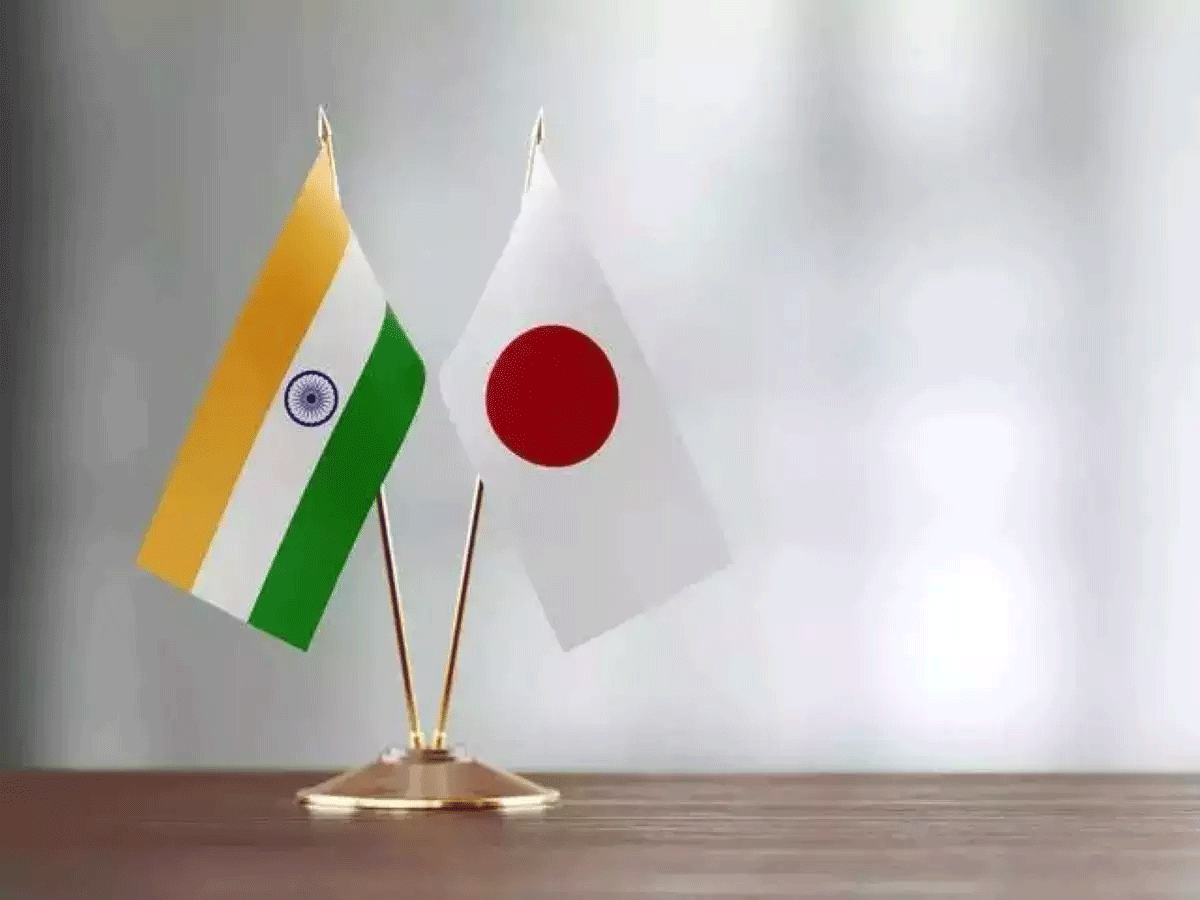
India and Japan have strengthened their economic partnership through new agreements covering artificial intelligence, semiconductors, clean energy, defence technology, and resilient supply chains. The latest deals could create significant opportunities for Indian startups seeking investment, technology partnerships, and access to global markets.
India-Japan economic deals are drawing significant attention after both countries announced a fresh roadmap to deepen cooperation in technology, manufacturing, energy, and economic security. The latest agreements, signed during the India-Japan Annual Summit, are expected to strengthen bilateral investment while creating new opportunities for Indian startups working in emerging sectors such as artificial intelligence, deep technology, clean energy, mobility, and advanced manufacturing. The partnership builds on Japan’s long-standing role as one of India’s largest foreign investors and infrastructure partners.
New India-Japan Agreements Focus on Future Technologies
The latest agreements go beyond traditional trade. Both governments have identified strategic sectors that are expected to shape future economic growth, including artificial intelligence, semiconductors, critical minerals, clean energy, shipbuilding, defence technology, and resilient supply chains. Economic security has also emerged as a central pillar of the partnership as countries seek to reduce dependence on vulnerable global supply chains.
Japan has also reiterated its commitment to expanding long-term investment in India. High-level discussions included new investment commitments and cooperation frameworks designed to encourage technology transfer, industrial collaboration, and innovation. These agreements complement existing Japanese investments in infrastructure projects such as the Mumbai-Ahmedabad High Speed Rail corridor and manufacturing facilities established across India.
Why Indian Startups Stand to Benefit
For startups, international partnerships often provide more than funding. They open access to advanced technologies, research collaboration, global customers, and experienced manufacturing ecosystems.
Indian startups developing AI applications, industrial automation, robotics, semiconductor design, electric mobility, cybersecurity, healthcare technology, and clean energy solutions could find greater opportunities to collaborate with Japanese companies. Japanese firms are known for their expertise in precision engineering, advanced manufacturing, electronics, and industrial innovation, while Indian startups bring strengths in software development, digital platforms, and scalable technology solutions.
Such complementary capabilities create favourable conditions for joint ventures, pilot projects, and technology partnerships that benefit both countries.
Manufacturing and Supply Chains Could Create New Markets
One of the important outcomes of the India-Japan partnership is the emphasis on resilient supply chains. Global disruptions over the past few years have encouraged governments and businesses to diversify manufacturing and sourcing networks.
For Indian startups working in industrial technology, logistics, warehouse automation, smart manufacturing, and supply chain software, this shift presents fresh business opportunities. Companies that develop digital tools for inventory management, predictive maintenance, industrial IoT, and factory automation may benefit as manufacturers expand operations in India.
The government’s continued focus on domestic manufacturing and value addition also aligns with these emerging opportunities, particularly for startups supplying technology to larger industries.
Tier-2 Cities Could See Greater Startup Activity
The impact of these agreements is unlikely to remain limited to major technology hubs. Tier-2 cities are increasingly becoming important centres for manufacturing, engineering talent, electronics production, and startup incubation.
Cities such as Nagpur, Coimbatore, Indore, Jaipur, Surat, Bhubaneswar, Kochi, and Chandigarh have witnessed growing investments in innovation ecosystems over the past few years. As Japanese companies expand partnerships across India, startups based outside Bengaluru, Hyderabad, Pune, and Delhi may also find opportunities to participate in collaborative projects.
Engineering colleges, research institutions, industrial parks, and startup incubators in smaller cities can contribute skilled talent and specialised technologies that support bilateral cooperation.
This wider geographic participation could strengthen regional economic development while encouraging entrepreneurship beyond metropolitan areas.
Challenges That Startups Should Consider
While the opportunities are promising, startups will also need to meet high international standards. Japanese businesses typically place strong emphasis on product quality, reliability, regulatory compliance, documentation, and long-term partnerships.
Early-stage companies seeking collaboration may need to strengthen intellectual property protection, quality certifications, cybersecurity practices, and governance standards. Understanding Japanese business culture and building trust through consistent performance will also be important for successful partnerships.
Access to patient capital, skilled talent, and research collaboration will determine how effectively Indian startups can leverage these opportunities over the coming years.
Looking Ahead
The latest India-Japan economic agreements represent more than another diplomatic milestone. They signal a growing partnership centred on technology, innovation, resilient manufacturing, and sustainable economic growth.
For Indian startups, particularly those working in artificial intelligence, semiconductors, mobility, clean energy, advanced manufacturing, and digital infrastructure, the agreements create an environment that encourages investment, collaboration, and global expansion.
As implementation progresses, the real impact will depend on how effectively businesses, research institutions, investors, and governments convert policy commitments into commercial partnerships. If executed successfully, the India-Japan partnership could become an important catalyst for India’s next generation of technology-driven startups while strengthening economic cooperation between the two countries.
Takeaways
- India and Japan have expanded cooperation in AI, semiconductors, clean energy, manufacturing, and economic security.
- Indian startups could benefit through investment, technology partnerships, research collaboration, and market access.
- Resilient supply chains and advanced manufacturing create new opportunities for technology companies across India.
- Tier-2 cities with growing startup ecosystems may also attract greater international collaboration and investment.
FAQs
Q1. Which sectors are covered under the latest India-Japan agreements?
The partnership includes artificial intelligence, semiconductors, clean energy, defence technology, critical minerals, shipbuilding, advanced manufacturing, and resilient supply chains.
Q2. How can Indian startups benefit from these agreements?
Startups may gain access to investment, technology partnerships, research collaboration, manufacturing expertise, and opportunities to serve global markets.
Q3. Why is Japan considered an important partner for Indian startups?
Japan is among India’s largest foreign investors and has extensive expertise in manufacturing, engineering, electronics, robotics, and industrial innovation.
Q4. Will startups outside metro cities benefit as well?
Yes. Growing innovation ecosystems in Tier-2 cities could attract collaborations in manufacturing, engineering, digital technology, and industrial solutions as bilateral projects expand.
(Internal keyword suggestions: India Japan economic deals, India Japan startup opportunities, Japan investment in India, Indian startups, AI startups India, semiconductor startups, India Japan trade, economic partnership, technology collaboration India Japan, supply chain resilience, startup funding India, Tier-2 startup ecosystem)












Leave a comment