

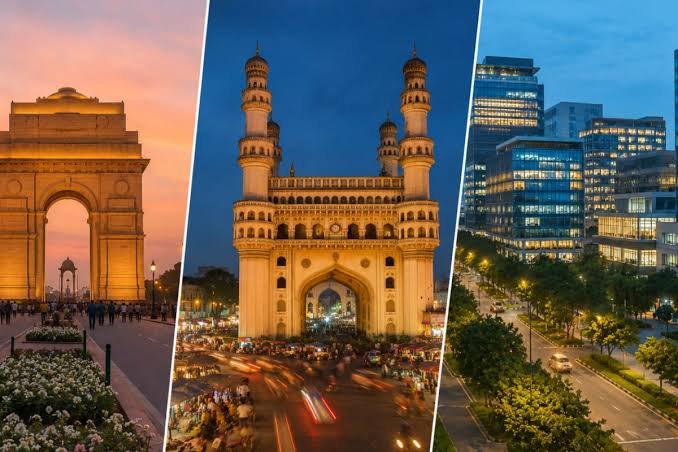
India’s SME digitisation boom is reshaping how small and medium enterprises operate across Tier 2 and Tier 3 cities. As affordable digital tools, online marketplaces, digital payments, and government-backed initiatives become more accessible, businesses outside metro cities are adopting technology at an unprecedented pace, opening new opportunities for growth, employment, and innovation.
The topic is evergreen with strong current relevance. While SME digitisation is an ongoing trend rather than breaking news, recent growth in digital infrastructure, fintech adoption, AI-powered business tools, and government initiatives has accelerated digital transformation across India’s smaller cities. This article follows an explanatory and analytical approach.
Small and medium enterprises contribute nearly 30 percent of India’s GDP and employ over 110 million people, making them one of the country’s most important economic pillars. Traditionally, many SMEs outside metropolitan areas depended on manual bookkeeping, cash transactions, and local customer networks. Today, that landscape is rapidly changing as businesses embrace digital technologies to improve efficiency and expand beyond regional markets.
Digital Payments and UPI Are Driving SME Transformation
One of the biggest catalysts behind SME digitisation has been the widespread adoption of digital payment systems.
The success of the Unified Payments Interface (UPI) has enabled even the smallest retailers, wholesalers, restaurants, manufacturers, and service providers to accept instant digital payments. QR code-based transactions have reduced dependence on cash while making financial records easier to maintain.
Banks and fintech companies have also simplified access to business loans by using digital transaction histories to evaluate creditworthiness. This has particularly benefited entrepreneurs in cities such as Nagpur, Indore, Surat, Coimbatore, Jaipur, Lucknow, Kochi, and Bhubaneswar, where thousands of businesses are formalising their operations.
As digital payment acceptance increases, SMEs are also becoming more comfortable using accounting software, GST management platforms, payroll systems, and online banking services.
E-commerce and Online Marketplaces Expand Business Reach
Another major factor behind India’s SME digitisation boom is the rapid growth of e-commerce.
Earlier, many small businesses served only local customers because geographical limitations restricted their reach. Today, sellers can showcase products through online marketplaces, their own websites, and social commerce platforms.
Handicraft businesses, textile manufacturers, food brands, furniture makers, and local artisans are increasingly receiving orders from customers across India.
Government initiatives encouraging digital commerce have also helped smaller manufacturers participate in national supply chains. Affordable logistics services, improved courier networks, and better internet connectivity have made nationwide deliveries more practical than ever before.
For many businesses, digital platforms are no longer optional. They have become essential channels for customer acquisition and revenue growth.
Artificial Intelligence and Automation Are Becoming Affordable
Artificial intelligence is no longer limited to large corporations.
Cloud-based AI tools now help SMEs automate customer support, generate marketing content, analyse sales performance, forecast demand, and improve inventory management without requiring major investments.
Many small businesses are using AI-powered chatbots to answer customer queries around the clock, while digital marketing platforms assist entrepreneurs in reaching highly targeted audiences through social media and search advertising.
Affordable subscription-based software allows even businesses with limited technical expertise to benefit from automation.
This shift enables entrepreneurs to spend less time on repetitive administrative work and focus more on product development, customer service, and business expansion.
Government Support Is Accelerating Digital Adoption
Government initiatives have played a significant role in encouraging SME digitisation across India.
Programs supporting Digital India, GST implementation, ONDC, Udyam Registration, GeM procurement, and various MSME development schemes have encouraged businesses to adopt digital systems.
The Open Network for Digital Commerce (ONDC) is particularly important because it aims to provide smaller sellers with greater visibility without relying exclusively on large e-commerce platforms.
Skill development programs and entrepreneurship initiatives have also increased awareness about cloud computing, cybersecurity, digital marketing, and financial management.
Combined with improving broadband connectivity and smartphone penetration, these initiatives are creating a stronger digital ecosystem for businesses across smaller cities.
Challenges That SMEs Still Need to Overcome
Despite encouraging progress, several challenges continue to slow complete digital transformation.
Many small businesses still face shortages of skilled digital talent, cybersecurity awareness, and technology training. Some entrepreneurs remain hesitant to invest in software due to concerns about costs or complexity.
Internet connectivity remains inconsistent in certain rural regions, while language barriers can affect software adoption among non-English speaking users.
Cybersecurity is another growing concern. As businesses move online, protecting customer data and financial information becomes increasingly important. Regular software updates, employee awareness, and secure payment practices are becoming essential components of digital operations.
Addressing these issues will determine how successfully India’s SME sector can sustain long-term digital growth.
The Future of SME Growth Lies Beyond Metro Cities
The next phase of India’s economic growth is expected to come increasingly from Tier 2 and Tier 3 cities.
As digital infrastructure improves, entrepreneurs outside traditional business hubs are finding new opportunities to compete nationally and even globally. Lower operating costs, expanding consumer markets, improving logistics, and growing digital literacy provide a favourable environment for business expansion.
Technology is no longer a competitive advantage reserved for large companies. It has become a practical business necessity for enterprises of every size.
Businesses that continue investing in digital capabilities, workforce training, online sales, and customer experience are likely to be better positioned for sustainable growth in the coming years.
Key Takeaways
- UPI and digital payments have significantly accelerated SME digitisation across India.
- E-commerce platforms allow businesses from smaller cities to reach national markets.
- Affordable AI and cloud-based software are helping SMEs improve efficiency and productivity.
- Government initiatives and improving digital infrastructure continue to support long-term business growth.
Frequently Asked Questions
Q1. What is SME digitisation?
SME digitisation refers to the adoption of digital technologies such as online payments, cloud software, e-commerce, AI tools, and automation by small and medium enterprises to improve business operations.
Q2. Why are Tier 2 and Tier 3 cities important for SME growth?
These cities offer lower operating costs, growing consumer demand, improving infrastructure, and a large number of emerging entrepreneurs, making them key drivers of India’s future economic growth.
Q3. How does AI help small businesses?
AI can automate customer support, analyse business performance, generate marketing content, improve inventory management, and reduce repetitive administrative work at affordable costs.
Q4. What are the biggest challenges facing SME digitisation?
Limited digital skills, cybersecurity concerns, inconsistent internet connectivity in some regions, and resistance to adopting new technologies remain key challenges.
(Internal Keywords: India’s SME digitisation boom, MSME digital transformation India, UPI for small businesses, Digital India SMEs, Tier 2 business growth, ONDC opportunities, AI for SMEs, MSME technology adoption, SME digital payments, Indian small business technology)











Leave a comment