

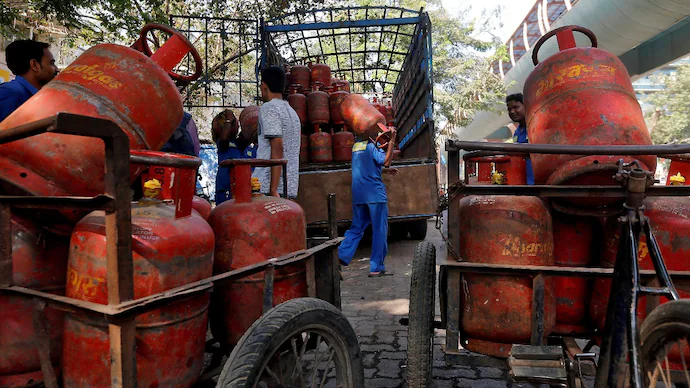
India’s LPG cylinder price hike of ₹60 has once again brought household budgets into focus, particularly for middle-class families in Tier-2 and Tier-3 cities. The increase affects daily cooking expenses and highlights the continuing challenge of balancing energy affordability and government subsidy policies.
LPG Price Hike Adds Pressure on Household Budgets
The latest LPG cylinder price hike has increased the cost of domestic cooking gas by around ₹60 in many parts of India. For middle-class households in smaller cities, where incomes often grow slower than in metro areas, even a moderate price rise can disrupt monthly budgeting.
Cooking gas remains one of the most essential household utilities in India. Most urban and semi-urban families depend on LPG cylinders for daily cooking. In cities like Nagpur, Indore, Nashik, and Lucknow, a single LPG cylinder already costs close to or above ₹900 depending on state taxes and distributor charges. With the new price increase, many households are now paying significantly more for the same monthly consumption.
For a typical family that uses one cylinder every 25 to 30 days, the ₹60 increase translates to an additional ₹720 per year. While this may appear small on paper, it comes at a time when food prices, school fees, and electricity bills are also rising.
Why LPG Prices Change Frequently in India
LPG cylinder prices in India are influenced by several factors including global crude oil prices, currency exchange rates, and government subsidy policies. India imports a large portion of its LPG requirement, which means international energy markets directly affect domestic prices.
When global energy prices rise, oil marketing companies adjust LPG rates to recover costs. These companies include public sector firms such as Indian Oil, Bharat Petroleum, and Hindustan Petroleum.
In recent years, the government has gradually reduced universal LPG subsidies. Instead of blanket subsidies for all households, financial support is now mostly targeted at economically weaker households through schemes like the Pradhan Mantri Ujjwala Yojana.
As a result, many middle-class families now pay the full market price of LPG cylinders.
Middle-Class Households in Tier-2 Cities Feel the Impact
The LPG price hike tends to affect smaller cities differently than major metros. In Tier-2 and Tier-3 cities, salary levels and employment opportunities are often more limited. Household budgets are therefore more sensitive to small increases in essential expenses.
Many families in these cities carefully plan their monthly spending around fixed costs such as cooking gas, groceries, school expenses, and transport. When LPG prices increase, households often adjust other areas of spending to maintain balance.
Some families try to stretch the use of a cylinder by adopting fuel-saving cooking practices. Others consider switching to induction cooktops for certain meals, though electricity costs and appliance prices remain a concern.
In rural and semi-urban areas, a small number of households may temporarily shift back to traditional fuels like firewood during periods of higher LPG prices. However, this practice is declining due to health concerns and government campaigns promoting clean cooking fuel.
Government Schemes and Relief Measures
Government policy continues to play a key role in determining the final LPG price paid by consumers. The Pradhan Mantri Ujjwala Yojana has expanded LPG access across rural India by providing subsidized cylinders to low-income households.
Under this scheme, eligible beneficiaries receive financial support for refilling cylinders, which helps offset price increases. However, middle-income households generally do not qualify for these subsidies.
Some state governments occasionally announce additional support measures or subsidies to ease the burden on consumers, particularly when energy prices rise sharply.
Despite these measures, the broader trend over the past decade has been a gradual shift toward market-linked LPG pricing.
Changing Energy Habits in Indian Homes
The recurring LPG price adjustments are also slowly influencing how households use energy for cooking. Urban families increasingly combine LPG with other cooking options such as electric induction stoves, pressure cookers, and energy-efficient appliances.
Smaller Indian cities are also seeing a growing market for kitchen appliances that reduce fuel consumption. Pressure cookers, insulated cooking pots, and multi-cookers are becoming more popular as families try to optimize gas usage.
While LPG remains the dominant cooking fuel for urban India, the rising cost has started encouraging experimentation with hybrid cooking methods.
For now, however, LPG cylinders remain the most reliable and widely used cooking fuel for millions of households across India.
Takeaways
The ₹60 LPG cylinder price increase adds around ₹720 in annual expenses for households using one cylinder per month.
Middle-class families in Tier-2 and Tier-3 cities are particularly sensitive to energy price changes due to tighter monthly budgets.
Reduced universal subsidies mean many households now pay the full market price for LPG cylinders.
Some families are adopting energy-saving cooking habits or combining LPG with electric appliances.
FAQs
Why did LPG cylinder prices increase in India?
LPG prices rise mainly due to changes in global crude oil prices, import costs, and adjustments by oil marketing companies to reflect market rates.
How much does an LPG cylinder cost in India after the hike?
Prices vary by city, but in many locations a domestic LPG cylinder now costs around ₹900 or more depending on local taxes and distributor charges.
Do middle-class households receive LPG subsidies?
Most middle-class households currently pay the full market price. Subsidies are mainly targeted toward low-income families under the Ujjwala scheme.
Can households reduce LPG consumption at home?
Yes. Using pressure cookers, planning meals efficiently, and combining LPG with induction cooking can help reduce overall gas usage.











Leave a comment