

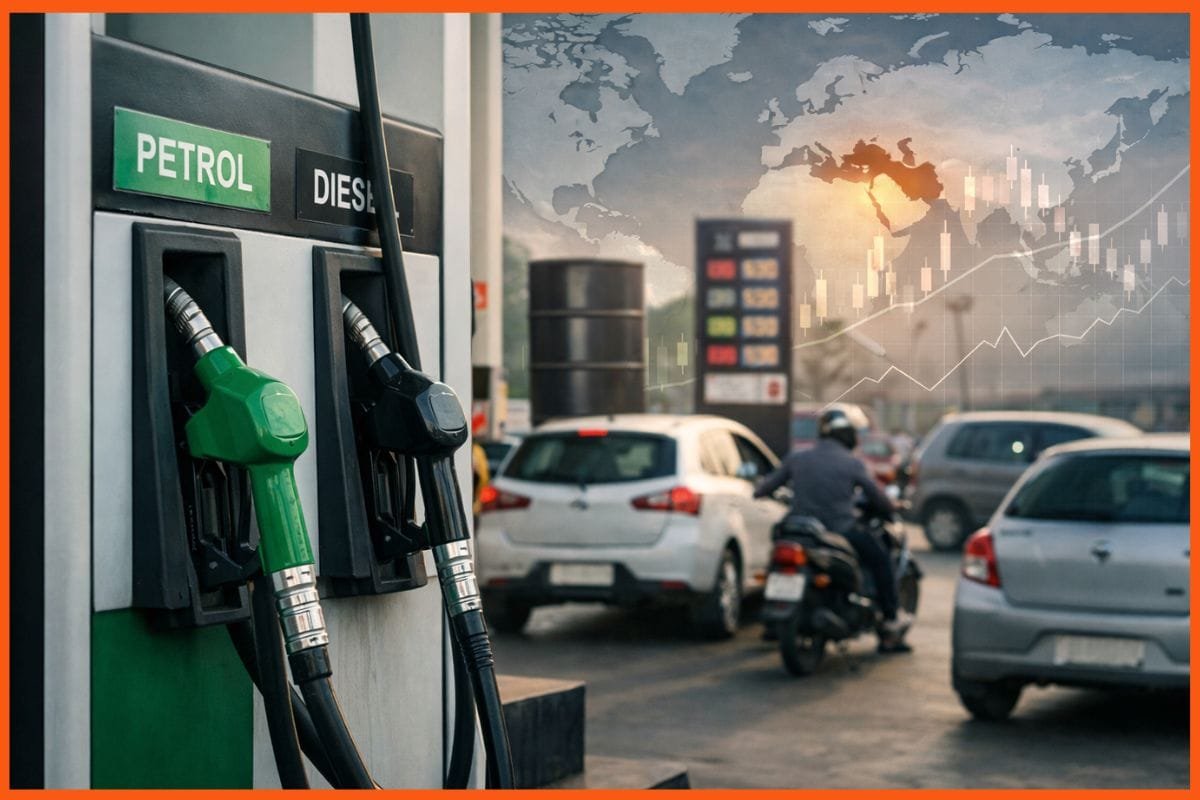
Petrol and diesel prices in India have remained largely unchanged in recent weeks, providing temporary relief to consumers and businesses. For Tier-2 cities, this fuel price stability is influencing transport costs, local logistics, and everyday commuting expenses.
Fuel Price Stability Brings Relief to Daily Commuters
Petrol and diesel prices holding steady has become an important development for many Indian households and businesses. The stability in fuel prices affects millions of daily commuters, transport operators, and small businesses that depend on road transportation.
In many Indian cities, petrol prices currently remain around ₹100 per litre, while diesel prices hover in the ₹90 range depending on state taxes and local levies. Although these prices remain relatively high compared to earlier years, the absence of frequent revisions provides predictability for consumers.
For residents of Tier-2 cities such as Nagpur, Jaipur, Indore, and Coimbatore, stable fuel prices make it easier to manage monthly expenses. Two-wheelers remain the most common mode of transport in these cities, and petrol costs directly influence household budgets.
Small changes in fuel prices can quickly impact daily commuting costs, especially for workers who travel long distances within expanding urban areas.
Why Petrol and Diesel Prices Have Remained Unchanged
The recent stability in petrol and diesel prices is linked to multiple economic and policy factors. Oil marketing companies in India revise fuel prices based on global crude oil prices, currency exchange rates, and domestic taxation policies.
Global crude oil prices have experienced moderate fluctuations in recent months but have largely remained within a manageable range. This has allowed oil marketing companies such as Indian Oil, Bharat Petroleum, and Hindustan Petroleum to maintain stable retail prices in several cities.
Government tax policies also play a significant role in determining final fuel prices. Both central excise duties and state value added taxes contribute to the price consumers pay at petrol pumps.
When international crude prices remain relatively stable, fuel retailers are less likely to make frequent adjustments in pump prices.
Impact on Transport Costs in Smaller Cities
Fuel price stability directly influences transport costs in Tier-2 cities where road transport remains the backbone of urban mobility and local commerce. Auto rickshaws, small taxis, delivery vans, and city buses all rely heavily on petrol or diesel.
When fuel prices remain unchanged, local transport operators can maintain stable fares. This helps prevent sudden increases in auto rickshaw fares, bus ticket prices, and app-based taxi charges.
For example, in cities such as Nagpur and Surat, auto rickshaw unions often revise fares only when fuel prices change significantly. Stable petrol and diesel prices therefore reduce pressure on transport authorities to approve fare hikes.
Local logistics businesses also benefit from this stability. Delivery companies transporting goods between warehouses, markets, and retail shops rely on predictable fuel costs to manage operational budgets.
Benefits for Local Businesses and Supply Chains
Stable petrol and diesel prices also support local businesses that depend on transportation for supply chains. Retail stores, restaurants, and small manufacturers rely on regular deliveries of goods and raw materials.
In Tier-2 cities, a large share of goods is transported through small trucks and commercial vehicles running on diesel. If diesel prices rise sharply, transport operators often pass on the additional cost to traders and shop owners.
When fuel prices remain steady, businesses can maintain stable product pricing for consumers. This becomes particularly important for sectors such as grocery retail, agriculture supply chains, and construction material transport.
For farmers and agricultural traders in semi urban areas, diesel price stability also helps manage the cost of transporting produce to wholesale markets.
Long Term Fuel Price Trends in India
Although petrol and diesel prices have remained stable recently, the long term trend in India has been influenced by global energy markets and domestic taxation policies. India imports a large portion of its crude oil requirement, making domestic fuel prices sensitive to international market movements.
Over the past decade, petrol and diesel prices have increased gradually due to rising crude oil prices and tax adjustments. However, price revisions have become less frequent in certain periods when global oil markets stabilize.
At the same time, India is exploring alternative mobility solutions such as electric vehicles, compressed natural gas vehicles, and public transport expansion to reduce dependence on conventional fuels.
While these transitions are underway, petrol and diesel will continue to remain the dominant fuels for transport across most Indian cities.
Takeaways
Petrol and diesel prices remaining stable provide short term relief to commuters and transport operators.
Fuel stability helps maintain consistent auto rickshaw fares, taxi prices, and delivery costs in Tier-2 cities.
Local businesses benefit from predictable logistics expenses when diesel prices remain unchanged.
India’s fuel prices are still closely linked to global crude oil markets and domestic taxation policies.
FAQs
Why are petrol and diesel prices not changing frequently right now?
Fuel prices remain stable when global crude oil prices do not fluctuate significantly and oil companies choose to maintain existing retail rates.
How do fuel prices affect transport costs in smaller cities?
Higher fuel prices often lead to increased auto rickshaw fares, taxi charges, and delivery costs. Stable prices help keep these expenses predictable.
Are petrol and diesel prices the same across India?
No. Fuel prices vary by state because different state governments impose different value added taxes on petrol and diesel.
Will petrol and diesel prices remain stable in the future?
Fuel prices depend on global crude oil markets, exchange rates, and government taxation policies, so changes can occur when these factors shift.









Leave a comment