

India’s retail inflation update has drawn attention as new data shows price changes affecting food, fuel, and daily essentials. For households across the country, the latest inflation numbers provide insight into how everyday spending and monthly budgets may shift.
Latest Retail Inflation Data and What It Indicates
India’s retail inflation update is closely tracked because it reflects the cost of living for millions of households. Retail inflation in India is measured using the Consumer Price Index, commonly known as CPI, which tracks price changes in a basket of goods and services such as food, housing, clothing, fuel, and healthcare.
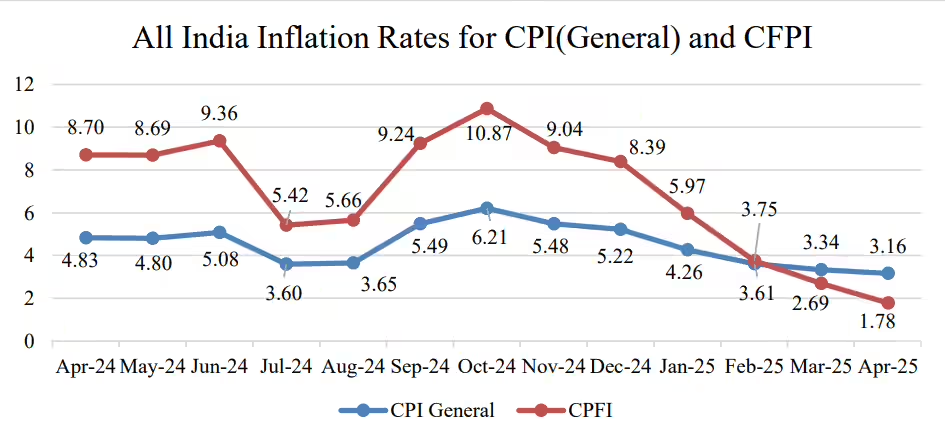
Recent CPI data released by the Ministry of Statistics and Programme Implementation indicates that inflation has remained within the Reserve Bank of India’s target range of 2 percent to 6 percent. However, food prices continue to be one of the biggest contributors to fluctuations in inflation levels.
When retail inflation rises, consumers experience higher prices for essential items such as vegetables, cooking oil, dairy products, and packaged food. Even moderate changes in CPI can affect how households allocate money for groceries, utilities, and transport.
For middle class and lower income households, these changes are often immediately visible in weekly grocery bills and everyday purchases.
Food Prices Continue to Drive Inflation Trends
One of the most significant drivers of retail inflation in India remains food inflation. The food and beverages category accounts for a large share of the CPI basket, meaning price increases in staples quickly influence overall inflation figures.
Vegetables, cereals, pulses, and edible oils are among the items that often experience seasonal price volatility. Weather conditions, supply chain disruptions, and transportation costs can all affect food availability and prices.
For example, fluctuations in vegetable prices such as tomatoes, onions, and potatoes frequently influence monthly inflation readings. Similarly, changes in global edible oil prices can push up cooking oil costs for households.
Food inflation tends to have a stronger impact in Tier-2 and Tier-3 cities where households spend a larger share of income on groceries and essential food items.
Impact of Inflation on Everyday Spending
The effect of retail inflation becomes most visible in daily spending patterns. When prices of essential goods increase, households typically adjust their budgets to manage expenses.
In many Indian households, groceries and food consumption represent one of the largest monthly expenses. If food inflation rises, families may reduce spending on discretionary items such as dining out, entertainment, or non essential purchases.
Retail inflation also affects the prices of services such as transportation, education, and healthcare over time. For instance, higher fuel costs can increase transportation charges and delivery costs, which may eventually translate into higher prices for goods.
Middle class households often feel the impact of inflation through gradual increases across multiple expense categories rather than through a single major price change.
Role of the Reserve Bank of India in Controlling Inflation
India’s monetary policy framework is designed to keep inflation within a target band. The Reserve Bank of India aims to maintain retail inflation at around 4 percent with a tolerance range between 2 percent and 6 percent.
To manage inflation, the RBI uses tools such as the repo rate, which is the rate at which it lends money to commercial banks. When inflation rises significantly, the central bank may increase interest rates to reduce excess spending in the economy.
Higher interest rates can make borrowing more expensive for businesses and consumers, which can slow demand and help control rising prices.
Conversely, when inflation is lower and economic growth needs support, the RBI may reduce interest rates to encourage investment and consumption.
Inflation Trends and the Outlook for Consumers
Looking ahead, inflation trends in India will depend on several key factors including food supply conditions, global commodity prices, and domestic economic activity.
Weather patterns such as monsoon performance play an important role in agricultural output and food availability. A good monsoon season typically helps stabilize food prices by improving crop production.
Global crude oil prices also influence inflation indirectly through fuel costs and transportation expenses. When fuel prices increase, the cost of transporting goods can rise across supply chains.
For consumers, monitoring inflation data provides a useful indicator of how prices for everyday goods and services may move in the coming months.
While inflation levels remain within the central bank’s target range, the impact on household budgets continues to depend largely on food prices and essential commodities.
Takeaways
Retail inflation in India is measured through the Consumer Price Index which tracks changes in the cost of everyday goods and services.
Food prices such as vegetables, cereals, and edible oils remain the largest contributors to inflation fluctuations.
Higher inflation can increase household spending on groceries, transport, and essential services.
The Reserve Bank of India manages inflation using monetary policy tools such as interest rate adjustments.
FAQs
What is retail inflation in India?
Retail inflation refers to the increase in prices of goods and services purchased by consumers and is measured through the Consumer Price Index.
Why are food prices important in inflation calculations?
Food items make up a large portion of the CPI basket, so price changes in food significantly affect overall inflation numbers.
How does inflation affect household budgets?
When inflation rises, the cost of essential items increases, which can reduce disposable income and limit spending on non essential goods.
Who controls inflation in India?
The Reserve Bank of India monitors inflation and uses monetary policy tools such as repo rate adjustments to keep inflation within the target range.










Leave a comment