

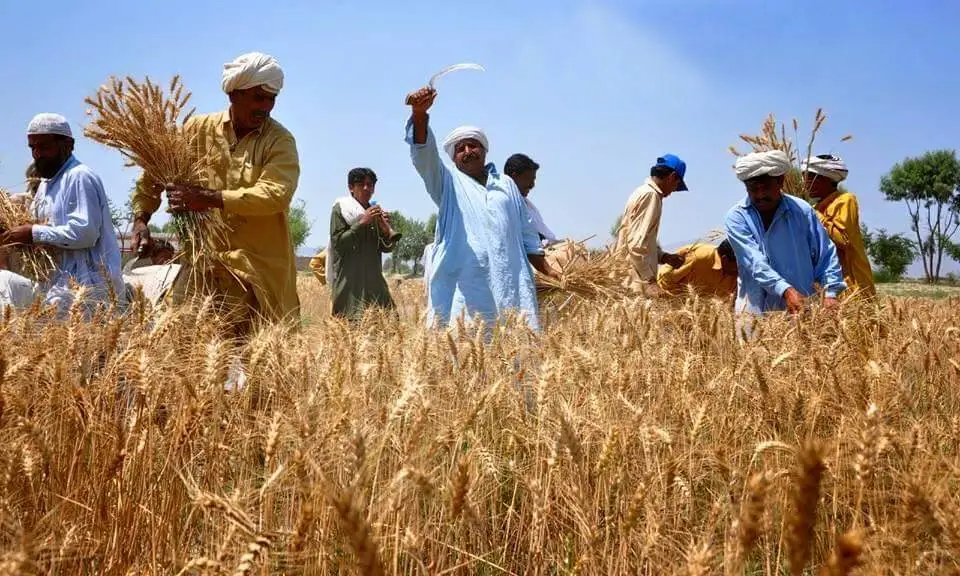
Punjab crop insurance demand has intensified again, with farmer groups and opposition leaders pushing for a state-backed scheme. Despite repeated discussions, implementation delays continue, leaving farmers exposed to crop losses caused by weather, pests, and market uncertainty.
The Punjab crop insurance demand sparks debate as farmers question why a comprehensive protection scheme is still missing in one of India’s most agriculturally significant states. While most states have adopted central schemes, Punjab’s approach remains cautious, creating a policy gap that is now under scrutiny.
Why Punjab Has No Full Crop Insurance Scheme Yet
Punjab has historically stayed away from fully implementing the Pradhan Mantri Fasal Bima Yojana. The state government has argued that the scheme structure is not suitable for its farmers due to concerns over premium costs, claim settlement delays, and private insurer involvement.
Instead, Punjab has focused on direct compensation models during crop damage. However, these payouts are often delayed and limited in scope compared to structured insurance coverage.
The debate has resurfaced as climate variability increases. Unseasonal rains, heatwaves, and pest attacks have made farming more unpredictable, raising the need for a systematic risk protection mechanism.
Farmer Concerns Driving the Current Debate
The current push for crop insurance in Punjab is largely farmer-driven. Agricultural unions argue that without insurance, farmers bear the entire financial risk of crop failure.
In states where crop insurance is active, farmers receive partial compensation even if yields drop due to natural causes. In Punjab, the absence of such a system means losses directly impact farmer income and debt cycles.
Another concern is rising input costs. Seeds, fertilizers, and diesel prices have increased over time, making each crop cycle more expensive. Without insurance, a single failed season can lead to significant financial stress.
Farmers are now demanding either a modified insurance scheme or a state-backed alternative that ensures timely and adequate compensation.
Political and Policy Challenges Behind the Delay
The delay in implementing crop insurance in Punjab is not just administrative but also political. Governments have been cautious about adopting schemes involving private insurance companies due to concerns over transparency and farmer trust.
There is also the issue of financial burden. Premium subsidies require significant state funding. Punjab, already dealing with fiscal constraints, has been hesitant to commit to a recurring financial obligation.
Additionally, past experiences in other states have raised questions about claim settlement timelines. Reports of delayed or disputed claims have made policymakers wary of adopting a model that may face backlash later.
This combination of financial, political, and structural concerns has slowed decision-making.
How Other States Are Handling Crop Insurance
Most Indian states have adopted variations of crop insurance schemes under central frameworks. These schemes provide coverage against yield loss due to natural calamities, pests, and diseases.
States like Maharashtra and Rajasthan have implemented the scheme with mixed outcomes. While many farmers benefit from coverage, challenges such as delayed claim settlements and data accuracy issues persist.
Punjab’s resistance is partly based on these observed gaps. However, experts argue that instead of opting out completely, the state could customize the scheme to suit its agricultural structure.
This could include faster claim processing, localized risk assessment, and better use of technology for crop monitoring.
Impact on Punjab’s Agriculture Without Insurance
The absence of a structured crop insurance system increases vulnerability in Punjab’s agriculture sector. Farmers rely heavily on stable yields, and any disruption directly affects rural income and economic activity.
This also impacts credit access. Banks and financial institutions consider insurance coverage as a risk mitigation factor. Without it, farmers may face stricter lending conditions or higher dependency on informal credit sources.
Over time, this can affect overall agricultural productivity and sustainability. Younger generations may become less inclined to continue farming due to financial uncertainty.
The issue is no longer just about compensation but about long-term agricultural resilience.
What Could Happen Next
The growing pressure from farmer groups is likely to push the government towards a decision. Discussions around a state-specific crop insurance model are gaining traction.
Such a model could balance farmer needs with financial feasibility. Options include partial insurance coverage, hybrid compensation systems, or improved disaster relief frameworks.
Technology could play a key role. Satellite data, weather tracking, and digital claim processing can improve efficiency and transparency, addressing some of the concerns raised earlier.
The outcome will depend on how quickly policymakers can align financial resources with farmer expectations.
Takeaways
Punjab farmers are demanding a structured crop insurance system due to rising risks
The state has avoided central schemes citing cost and implementation concerns
Lack of insurance increases financial vulnerability and credit challenges
A customized, tech-driven insurance model may be the way forward
FAQs
Why does Punjab not have a full crop insurance scheme?
Punjab has avoided central schemes due to concerns over premium costs, private insurer involvement, and claim settlement efficiency.
What are farmers demanding now?
Farmers are asking for a reliable insurance system or a state-backed alternative that ensures timely compensation for crop losses.
How does the lack of insurance affect farmers?
It increases financial risk, especially during crop failure, and can lead to debt and reduced income stability.
Can Punjab create its own crop insurance model?
Yes, the state can design a customized scheme tailored to its agricultural needs, potentially using technology for better implementation.









Leave a comment