


Rising real estate prices in Tier-2 Indian cities are changing how middle-class families invest and plan their finances in 2026. Cities like Indore, Jaipur, Lucknow, Coimbatore, and Nagpur are seeing growing property demand, pushing buyers toward long-term real estate investment, rental income strategies, and suburban housing markets.
Tier-2 Real Estate Markets Are Growing Rapidly
Tier-2 city real estate has become one of India’s fastest-growing investment segments. Over the last few years, smaller cities have witnessed sharp increases in residential property demand due to infrastructure expansion, job growth, startup activity, and better connectivity.
Cities such as Indore, Jaipur, Ahmedabad, Kochi, Coimbatore, and Lucknow are attracting professionals, entrepreneurs, and remote workers who want affordable living compared to metro cities. As demand increases, property prices are also rising steadily across premium and mid-range housing segments.
For middle-class families, this shift is changing traditional investment patterns. Earlier, many households preferred fixed deposits, gold, or metro-city real estate for wealth creation. In 2026, Tier-2 property markets are increasingly seen as both residential and investment opportunities.
The perception of smaller cities has also evolved. Better roads, airports, smart city projects, shopping infrastructure, and educational institutions are making Tier-2 cities more attractive for long-term settlement.
Middle-Class Investors Are Entering Real Estate Earlier
One major trend visible in 2026 is earlier participation in property investment among salaried middle-class buyers.
Many working professionals in their late twenties and early thirties are now purchasing homes sooner than previous generations. Fear of future price escalation is pushing buyers to secure property before affordability declines further.
In cities like Jaipur and Indore, residential projects near highways, IT parks, and upcoming commercial zones are seeing strong demand from first-time buyers. Buyers believe that current property prices may appear relatively affordable compared to future market rates.
This investment behavior is especially common among dual-income households. Stable salaries and easier digital access to home loan options have increased buyer confidence.
Middle-class investors are also paying closer attention to appreciation potential rather than only immediate housing needs. Location advantages, upcoming infrastructure projects, and rental demand now play a bigger role in purchase decisions.
Rental Income Has Become a Strong Investment Motivation
Rising property prices are also increasing interest in rental income opportunities.
Middle-class investors increasingly view Tier-2 city properties as income-generating assets instead of purely residential purchases. Areas near universities, hospitals, industrial zones, and IT parks are attracting buyers looking for stable monthly rental returns.
Cities with growing student populations and professional migration are especially benefiting from this trend. Coimbatore, Pune outskirts, Chandigarh, and Lucknow have seen expanding demand for rental apartments and co-living spaces.
Many investors now calculate expected rental yields before finalizing purchases. The growth of remote work and flexible employment has also increased demand for smaller rented homes in non-metro cities.
For some families, rental income is becoming an important financial support system alongside salaries and traditional savings.
However, rising property rates are simultaneously making entry difficult for lower-middle-class buyers who struggle with down payments and loan eligibility.
Infrastructure Projects Are Driving Property Demand
Infrastructure growth remains one of the biggest reasons behind rising real estate prices in Tier-2 India.
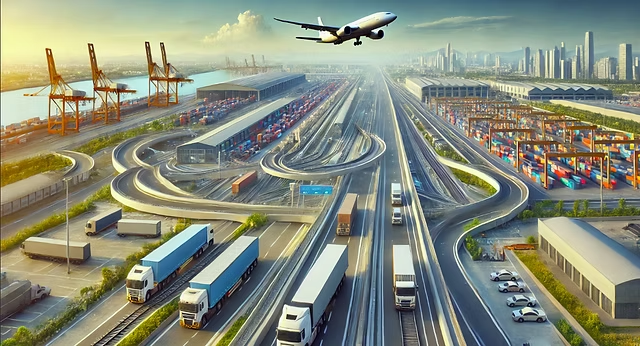
New expressways, metro rail projects, airports, industrial corridors, and smart city developments are directly influencing property markets. Locations connected to upcoming transport networks often experience rapid land value appreciation.
For example, cities linked through major highway expansions or industrial corridors are attracting commercial investment, which eventually increases housing demand nearby. Developers are aggressively launching residential projects around these growth zones.
Middle-class investors are now closely tracking government infrastructure announcements before making real estate decisions. Property investment is increasingly tied to future urban expansion plans rather than only present city conditions.
Smart city upgrades such as improved roads, digital governance, better sanitation, and organized commercial areas are also improving buyer confidence in smaller urban markets.
This trend reflects a broader shift where Tier-2 cities are no longer viewed as secondary markets in India’s real estate economy.
Financial Pressure on Homebuyers Is Also Increasing
While rising property values benefit investors, they also create affordability concerns.
Home loan sizes have increased significantly in several Tier-2 cities during the last few years. Buyers are now committing larger portions of their monthly income toward EMI payments.
Many middle-class families are extending loan tenures to manage higher property costs. Some buyers are choosing apartments farther from city centers due to budget limitations.
There is also growing concern about speculative investment activity in certain locations. Rapid price increases can sometimes create unrealistic expectations about future appreciation.
Real estate experts often caution buyers against purchasing properties purely based on hype surrounding upcoming infrastructure projects. Factors such as legal approvals, builder credibility, water availability, and long-term urban planning remain important.
Despite these concerns, real estate continues to be viewed by many Indian middle-class families as one of the safest long-term wealth-building assets.
Tier-2 Cities Are Becoming Long-Term Investment Destinations
The biggest change in 2026 is psychological. Tier-2 cities are no longer seen only as affordable alternatives to metro cities. They are increasingly viewed as growth centers with independent economic potential.
Middle-class investors now believe that smaller Indian cities can offer both lifestyle benefits and financial returns. This belief is reshaping how households allocate savings, choose locations, and plan future investments.
As India’s urban expansion continues, Tier-2 real estate markets are expected to remain central to middle-class wealth creation strategies.
Takeaways
- Rising real estate prices in Tier-2 cities are changing middle-class investment behavior
- Younger buyers are entering property markets earlier due to fear of future price increases
- Rental income opportunities are attracting investors to smaller Indian cities
- Infrastructure growth and smart city development are boosting property demand
FAQ
Why are property prices rising in Tier-2 Indian cities?
Property prices are increasing due to infrastructure development, migration, startup growth, improved connectivity, and rising housing demand.
Which Tier-2 cities are seeing strong real estate growth?
Indore, Jaipur, Coimbatore, Lucknow, Ahmedabad, Kochi, and Nagpur are among the cities witnessing major property market expansion.
Why are middle-class families investing more in Tier-2 real estate?
Many middle-class investors see Tier-2 properties as affordable long-term assets with appreciation potential and rental income opportunities.
Are Tier-2 cities better for real estate investment than metro cities?
Tier-2 cities often offer lower entry costs and higher future growth potential, although investment decisions still depend on location, infrastructure, and market conditions.









Leave a comment