

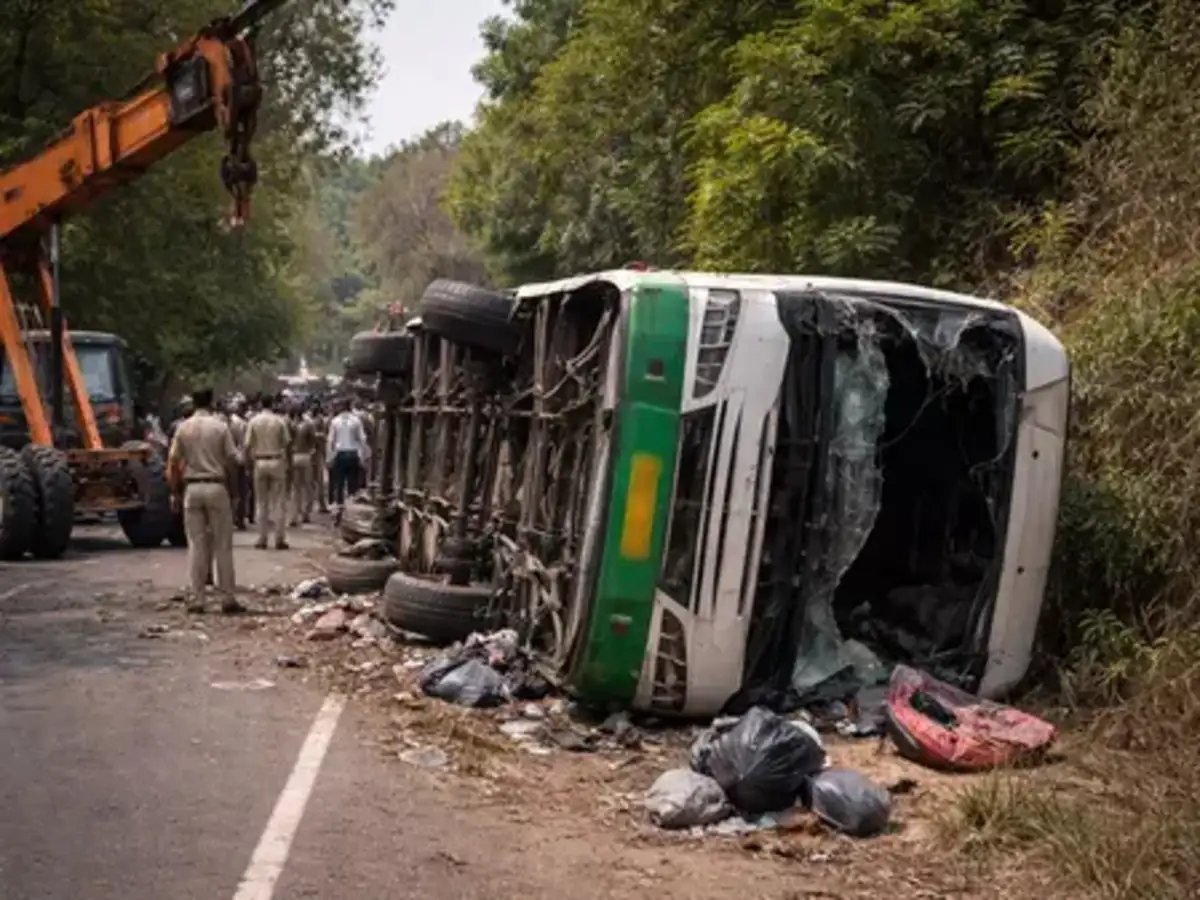
Road accident cases across cities like Nagpur and Chhindwara are showing a worrying rise, raising serious concerns about road safety in Tier-2 regions. Increasing vehicle density, weak enforcement, and infrastructure gaps are contributing to a growing public safety challenge.
Increasing Road Accident Cases in Tier-2 Cities
The surge in road accidents in Nagpur, Chhindwara, and similar Tier-2 cities reflects a broader national trend. As urban expansion continues, more vehicles are entering roads that were not originally designed to handle such volumes. This mismatch is leading to frequent collisions, especially at busy intersections and highways connecting smaller towns.
Recent local reports and police data indicate that two-wheeler riders and pedestrians account for a large share of accident victims. In cities like Nagpur, which serves as a key logistics and transport hub in central India, traffic flow has intensified over the years. Meanwhile, Chhindwara and nearby districts are seeing increased road usage due to economic activity and regional connectivity improvements.
The rise is not limited to highways. Urban roads within city limits are also witnessing a spike in accidents, often linked to overspeeding and lack of lane discipline.
Infrastructure Gaps and Traffic Planning Challenges
One of the major reasons behind rising road accidents in Tier-2 cities is inadequate infrastructure planning. While roads are being expanded in some areas, supporting systems such as traffic signals, pedestrian crossings, and signage often lag behind.
In many parts of Nagpur and Chhindwara, roads lack proper lighting, especially on outskirts and semi-urban stretches. Poorly marked lanes and the absence of dedicated pedestrian pathways increase the risk for both drivers and walkers.
Another issue is the inconsistent design of junctions and flyovers. Sudden merges, unclear turns, and poorly managed intersections create confusion, increasing the likelihood of crashes. In contrast to metro cities where traffic systems are more standardized, Tier-2 cities often deal with unplanned growth.
Urban planners have repeatedly highlighted the need for integrated traffic management systems, but implementation remains uneven.
Human Behavior and Weak Enforcement
Beyond infrastructure, human behavior plays a critical role in road accidents. Traffic violations such as overspeeding, drunk driving, and mobile phone usage while driving are common across Tier-2 regions.
Helmet and seatbelt compliance also remain inconsistent. Despite awareness campaigns, many riders continue to ignore safety gear, increasing the severity of injuries in accidents. In smaller cities, enforcement mechanisms are often less strict compared to metros, allowing violations to go unchecked.
Traffic police departments in cities like Nagpur have increased surveillance through cameras and fines, but coverage is still limited. In districts like Chhindwara, enforcement largely depends on manual monitoring, which can be inconsistent.
The combination of risky driving behavior and limited enforcement creates a high-risk environment on roads.
Role of Rapid Urbanisation and Vehicle Growth
The rapid pace of urbanisation in Tier-2 cities is another contributing factor. As economic opportunities grow, more people are purchasing vehicles, particularly two-wheelers and entry-level cars.
This rise in vehicle ownership has not been matched by proportional upgrades in road capacity or public transport systems. As a result, congestion has increased, leading to chaotic traffic conditions.
In cities like Nagpur, which are emerging as regional economic centers, the influx of commercial vehicles has added to road pressure. Freight movement, daily commuting, and local transport often compete for the same road space.
Chhindwara and surrounding regions are also experiencing similar patterns, driven by improved connectivity and economic activity. However, without structured traffic planning, this growth is translating into higher accident risks.
Impact on Public Safety and Healthcare Systems
The increase in road accidents is placing additional strain on public safety systems and healthcare infrastructure. Emergency response times in Tier-2 cities are often longer due to limited resources and traffic congestion.
Hospitals in these regions report a steady inflow of accident-related injuries, many of which could have been prevented with better safety measures. Serious injuries not only affect individuals and families but also have economic consequences due to loss of productivity and medical expenses.
Road accidents are also a leading cause of fatalities among young adults, making it a critical public health issue. The social and economic cost of these incidents continues to rise, particularly in regions where support systems are limited.
Need for Policy Action and Local Solutions
Addressing the rise in road accidents requires coordinated efforts at multiple levels. Authorities need to focus on strengthening infrastructure, improving enforcement, and promoting awareness.
Smart traffic management systems, better road design, and stricter penalties for violations can help reduce accident rates. At the same time, public awareness campaigns must emphasize responsible driving behavior and adherence to safety norms.
Local governments in Tier-2 cities have an opportunity to learn from metro models while adapting solutions to regional needs. Community participation and consistent enforcement will be key to creating safer roads.
The issue is not just about traffic management but about ensuring long-term urban safety and sustainability.
Key Takeaways
- Road accident cases are rising in Tier-2 cities like Nagpur and Chhindwara
- Infrastructure gaps and poor traffic planning increase accident risks
- Human behavior and weak enforcement remain major contributing factors
- Urbanisation and vehicle growth are putting pressure on existing road systems
FAQs
Q1: Why are road accidents increasing in Tier-2 cities?
Rising vehicle numbers, inadequate infrastructure, and weak enforcement are key reasons behind the increase.
Q2: Who is most affected by road accidents in these regions?
Two-wheeler riders and pedestrians are among the most vulnerable groups.
Q3: What role does urbanisation play in road safety issues?
Rapid urbanisation increases traffic without corresponding infrastructure upgrades, leading to higher accident risks.
Q4: What measures can reduce road accidents?
Improved road design, strict traffic enforcement, and public awareness campaigns can significantly reduce accidents.











Leave a comment