

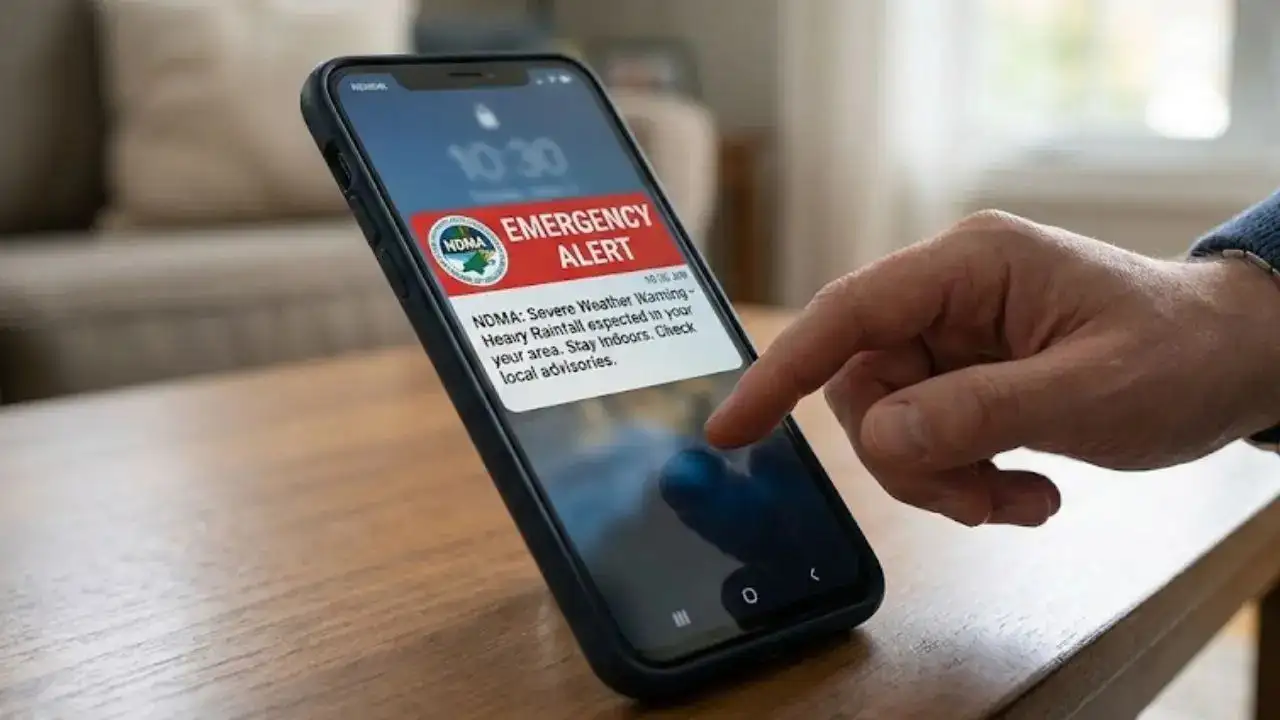
If your smartphone emitted a loud, piercing alarm followed by a vibratory buzz today, you were part of a critical national safety exercise. The National Disaster Management Authority (NDMA), in collaboration with the Department of Telecommunications (DoT), conducted a comprehensive test of the Cell Broadcast Alert System. This technology is designed to deliver instantaneous, life-saving information during emergencies such as earthquakes, floods, or tsunamis. Unlike a standard text message, this alert bypasses network congestion to ensure that every citizen in a specific geographic area receives a warning simultaneously, regardless of their service provider.
The Technology Behind the Sudden Emergency Alert
The “Emergency Alert: Extreme” message that appeared on screens across the country is powered by Cell Broadcast (CB) technology. While traditional SMS is a point-to-point communication—meaning it is sent to one number at a time—Cell Broadcast is a point-to-area service. This distinction is vital for disaster management. During a crisis, mobile networks often experience high traffic or “clogging” as people attempt to call loved ones. Because Cell Broadcast does not rely on a dedicated signaling path for each user, it remains unaffected by network traffic jams, ensuring that warnings reach the public without delay.
India’s Strategic Move Toward Disaster Resilience
India is geographically diverse and frequently faces various natural calamities, from cyclones on the eastern coast to seismic activity in the Himalayan belt. The NDMA’s transition to a cell-based alert system represents a significant upgrade in India’s disaster preparedness infrastructure. Previously, early warnings were often delayed by the time-consuming process of sending mass SMS blasts. By implementing the Integrated Public Alert and Early Warning System (IPAWS), the government can now target specific towers in a high-risk zone, broadcasting alerts to thousands of devices within seconds to facilitate rapid evacuation or shelter-in-place orders.
What to Do When You Receive a Real Alert
While today’s buzz was only a test, it serves as a drill for the real-world application of the system. In an actual emergency, the notification will include the nature of the hazard and specific instructions for the public. It is designed to be intrusive; the sound is distinct from a normal notification to grab immediate attention even if the phone is on silent mode. Authorities emphasize that the primary objective is to minimize the loss of life by providing an “advance window” for action. When a real alert arrives, users should stop what they are doing, read the instructions carefully, and follow the guidance of local emergency services.
Ensuring Device Compatibility and Future Rollouts
The Department of Telecommunications has been working closely with mobile manufacturers to ensure that all devices sold in India are compatible with these emergency protocols. Most modern Android and iOS devices are equipped to handle these signals by default under the “Emergency Alerts” setting in the notifications menu. Today’s nationwide test was also aimed at identifying “dark spots” where the signal might not have reached or where certain handset models failed to trigger the alarm correctly. This data will be analyzed to refine the system before it is fully integrated into the national emergency response framework.
Enhancing Public Safety Through Digital Innovation
The success of the Cell Broadcast Alert System hinges on public cooperation and understanding. By conducting these periodic tests, the NDMA aims to familiarize the population with the sound and look of these alerts, reducing panic when a genuine crisis occurs. This initiative is part of a broader digital transformation in Indian governance, where technology is leveraged to protect the most vulnerable populations in remote and disaster-prone regions. As the system evolves, future iterations may include multi-language support and more granular targeting down to the village or street level.
Key Takeaways for Citizens
- The alert was a planned test by the NDMA and DoT to evaluate the efficiency of the Cell Broadcast Alert System across India.
- Cell Broadcast technology is superior to traditional SMS because it can reach millions of devices instantly without being affected by network congestion.
- These alerts are designed to override silent or “Do Not Disturb” modes to ensure they are seen during life-threatening situations.
- No action is required from the public during these tests, as they are intended solely for system calibration and performance monitoring.
Frequently Asked Questions
Why did my phone make a sound even though it was on silent? The Emergency Alert System is programmed to use a dedicated audio channel that overrides volume settings. This ensures that users are alerted to immediate dangers even if they are sleeping or have their devices silenced.
Is my personal data at risk during these government alerts? No. Cell Broadcast is a one-way communication method. The government sends a signal to all devices connected to specific cell towers. It does not require your phone number, nor does it track your identity or location data.
Will I receive these alerts if I don’t have an internet connection? Yes. One of the greatest advantages of Cell Broadcast is that it does not require an active data or internet connection. As long as your phone is connected to a mobile network tower, it can receive the broadcast signal.
Can I opt out of these emergency alerts on my smartphone? While most phones have a setting to disable “Emergency Alerts,” it is strongly discouraged by disaster management experts. Keeping these alerts active is essential for receiving timely warnings about natural disasters in your immediate vicinity.











Leave a comment