

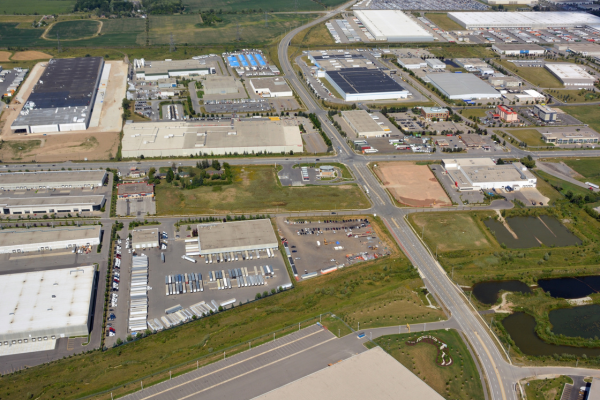
Pune’s Chakan industrial belt is set for a major infrastructure push after the Maharashtra government gave in-principle approval to a ₹1,400-crore plan covering roads, drainage, traffic management and public amenities. Work is expected to begin in December, with authorities targeting major improvements before the next monsoon.
Chakan Gets ₹1,400-Crore Infrastructure Plan
The ₹1,400-crore Chakan infrastructure plan comes as the industrial area continues to face persistent problems involving traffic congestion, poor road conditions, waterlogging and inadequate civic infrastructure.
Maharashtra Chief Minister Devendra Fadnavis gave in-principle approval to the plan at a meeting in Mumbai on September 28, following a presentation by Pune District Collector Jitendra Dudi. Officials said the proposed works are expected to begin in December 2026.
The plan is aimed at improving the overall infrastructure network supporting Chakan’s industrial activity rather than focusing only on individual road repairs. It includes road upgrades, stormwater drainage, traffic management, pedestrian facilities and other public amenities.
The government has said the objective is to achieve significant improvements before the next monsoon, while drainage-related work is expected to continue into 2027.
75 Km of Roads to Be Upgraded in Chakan
One of the largest components of the plan involves improvements to approximately 75 km of roads in the Chakan area.
The proposed work includes road improvements along with footpaths and road-safety measures. Authorities have indicated that existing road space will be used as far as possible, which is intended to avoid additional land acquisition for the identified works.
The road network has become increasingly important because Chakan is one of Pune district’s major industrial centres. Large numbers of employees, commercial vehicles, trucks and other vehicles use the area’s roads every day.
The administration has also studied the wider road network in Chakan, covering approximately 498 km. This assessment is being used to identify infrastructure requirements and prioritise improvements.
For commuters, the impact of the road programme will depend not only on widening or resurfacing but also on how junctions, pedestrian movement, parking and heavy-vehicle traffic are managed during and after construction.
Stormwater Drainage Is a Major Focus
Drainage is another central part of the Chakan infrastructure plan.
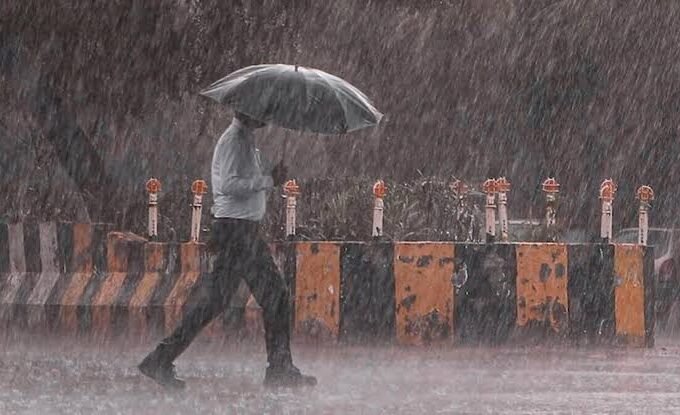
Waterlogging has repeatedly affected the industrial area during periods of heavy rainfall. Officials have identified blocked or encroached natural drainage channels as one of the factors affecting the movement of rainwater.
According to reports, a survey found encroachments along nearly 78 km of natural streams in the Chakan area. Authorities have said a substantial portion of the encroachment-removal work has already been completed, with the remaining work planned in phases.
The government plans to clear natural drains, establish stormwater drainage along both sides of roads, increase the capacity of culverts and bridges, and create water-storage facilities where required.
A stormwater drainage network extending for approximately 38 km is also part of the plan. Authorities have set a target of completing the drainage system and clearing natural drainage routes by June 2027.
Why Traffic Congestion Has Become a Chakan Problem
Chakan’s infrastructure challenges are closely connected to its role as an industrial hub.
The area handles significant movement of industrial vehicles as well as daily commuter traffic. Trucks and other heavy vehicles share road space with employees travelling to factories, local residents, two-wheelers, buses and commercial vehicles.
This combination can create bottlenecks, particularly around busy junctions and industrial access roads.
Road widening alone may not resolve these problems if traffic flows, parking and heavy-vehicle movement remain poorly coordinated. That is why the current plan includes traffic management and safety measures alongside physical road improvements.
Earlier this month, the Pune district administration had also directed departments to prepare coordinated measures for traffic congestion, potholes, unauthorised parking and increasing industrial vehicle movement in Chakan.
The latest ₹1,400-crore plan represents a broader infrastructure response to those problems.
Public Transport Could Get a Bigger Role
The infrastructure plan also addresses the daily movement of workers between Pune, Pimpri-Chinchwad and Chakan.
According to the district administration’s presentation, route-specific public transport services are being planned for workers travelling to Chakan from Pune and Pimpri-Chinchwad. The administration has identified a requirement for approximately 500 additional buses.
Increasing bus services could have a direct impact on the number of private vehicles travelling towards the industrial belt. However, the effectiveness of such a plan will depend on route planning, frequency, last-mile connectivity and coordination with existing public transport services.
For workers, reliable bus services could also reduce dependence on private vehicles and provide an alternative during periods of severe congestion.
The public transport component therefore forms an important part of the larger effort to address Chakan’s mobility problems rather than treating road construction as the only solution.
AI-Based Traffic Management Planned
Technology is also being included in the traffic-management strategy for Chakan and neighbouring industrial areas.
An AI-based traffic management system is planned for Chakan, Talegaon and Hinjewadi. The system is expected to use CCTV cameras and an Intelligent Traffic Management System, or ITMS, connected to a centralised command and control centre.
The objective is to improve monitoring of traffic conditions and allow authorities to respond more effectively to congestion.
The approach is significant because traffic conditions in industrial corridors can change quickly depending on factory shifts, heavy-vehicle movement, road work and weather.
However, the technology itself will not automatically solve congestion. Its effectiveness will depend on how quickly authorities respond to the information generated by the system and how well different agencies coordinate their operations.
What the Plan Could Mean for Chakan’s Industrial Belt
Better infrastructure could have implications beyond daily commuting.
Chakan’s industrial ecosystem depends on the movement of workers, raw materials, finished products and commercial vehicles. Delays on roads can affect travel times and logistics operations, while waterlogging can disrupt movement during heavy rainfall.
Improved roads and drainage could therefore support more predictable movement through the industrial area.
The plan also comes at a time when authorities are trying to address infrastructure concerns in other major employment centres around Pune. A separate ₹426.54-crore plan has received in-principle approval for Hinjewadi, covering traffic and infrastructure issues there.
Together, the Chakan and Hinjewadi plans represent a broader attempt to improve infrastructure in two major economic zones of Pune district. The Chakan component, however, is specifically focused on the industrial area’s road, drainage and mobility requirements.
Chakan Road Work Will Need Careful Execution
The scale of the proposed programme also means that implementation will be important.
Road construction, drainage work and traffic changes can temporarily create additional congestion, especially in an already busy industrial corridor. Authorities will need to coordinate construction schedules, diversions, heavy-vehicle movement and pedestrian safety.
Earlier planning for the Chakan-Shikrapur corridor had also emphasised advance traffic arrangements, alternative routes for heavy vehicles and safety measures around construction zones.
For residents and workers, the immediate benefit may therefore not be visible as soon as work begins. Some sections could experience disruption before improvements become apparent.
The government’s stated timeline is to begin work in December 2026, with significant traffic and drainage improvements targeted before the next monsoon. Drainage-related work has a longer timeline extending towards June 2027.
The Larger Connectivity Picture
Chakan is also part of Pune’s wider regional connectivity plans.
The proposed Pune Inner Ring Road is designed to connect major growth and employment areas, including Chakan MIDC, Hinjewadi and Lohegaon Airport. The project is intended to divert heavy traffic away from congested urban areas and improve regional connectivity.
Separately, the proposed Nigdi-Chakan Metro corridor is designed to connect Pimpri-Chinchwad with the Chakan industrial belt. The proposed 45.295-km corridor has been estimated at ₹12,937.23 crore and includes 34 stations.
These projects are separate from the ₹1,400-crore Chakan infrastructure plan, but together they show the wider transportation challenges created by Pune’s expansion towards industrial and employment centres.
What Happens Next
The immediate next step for the Chakan plan is preparation and commencement of the approved-in-principle works.
Officials have indicated that construction is expected to start in December 2026. Drainage routes have already been identified through surveys, while agencies are expected to coordinate road, drainage, traffic and public transport-related work.
The key milestones to watch will be the start of construction, progress on the 75 km road upgrade, completion of the stormwater network, removal of remaining drainage obstructions and deployment of additional public transport.
For Pune’s industrial belt, the success of the plan will ultimately depend on execution. The ₹1,400-crore proposal provides a framework for addressing several long-standing infrastructure problems, but its impact will be measured by whether commuters, workers, residents and businesses experience safer roads, better drainage and more predictable travel conditions.
Key Takeaways
- Maharashtra has given in-principle approval to a ₹1,400-crore infrastructure plan for Chakan.
- Around 75 km of roads are planned for improvement, along with footpaths and road-safety measures.
- A roughly 38 km stormwater drainage network and natural-drain restoration are part of the programme.
- Authorities are also planning additional buses and AI-based traffic management for the wider industrial corridor.
Frequently Asked Questions
What is the ₹1,400-crore Chakan road plan?
It is an integrated infrastructure plan for Chakan covering road upgrades, stormwater drainage, traffic management, pedestrian safety and public amenities. The Maharashtra government has given the plan in-principle approval.
When will Chakan road work begin?
According to officials, work is expected to begin in December 2026. The administration aims to achieve significant improvements before the next monsoon.
How much road infrastructure will be upgraded?
The plan includes improvements to approximately 75 km of roads in Chakan, along with footpaths and road-safety infrastructure. Officials have said the work will make use of existing road space where possible.
Will the plan address Chakan’s waterlogging problem?
Yes. The programme includes clearing natural drains, developing stormwater drainage on both sides of roads, increasing culvert and bridge capacity and constructing a stormwater network of approximately 38 km. Drainage-related work is targeted for completion by June 2027.








Leave a comment