

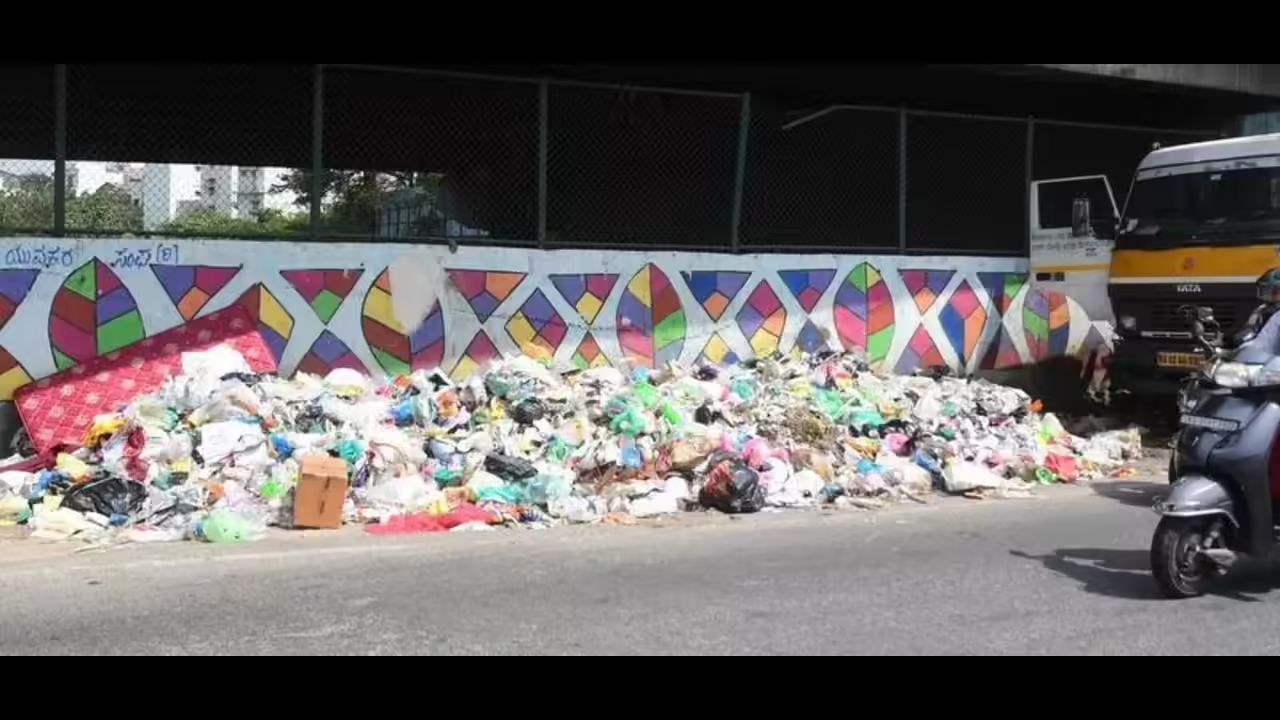
The fact that Bengaluru is generating around 900 tonnes of plastic waste every day signals a wake-up call for India’s mid-Tier cities. Beyond the mere numbers, the issues of waste segregation, recycling capacity, infrastructure lag and civic behaviour exposed in Bengaluru hold direct relevance for smaller cities gearing up for rapid growth.
The scale of the problem
When a city produces 900 tonnes of plastic waste per day, you are looking at a systemic challenge—not just a civic nuisance. Bengaluru’s announcement reflects not only consumption patterns but also gaps in collection, segregation and recycling systems. If recycling capacity cannot keep up, waste either lands in dumpsites or leaks into waterways, neighbourhoods and downstream ecosystems. For mid-Tier cities, which often lack the infrastructure of metros, this kind of scale acts as a glaring caution.
What mid-Tier cities should learn from Bengaluru’s plastic dynamics
In smaller cities, waste generation is lower but so is system capacity. When a metro like Bengaluru hits this volume, it alerts us to what happens when growth outpaces civic systems. Key takeaways:
- Waste segregation at source matters: If households and businesses don’t separate dry/plastic waste from wet, even the best infrastructure struggles.
- Recycling infrastructure needs investment: The best plan on paper fails if the collection-to-recycling chain is broken. Mid-Tier cities must prioritise material recovery facilities and local recyclers early.
- Enforcement isn’t optional: Banning single-use plastics or imposing fines is only one part; monitoring, citizen behaviour and system redesign matter.
- Consumption patterns change faster than infrastructure: As incomes rise, plastic use (single-use items, packaging) surges. Mid-Tier cities must anticipate that surge rather than react later.
Impacts on environment, health and economy
Plastic waste is not just about litter. Poor disposal affects drainage, causes blockages in monsoon, pollutes lakes and rivers, and eventually affects groundwater and soil quality. For example, puddles increase mosquito breeding; blocked drains increase flood risk. Health costs rise when air/water quality declines. Economically, clean cities attract business, investment and talent; dirty ones risk losing them. Mid-Tier cities looking to build “smart” credentials or regional hubs cannot ignore how waste management ties into overall growth.
Strategic actions for smaller cities
Mid-Tier cities can act early and smart:
- Build waste management systems with scale in mind: anticipate doubling/trebling of volumes within a decade.
- Engage local communities: awareness campaigns, school programmes, incentives for segregation work if sustained.
- Collaborate with private sector and recyclers: linking business (say packaging) with circular economy models.
- Use data and mapping: identify hotspots of plastic use (markets, eateries, packaging hubs) and monitor unavoidable leakage.
- Set realistic but clear targets: Having an endpoint (for example ‘plastics-reduced by x% by 2030’) provides focus.
Why this matters now
Cities beyond metros are growing fast. The waste footprint of “smaller” cities tomorrow will resemble what metros face today. Bengaluru producing 900 tonnes of plastic daily is a live example. The policy push in states to make wards plastic-free, crack down on single-use plastics and push recycling all show that the challenge is recognised. Mid-Tier cities who delay will face higher retrofit costs, slower growth and more public health risks.
Takeaways
- Bengaluru’s 900 tonne daily plastic waste output is a marker of scale and systemic gap.
- Mid-Tier cities must treat waste management as growth infrastructure, not a secondary concern.
- Segregation at source, local recycling capacity and enforcement are key pillars.
- Early action is cheaper, easier and more sustainable than reacting to a crisis later.
FAQs
Q. What qualifies as “mid-Tier city” in this context?
A mid-Tier city refers to an urban centre outside the major metros (Delhi, Mumbai, Bengaluru, etc.) typically with population in hundreds of thousands to a few million, growing rapidly in economy and infrastructure.
Q. Why is plastic waste highlighted rather than total waste?
Plastic waste is emphasized because it persists, accumulates, hampers waste segregation and recycling, blocks drains and environmental systems, and its reduction is easier to target with policy than many other waste streams.
Q. How realistic is the target of making a city “plastic-free by 2030”?
It is aspirational. Success depends on consumption reduction, robust collection systems, alternative materials, public behaviour change and enforcement. For mid-Tier cities, setting phased targets (e.g., cut single-use plastic by 50% in 5 years) may be more practical.
Q. What are the main barriers smaller cities face in tackling plastic waste?
Key barriers include limited budget, weak enforcement, lack of local recycling industry, insufficient awareness among residents, and absence of data/monitoring systems.








Leave a comment