

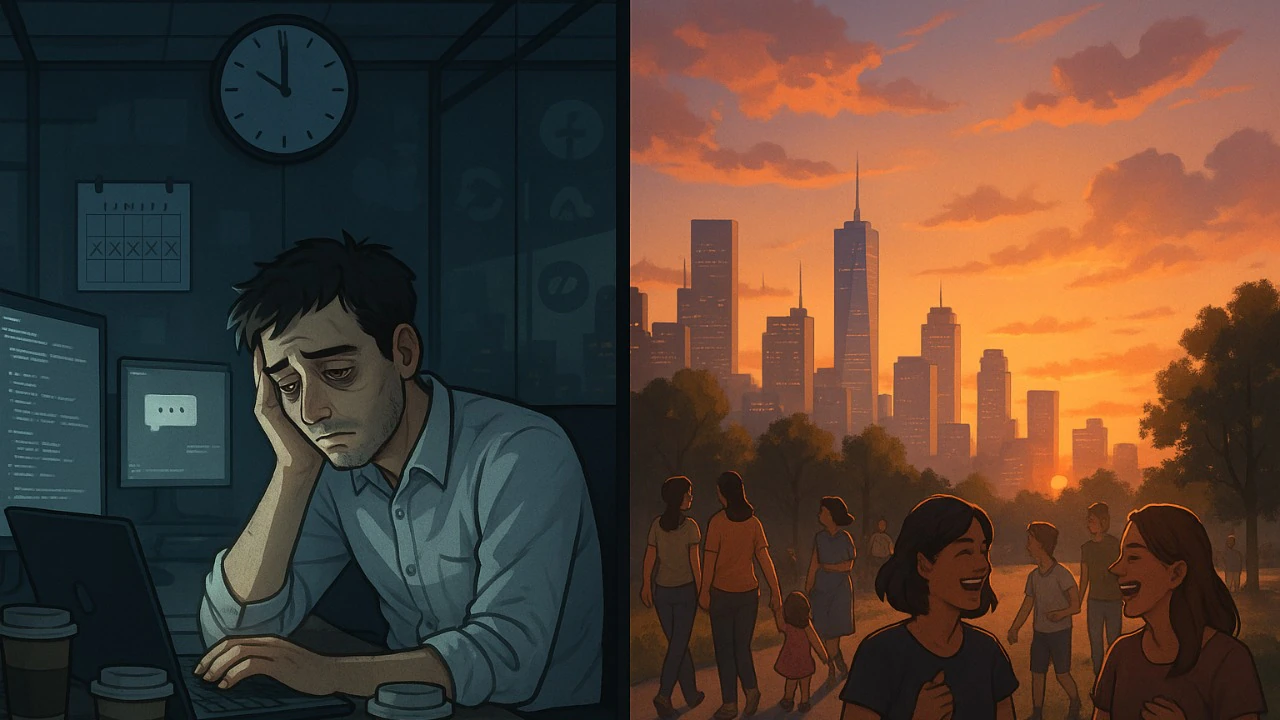
Digital Sunsets are emerging as a vital corporate wellness strategy in urban Indian offices to combat record high levels of employee burnout. As of April 2026, major IT hubs from Bengaluru to Gurugram are implementing these structured digital detox periods to help workers disconnect from a culture of perpetual connectivity. By establishing firm boundaries around after hours communication, organizations are finding that switching off is no longer just a personal choice but a necessary institutional policy for maintaining long term productivity and mental health in a post hybrid world.
Understanding the Digital Sunset Wellness Trend
A Digital Sunset refers to the intentional phasing out of digital device usage and work related communication as the workday ends. In the context of the Indian corporate landscape, this trend has moved beyond individual do not disturb settings to formal HR mandated policies. Companies are now introducing Dark Hours between 7:00 PM and 8:00 AM, where internal servers are programmed to hold non urgent emails and messaging apps are silenced. This systemic approach addresses the always on anxiety that has plagued Indian professionals, particularly those in the tech and financial sectors, where 72 percent of employees reported burnout symptoms in early 2026.
Why Urban Indian Offices are Fighting Burnout
The urgency of the Digital Sunset movement is driven by a sharp rise in workplace stress across India metropolitan centers. Recent 2026 workforce reports indicate that Indian employees face some of the highest stress levels globally, with nearly 89 percent of respondents reporting chronic pressure. The collapse of work life boundaries during the shift to hybrid models has led to technostress, a condition where the psychological cost of constant digital interaction results in emotional exhaustion. By implementing Digital Sunsets, urban offices are attempting to restore the right to disconnect, ensuring that the flexibility of modern work does not evolve into a hidden demand for 24/7 availability.
The Impact of Constant Connectivity on Health
Scientific research supporting Digital Sunsets highlights the physiological necessity of reducing blue light exposure and cognitive load before sleep. In the high pressure environments of Mumbai and Hyderabad, the habit of checking work emails late at night has been linked to significant disruptions in circadian rhythms. Poor sleep quality directly correlates with decreased cognitive function and increased irritability the following morning. Corporate wellness programs are now educating staff on how the brain requires a wind down period to transition from the high cortisol state of problem solving to a restorative state, making the Digital Sunset a biological requirement rather than just a lifestyle preference.
Implementing Digital Sunsets in the Workplace
For a Digital Sunset policy to be effective, it must be led by senior management to remove the guilt associated with being unavailable. Leading Indian startups have begun adopting Scheduled Send as a default for all leadership communications, ensuring that a late night thought from a manager does not trigger a flurry of activity among juniors. Some firms have even introduced Analog Fridays, where the last two hours of the work week are dedicated to deep work or face to face meetings without the use of laptops or phones. These initiatives are proving successful in Tier 1 cities, where the competition for talent is fierce and mental health support has become a key differentiator for employer branding.
Measuring the Success of Disconnection Policies
Organizations that have successfully integrated Digital Sunsets report a measurable improvement in employee engagement and a reduction in attrition rates. Internal surveys from a Bengaluru based fintech firm showed a 20 percent increase in self reported mental clarity among teams following a six month Digital Sunset pilot. Furthermore, the reduction in late night ping pong messaging has led to more concise and efficient communication during core business hours. As the trend matures, experts predict that the ability to protect employee downtime will be viewed as a critical metric for organizational health, moving wellness from a peripheral HR perk to a core enterprise strategy.
Key Takeaways for Digital Sunsets
- Digital Sunsets provide a formal structure for employees to disconnect, reducing the risk of clinical burnout.
- The trend addresses technostress by halting after hours digital communication through HR led policies.
- Reducing late night screen time improves sleep quality and morning productivity for urban professionals.
- Successful implementation requires leadership to model the behavior by not sending non urgent messages after hours.
Frequently Asked Questions
What is the difference between a Digital Sunset and a standard digital detox? A digital detox is often a personal, temporary break from all technology. A Digital Sunset is a consistent, daily professional boundary that specifically targets work related digital communication to allow for evening recovery.
How can I implement a Digital Sunset if my team works across different time zones? In globalized Indian offices, teams use asynchronous communication protocols. This involves using tools that allow messages to be delivered only during the recipient local working hours, respecting their regional Digital Sunset.
Does a Digital Sunset policy affect urgent business needs? No. Most policies include an Emergency Protocol where a phone call is used for genuine crises. This filters out 95 percent of non urgent pings that usually clutter an employee evening.












Leave a comment