

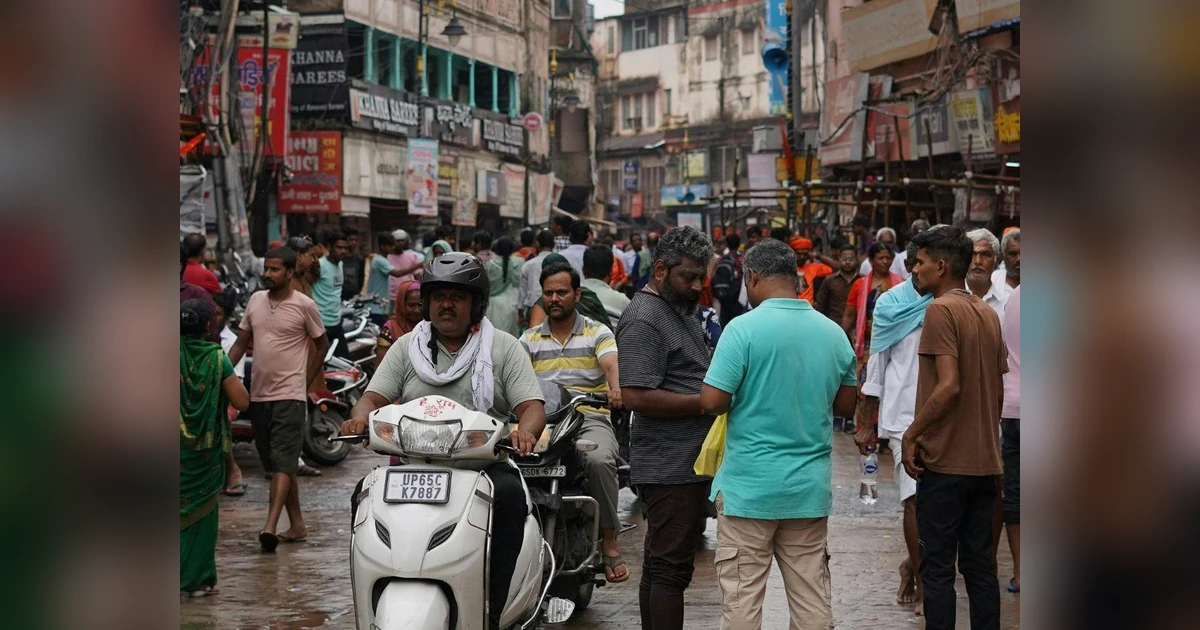
The Census 2027 household listing rollout will be the first large scale population exercise in India after a long gap, and smaller cities are at the centre of its success. This preparatory phase determines how accurately towns and emerging urban centres are counted, mapped, and represented.
The topic is time sensitive but largely informational in nature. The tone blends news reporting with practical explanation, as the household listing phase sets the foundation for the full Census exercise scheduled later.
What the household listing phase actually involves
The household listing rollout under Census 2027 is not about counting people yet. It focuses on identifying and recording every building, structure, and household within defined administrative boundaries. Enumerators visit each area to note housing conditions, access to amenities, and basic structural details. This data creates the frame on which the actual population enumeration is later built.
For smaller cities, this phase is critical because urban boundaries have expanded rapidly over the past decade. New wards, unauthorised colonies, peri urban settlements, and converted rural pockets often remain poorly documented. If they are missed during household listing, residents risk being undercounted or excluded from future planning metrics.
Unlike earlier Censuses, this rollout is expected to rely more heavily on digital tools, geo tagging, and updated maps. That shift raises both opportunities and preparedness challenges at the local level.
Why smaller cities face unique challenges
Tier 2 and Tier 3 cities sit in an in between zone. They grow faster than rural areas but often lack the administrative capacity of metros. Migration from nearby districts, informal housing, and mixed land use complicate enumeration.
Many households in these cities live in semi permanent structures, rented units, or shared accommodations. Address formats may be inconsistent, and lanes may not appear clearly on official maps. During household listing, enumerators must still record these dwellings accurately.
Another challenge is awareness. In smaller cities, residents may confuse household listing with surveys, tax assessments, or welfare inspections. This can lead to hesitation or non cooperation. Local administrations need to communicate clearly that the exercise is purely statistical and not linked to penalties or benefits at this stage.
Administrative preparation at the city level
Urban local bodies play a key role in the Census 2027 household listing rollout. Municipal records, ward maps, and property registers must be updated and aligned with census blocks. Discrepancies between municipal boundaries and census boundaries can cause duplication or omission.
Staff readiness is equally important. Enumerators and supervisors often come from local government or educational institutions. Training must emphasise digital data entry, field verification, and handling of ambiguous housing situations common in growing cities.
Infrastructure matters too. Reliable internet connectivity, functioning devices, and technical support systems are essential for smooth data capture. Smaller cities with patchy connectivity need offline data protocols and backup processes to avoid data loss.
What residents and communities should expect
For households, the listing process is usually brief but important. Enumerators collect information about the building and household, not individual demographic details yet. Cooperation at this stage ensures correct inclusion later.
Residents should expect enumerators to carry official identification and use standardised digital forms. In smaller cities, resident welfare associations, market associations, and local leaders can help by spreading awareness and guiding enumerators through complex local layouts.
Special attention is required for vulnerable groups. Migrant workers, students, and informal settlers are more likely to be missed if they move frequently or live in non standard housing. Cities that proactively flag such clusters improve overall accuracy.
Long term impact on urban planning and services
The data generated during household listing directly influences how cities are planned and funded. Population projections, infrastructure investment, transport planning, and public service allocation all depend on accurate census data.
For smaller cities aspiring to upgrade infrastructure or attract investment, being accurately counted matters. Under enumeration can lead to lower budget allocations and weaker policy focus. Over time, this affects schools, hospitals, roads, and urban amenities.
The Census 2027 household listing rollout also feeds into electoral delimitation, urban governance reforms, and regional development strategies. Smaller cities that prepare well strengthen their case for greater administrative and fiscal attention.
What smaller cities should do now
Preparation cannot wait for enumerators to arrive. Municipalities should update maps, resolve boundary disputes, and clean up records. Awareness campaigns using local language and community channels can reduce confusion.
Residents should ensure their dwellings are identifiable and cooperate with officials. Local administrations must treat this as a governance exercise, not a routine formality. The accuracy achieved at this stage will shape how smaller cities are represented in national data for the next decade.
Takeaways
The household listing phase lays the foundation for the entire Census 2027 exercise
Smaller cities face higher risks of undercounting due to rapid and informal growth
Administrative readiness and public awareness are key to accurate enumeration
Correct household listing directly impacts future urban planning and funding
FAQs
What is the purpose of the Census 2027 household listing rollout?
It identifies and records all buildings and households to create an accurate base for the population count conducted later.
Does the household listing collect personal data of residents?
No. It focuses on housing and structural details, not individual demographic information.
Why is this phase important for smaller cities?
Because rapid expansion and informal settlements make these cities more prone to being undercounted.
What should residents do during household listing?
Cooperate with enumerators, verify that their dwelling is listed, and seek clarification if any information appears incorrect.











Leave a comment