

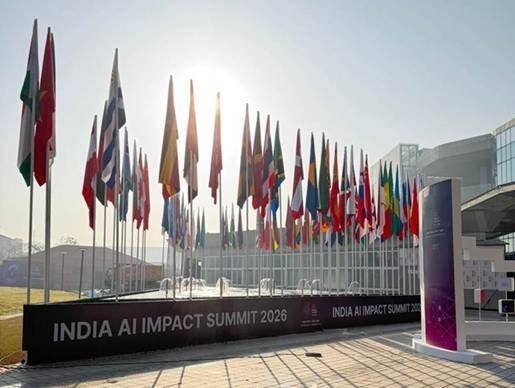
As the AI Summit unfolds in Delhi, state cities across India are adjusting travel, security and business operations to manage the ripple effects. Increased VIP movement, tighter security protocols and shifting corporate travel plans are influencing regional hubs beyond the capital.
The AI Summit in Delhi has triggered heightened coordination not only in the national capital but also across several state cities. Large scale international events typically involve central security advisories, VIP travel routes and corporate delegations moving between metros and regional hubs. As a result, airports, hotels and transport networks in cities such as Jaipur, Ahmedabad, Lucknow and Chandigarh are experiencing indirect but measurable impact. While the summit remains Delhi centric, its logistical footprint extends well beyond the city limits.
Security Coordination Extends Beyond the Capital
Whenever a high profile international summit takes place in Delhi, security agencies adopt a nationwide alert posture. State police departments are instructed to strengthen surveillance around key installations, government offices and foreign consulates. This is part of a standard precautionary framework rather than a reaction to any specific threat.
In several state capitals, additional police deployment has been observed around airports and major hotels that may host visiting delegations before or after the summit. Intelligence sharing between central and state agencies becomes more frequent during such events. Local administrations review emergency response plans and ensure rapid coordination channels remain active.
For smaller cities connected by air to Delhi, airport authorities often step up screening procedures. Extra baggage checks and visible security presence can slightly increase passenger processing time. Though these measures are temporary, they influence daily travel experience.
Travel Disruptions and Airline Scheduling Adjustments
The AI Summit travel impact is most visible in aviation schedules. When airspace restrictions are imposed in parts of Delhi for security reasons, airlines may reschedule or slightly adjust flight timings. This has a cascading effect on connecting flights from Tier 2 cities.
Business travellers from state cities attending related events, side meetings or technology expos in Delhi have reported higher ticket demand during summit week. This surge in bookings often pushes up airfares temporarily. Hotels in cities with strong technology ecosystems also experience higher occupancy as companies host parallel meetings or regional gatherings.
Rail networks are generally less affected, but security checks at major stations may increase during peak movement of delegates. Road transport operators also monitor traffic advisories closely, especially for inter city bus routes linking to Delhi NCR.
Business Sentiment and Regional Technology Hubs
Beyond travel, the AI Summit ripple effects are visible in regional business sentiment. Cities with emerging technology clusters such as Indore, Coimbatore and Bhubaneswar often align local industry events with major national summits. Industry bodies host watch sessions, panel discussions and networking meets to capitalise on the global attention around artificial intelligence.
Startups based outside Delhi use the summit period to announce product launches or partnerships, aiming to ride the national technology conversation. Venture capital firms with portfolios spread across multiple states may schedule meetings in regional offices during the same week.
Local IT service providers and consulting firms report increased client engagement as companies explore AI integration strategies. While the primary announcements happen in the capital, interest in adoption spreads quickly to regional markets.
Hotel, Transport and Event Industry Boost
State cities connected to summit activity frequently witness a short term boost in hospitality demand. Delegates travelling onward to industrial clusters or heritage destinations often extend their trips beyond Delhi. This benefits hotels, travel operators and local tourism services.
Corporate transport providers in cities like Pune and Hyderabad, which host major IT parks, may see higher booking volumes for executive travel during the summit period. Conference venues in these cities sometimes schedule complementary technology events, attracting professionals who could not attend the main summit in Delhi.
The multiplier effect is not uniform, but sectors linked to business travel and corporate services typically experience noticeable activity.
Public Communication and Crowd Management
Large international gatherings in Delhi often come with traffic advisories and route diversions. News of such measures influences travellers across states. Passengers flying from state cities plan departures earlier, anticipating possible delays in the capital.
State authorities also monitor social media for misinformation during high profile events. Clear communication helps prevent rumours related to security or travel restrictions from spreading. In previous national events, proactive updates have played a crucial role in maintaining public confidence.
For daily commuters in regional cities, the impact is subtle but real. Heightened security checks at airports and government buildings become visible reminders of the interconnected nature of national events.
Long Term Implications for Regional Innovation
While the immediate effects revolve around travel and security, the broader significance lies in how AI policy discussions influence regional innovation ecosystems. When national leaders and global executives discuss artificial intelligence frameworks, funding and infrastructure, those decisions eventually shape state level initiatives.
Regional universities, incubation centres and technology parks often align their strategies with national priorities announced during such summits. Over time, this alignment can attract investments into smaller cities, strengthening India’s distributed innovation model.
Takeaways
Major summits in Delhi trigger coordinated security measures across multiple state cities.
Air travel schedules and ticket demand in Tier 2 cities may shift temporarily.
Regional technology hubs leverage summit momentum for business engagement.
Hospitality and corporate travel sectors often see short term demand growth.
FAQs
Q1. Why do state cities increase security during a Delhi summit?
Security agencies operate on a coordinated national framework to prevent risks and ensure preparedness during high profile events.
Q2. Are flights from Tier 2 cities affected by such summits?
Flights may see minor rescheduling or higher demand due to airspace management and increased business travel.
Q3. Do regional businesses benefit from a Delhi based summit?
Yes, technology firms and startups in state cities often align events and announcements with national summits to attract attention.
Q4. Is the impact long term or temporary?
Travel and security effects are short term, but policy decisions and investment trends may have longer lasting regional influence.








Leave a comment